
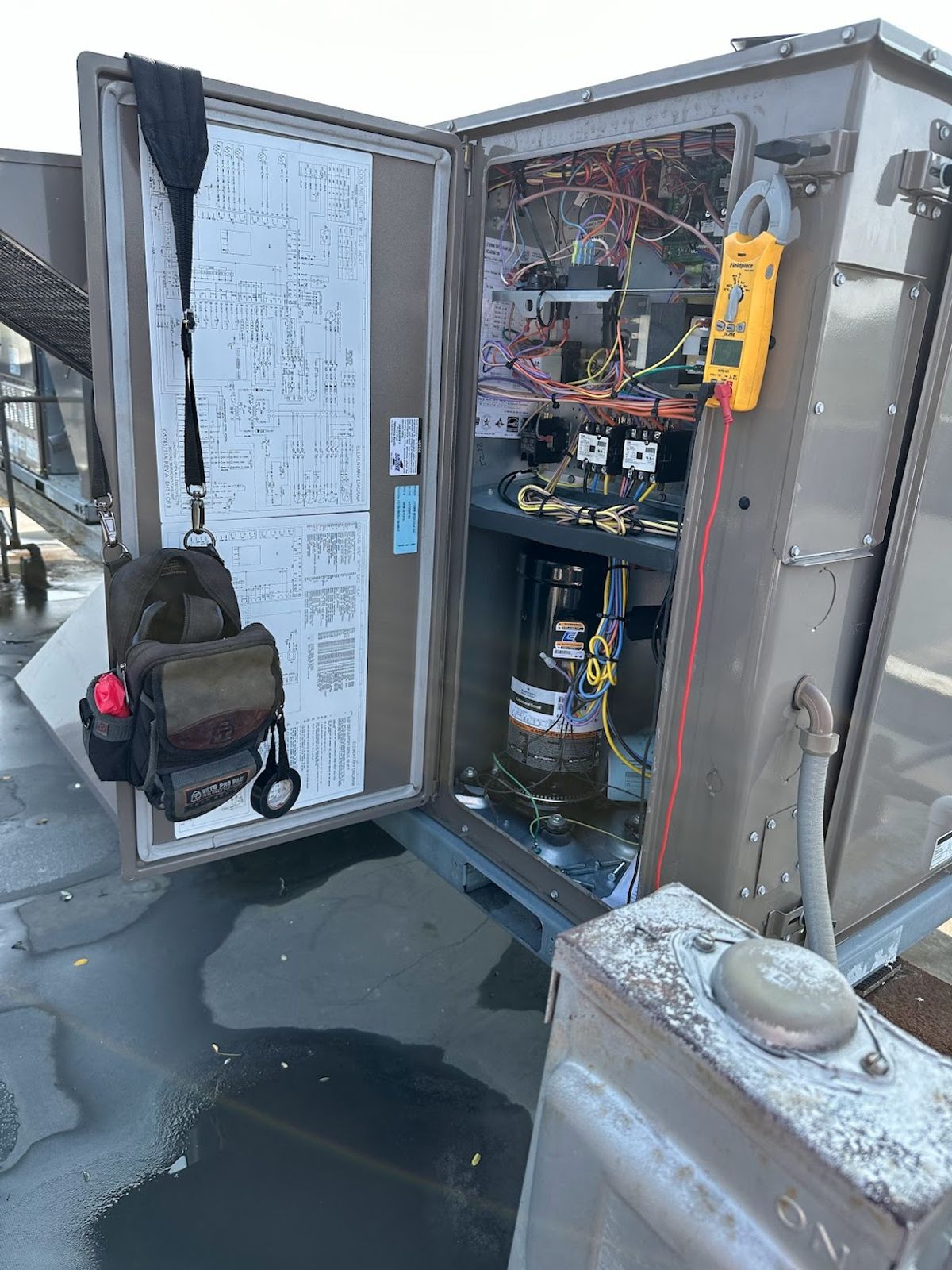
AC refrigerant leak inspection
Back to Blog HVAC TIPS

Should You Repair or Replace an AC Leaking Refrigerant?

Apr 7, 2026 10 min read Alex Weber
Quick Read

This article covers:

  • Why recharging without fixing the leak is wasting money
  • The 4 factors that determine repair vs. replace
  • R-22 vs R-410A: how your refrigerant type changes the math
  • What leak repairs actually cost (and what crosses the replacement threshold)
  • How to get the most value from your next repair or upgrade decision

Estimated read time: 5 minutes.

Your AC technician delivers the news: your system is low on refrigerant, and there’s a leak somewhere in the system. The immediate question — should you repair the leak or replace the whole system? — doesn’t have a simple answer. It depends on four key factors that we’ll break down in this guide.

What’s certain: simply recharging the refrigerant without finding and fixing the leak is the worst option. Refrigerant doesn’t “get used up” — it circulates in a sealed system. If it’s low, it’s leaking. And leaks don’t get smaller. Every recharge without repair is money poured into a system that’s actively losing it.

Here’s the framework we use when advising NYC homeowners on this exact decision.
Warning Sign #01

System Age

This is the single biggest factor. A 5-year-old system with a fixable leak is worth repairing. A 13-year-old system is approaching end-of-life anyway — spending $500–$1,000 on a leak repair buys you maybe 2–3 more years of declining efficiency before you replace it.

Under 8 years: repair almost always makes sense
8–12 years: repair if the fix is under $500 and the system runs well otherwise
12+ years: seriously consider replacement, especially if R-22
15+ years: replace — you’re spending money on a depreciating asset
Warning Sign #02

Refrigerant Type (R-22 vs R-410A)

If your system uses R-22 (Freon), the math changes dramatically. R-22 production was banned in 2020 and reclaimed supply costs $50–$150/lb. A single recharge can cost $500–$1,500. Even if you fix the leak, the next recharge will be even more expensive — and eventually unavailable.

R-22 systems: replacement is almost always the better investment
R-410A systems: repair makes financial sense if the system is under 10 years
You cannot “convert” R-22 to R-410A — it requires a complete system replacement
R-410A recharges cost $8–$25/lb vs $50–$150/lb for R-22
Warning Sign #03

Leak Location

Where the leak is matters as much as whether it exists. A leak at a brazed joint or service valve is a straightforward $200–$400 repair. A leak in the evaporator coil or condenser coil often means replacing the entire coil — $1,000–$2,500 — which tips the math toward full system replacement.

Service valve or connection joint: $200–$400 repair
Refrigerant line (accessible): $300–$600
Evaporator coil leak: $800–$2,000 (coil replacement)
Condenser coil or multiple leaks: $1,000–$2,500 (often better to replace system)
Warning Sign #04

Total Repair Cost vs. 50% Rule

The industry-standard rule: if the repair cost exceeds 50% of a new system’s price, replacement is the smarter investment. For a system that costs $5,000–$8,000 new, that threshold is $2,500–$4,000. Factor in the recharge cost, the repair cost, and any other needed work.

New system cost: $5,000–$8,000 (residential central AC)
50% threshold: $2,500–$4,000
Include recharge cost in your repair total (R-22: $500–$1,500)
Also factor in the system’s remaining useful life
Stop “Just Recharging”

If a technician offers to “just recharge” your refrigerant without finding and fixing the leak, you’re paying for a temporary fix — typically 1–6 months before the system is low again. Over the life of an unfixed leak, homeowners spend 3–5x more on repeated recharges than a one-time repair would cost. Always insist on leak detection and repair, not just a top-off.

LEAK REPAIR VS. SYSTEM REPLACEMENT

What Your Options Actually Cost

R-410A Recharge + Joint Repair$300–$600
R-22 Recharge + Joint Repair$700–$1,500
Evaporator Coil Replacement$1,000–$2,500
New AC System (installed)$5,000–$8,000

* Residential central AC, NYC metro area. R-22 recharge pricing reflects current reclaimed supply costs.

Repair or Replace?

Repair the Leak
System is under 10 years old
Uses R-410A refrigerant
Leak is at a joint or service valve
Repair cost under $800 total
Rest of system runs efficiently
No history of previous leaks
Replace the System
System is 12+ years old
Uses R-22 refrigerant (phased out)
Leak is in evaporator or condenser coil
Repair + recharge exceeds $1,500
Multiple components showing age
This is the 2nd+ leak repair

The R-22 Factor: Why It Changes Everything

If your system uses R-22 (Freon), the repair-vs-replace calculation is heavily weighted toward replacement. Here’s why:

  • R-22 costs $50–$150 per pound (reclaimed only) — a typical recharge is 3–8 lbs = $150–$1,200 just for the refrigerant
  • R-22 supply is shrinking every year — prices will only go up, and availability will only get worse
  • R-22 systems are 15–25+ years old — they’re already past their designed lifespan and operating at declining efficiency
  • You can’t convert R-22 to R-410A — the systems use different pressures, oils, and components. Switching refrigerant types requires a complete system replacement

For R-22 systems, the financially optimal move is almost always to upgrade to a modern high-efficiency system — preferably a heat pump that qualifies for the $2,000 federal tax credit. The energy savings alone often recoup the upgrade cost within 3–5 years.

Use the Tax Credit Window

The $2,000 federal tax credit for qualifying heat pumps (Inflation Reduction Act) won’t last forever. If your R-22 system needs a major repair anyway, this is the best time to make the switch — you’re spending money either way, and the tax credit effectively subsidizes 25–40% of the upgrade cost.

What to Do When You Get the Diagnosis

When your technician tells you there’s a refrigerant leak, here’s the step-by-step approach:

  1. Identify the refrigerant type — R-22 or R-410A? This determines your cost baseline
  2. Get the leak location — Ask specifically: is it at a joint, a service valve, or inside a coil?
  3. Get a written repair estimate — Including leak repair, refrigerant recharge, and any other recommended work
  4. Get a replacement estimate too — Ask for a side-by-side comparison from your HVAC provider. A good company will give you both options honestly
  5. Apply the 50% rule — If repair + recharge exceeds 50% of replacement cost, upgrade is the smarter long-term investment
A refrigerant leak is often the inflection point that triggers a system upgrade — not because the repair is impossible, but because the repair cost brings the total lifetime investment too close to what a new, efficient system would cost. Don’t make a $1,000 decision on a 10-minute conversation. Get the numbers and compare.

REFRIGERANT LEAK

Frequently Asked Questions

Find answers to common questions about our HVAC, plumbing, and refrigeration services.

It depends on the location. A joint or valve leak: $200–$600 including recharge. An evaporator coil leak: $800–$2,000. A condenser coil leak: $1,000–$2,500. R-22 systems add $500–$1,200 for the refrigerant alone. Get a written estimate before authorizing any work.

You can, but it’s the most expensive option long-term. Leaks don’t shrink — they get worse. You’ll need recharges every 1–6 months, costing $200–$1,500 each time. Over 2–3 years, repeated recharges cost more than a proper leak repair or system replacement.

Residential refrigerant leaks are generally not dangerous in well-ventilated areas. However, refrigerant displaces oxygen in enclosed spaces and can cause dizziness, headaches, or breathing difficulty. If you smell a sweet chemical odor, ventilate the area and call a technician.

Three methods: electronic leak detectors (most common), UV dye injection (dye circulates with refrigerant and glows under UV light at the leak point), and nitrogen pressure testing (pressurize the system and listen/soap-test for escaping gas). A thorough technician uses multiple methods.

If your R-22 system has a leak or needs a major repair, now is the best time to replace. R-22 prices are rising every year, the $2,000 federal tax credit for heat pumps is available now, and new systems offer 30–50% energy savings. Waiting only makes the eventual replacement more expensive.

Limited Availability

AC Leaking Refrigerant? Let’s Figure Out Your Best Move.

We’ll diagnose the leak location, give you honest repair AND replacement estimates side by side, and help you make the decision that saves the most money long-term — not just today.

Alex Weber

Marketing and Sales dept