
Benefits of VRV VRF Systems Guide by Art HVAC NYC Licensed Commercial Daikin Mitsubishi Heat Pump Contractor Team
Back to Blog HVAC TIPS

Benefits of VRV Systems for Commercial Buildings — A Full Guide

Mar 5, 2026 10 min read Alex Weber
Quick Read

This article covers:

  • What VRV/VRF technology is and how it differs from traditional HVAC
  • Why VRV systems save 30–50% on energy costs for commercial spaces
  • 5 key advantages: efficiency, zoning, quiet operation, scalability, heat recovery
  • Which building types benefit most from VRV technology
  • Installation requirements and what to expect

Estimated read time: 5 minutes.

If you manage a commercial building in New York — whether it’s an office tower, a mixed-use property, a hotel, or a retail complex — you already know that HVAC is one of your largest operating expenses. Traditional systems blast conditioned air through miles of ductwork, treating every floor and zone the same regardless of actual demand.

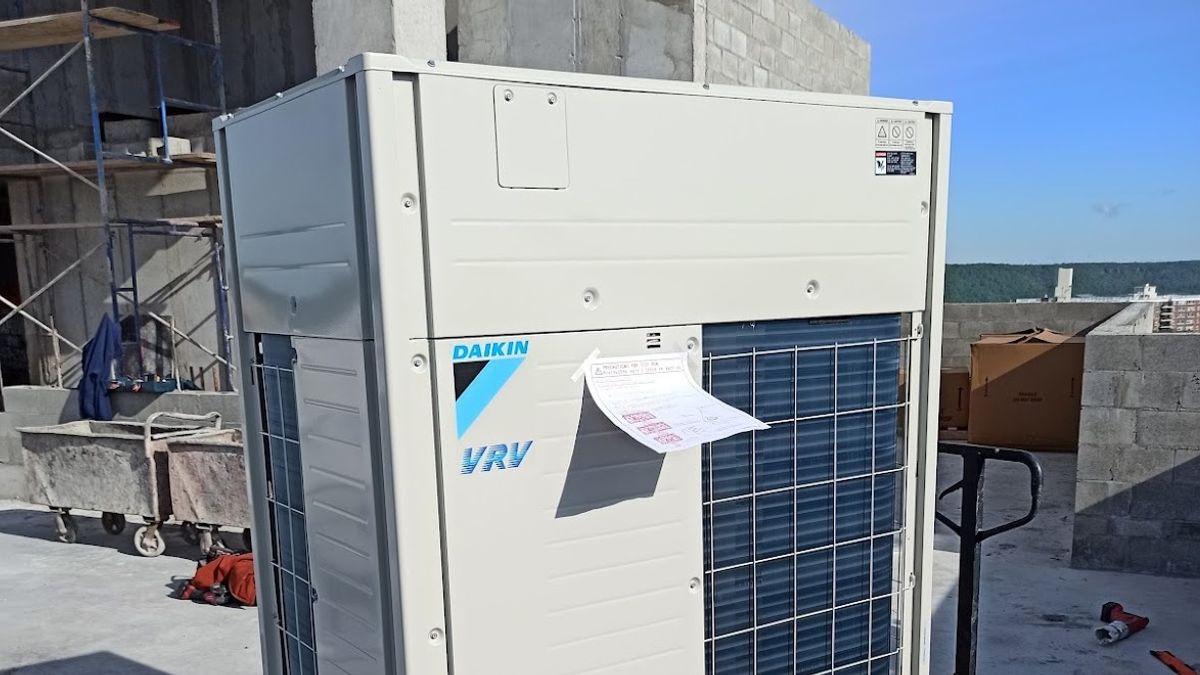
PortableText [components.type] is missing "span"VRV (Variable Refrigerant Volume) technology, also known as VRF (Variable Refrigerant Flow), takes a fundamentally different approach. Instead of pushing air through ducts, VRV systems circulate refrigerant directly to individual indoor units — each one independently controlled, each one using only the energy it actually needs.

The result? Buildings that switch to VRV typically see 30–50% reductions in HVAC energy costs, dramatically improved tenant comfort, and systems that last 15–20 years with significantly lower maintenance overhead. Here’s why more New York building owners and managers are making the switch.
Warning Sign #01

Tenant Complaints About Temperature

Different floors, different sun exposure, different occupancy — yet your HVAC treats every zone identically. If you’re constantly fielding complaints from tenants who are too hot or too cold, your system can’t match the actual thermal demands of each space.

Sun-facing offices overheating while shaded zones are cold
Conference rooms swinging between freezing and stifling
Server rooms competing with occupied spaces for cooling
Lobby and common areas always the wrong temperature
Warning Sign #02

Energy Costs Consuming Your Budget

If HVAC accounts for more than 40% of your building’s utility costs, your system is likely oversized, poorly zoned, or running at full capacity regardless of actual demand. VRV systems modulate output continuously, using only the energy each zone requires.

Compare your $/sqft energy cost with similar buildings
Traditional systems average $3.50–$4.50/sqft/yr for HVAC
VRV with heat recovery can drop this to $1.80–$2.40/sqft/yr
Payback on VRV premium typically 3–5 years through savings
Warning Sign #03

Aging Equipment with Rising Repair Costs

Commercial HVAC equipment over 15 years old is operating at a fraction of its original efficiency. If you’re facing a major repair or replacement decision, upgrading to VRV often costs only 15–25% more than a like-for-like replacement — with dramatically lower operating costs.

Equipment 15+ years: likely 40–60% below rated efficiency
R-22 refrigerant phase-out making repairs increasingly expensive
Compressor or chiller replacement = ideal time to evaluate VRV
VRV install during renovation avoids double disruption
Warning Sign #04

Building Renovations or Expansion Plans

If you’re renovating, adding floors, or converting commercial space to mixed-use, VRV systems offer unmatched flexibility. New zones can be added to existing outdoor units without replacing the entire system.

Each outdoor unit can serve up to 64 indoor units
New zones tap into existing refrigerant piping
No ductwork modifications needed for new spaces
Ideal for phased renovations across multiple floors

How VRV Technology Works

Traditional HVAC systems are binary — they’re either on at full capacity or completely off. VRV systems use inverter-driven compressors that continuously adjust output to match real-time demand. Here’s what makes the technology different:

  • Variable output — The compressor modulates from 10% to 100% capacity based on actual need, rather than cycling on and off
  • Direct refrigerant delivery — Refrigerant flows directly to each indoor unit through small-diameter piping, eliminating ductwork losses of 20–30%
  • Independent zone control — Each indoor unit has its own thermostat and operates independently. One office can cool while another heats
  • Heat recovery — Heat rejected from cooling zones is redirected to zones that need heating. One side of your building gets free heating from the other side’s cooling waste

This simultaneous heating and cooling capability is what sets VRV apart from every other commercial HVAC technology. In a building with both sun-facing and shaded zones — common in NYC’s dense skyline — heat recovery can reduce energy consumption by an additional 20–30%.

Efficiency That Pays for Itself

In buildings with simultaneous heating and cooling demands, VRV heat recovery systems can achieve effective COPs (Coefficient of Performance) above 6.0. That means for every $1 of electricity consumed, the system delivers $6 worth of heating and cooling combined. No other commercial HVAC technology comes close.

ANNUAL HVAC OPERATING COST PER SQ FT

How VRV Compares on Operating Cost

Traditional Rooftop Units$4.50/sqft
Central Chiller System$3.20/sqft
VRV (Cooling Only)$2.40/sqft
VRV with Heat Recovery$1.80/sqft

* Based on a 10,000 sq ft NYC commercial building. Actual costs vary by building envelope, occupancy, and climate exposure.

5 Key Benefits for Commercial Buildings

  1. 30–50% Energy Savings — Variable-speed compressors and direct refrigerant delivery eliminate the two biggest energy wasters in traditional systems: constant full-capacity operation and duct losses. Most buildings see payback on the VRV premium within 3–5 years through energy savings alone.
  2. True Zone-by-Zone Control — Each indoor unit operates independently with its own thermostat. Conference rooms, server rooms, lobbies, and individual offices can each maintain their ideal temperature without affecting other zones.
  3. Near-Silent Operation — Indoor units operate at 23–29 dB — quieter than a whispered conversation. This makes VRV ideal for offices, hotels, hospitals, and any environment where noise is a concern.
  4. Modular Scalability — Need to add zones for a new tenant buildout or floor expansion? Additional indoor units connect to existing outdoor units without replacing or reconfiguring the core system. This modularity makes VRV the most future-proof commercial HVAC investment.
  5. Compact Footprint — VRV outdoor units are significantly smaller than equivalent chillers or rooftop units. Indoor units mount on walls, ceilings, or in concealed duct configurations — freeing up valuable mechanical room space for revenue-generating use.

VRV vs. Traditional HVAC?

VRV/VRF System
Up to 64 independent zones
Variable-speed modulation 10–100%
Direct refrigerant — zero duct losses
Simultaneous heating and cooling
Compact equipment, minimal space
Near-silent (23–29 dB indoors)
Traditional HVAC
Single-zone or limited zoning
On/off cycling at full capacity
Duct losses waste 20–30% of energy
Separate heating and cooling equipment
Large mechanical room footprint
Noisy operation (50–70 dB indoors)
Certified Installation Matters

VRV installation requires certified technicians trained by the manufacturer (Daikin, Mitsubishi, etc.). Improper installation — especially refrigerant piping runs and charge calculation — can void the manufacturer warranty and reduce system efficiency by 30–40%. Always verify your installer holds current VRV/VRF certification.

Is VRV Right for Your Building?

VRV technology delivers the strongest ROI for buildings that meet certain criteria. The technology makes the most financial sense when:

  • Your building is 3,000+ square feet with multiple zones or tenants
  • You have simultaneous heating and cooling needs (mixed sun exposure)
  • Energy costs currently exceed $3.50 per square foot annually
  • You’re planning a 10+ year ownership horizon to capture full ROI
  • Quiet operation matters (hospitality, healthcare, professional offices)

For smaller buildings with simple single-zone layouts, a high-efficiency heat pump or mini-split system may deliver better value per dollar invested.

Not sure which direction is right for your property? We offer complimentary building assessments with energy modeling — so you can compare projected costs and ROI before committing.

VRV/VRF QUESTIONS

Frequently Asked Questions

Find answers to common questions about our HVAC, plumbing, and refrigeration services.

They’re the same technology. VRV (Variable Refrigerant Volume) is Daikin’s proprietary trademark — they invented the technology in 1982. VRF (Variable Refrigerant Flow) is the generic industry term used by other manufacturers like Mitsubishi, Fujitsu, LG, and Samsung.

A commercial VRV system typically costs $15,000–$50,000+ depending on building size, zones, and complexity. While 15–25% more expensive upfront than traditional systems, the 30–50% energy savings typically deliver ROI within 3–5 years.

For a typical 10,000 sq ft commercial space with 8–12 zones, installation takes 5–10 business days. Larger or more complex buildings may require 2–4 weeks. We coordinate scheduling to minimize disruption to your operations.

With proper maintenance, VRV systems last 15–20 years — comparable to or longer than traditional commercial HVAC. Outdoor units are typically rated for 15+ years, and indoor units can last 20+ years since they have fewer moving parts.

Yes. The compact piping makes VRV one of the easiest commercial systems to retrofit. Piping runs through existing ceiling voids, walls, and risers without major structural modifications. This makes VRV especially popular for renovations and building conversions in NYC.

Limited Availability

Ready to Explore VRV for Your Building?

Schedule a complimentary building assessment with energy modeling. We’ll analyze your current HVAC costs, design a custom VRV solution, and project your energy savings — all before you commit.

Alex Weber