

Staten Island HVAC: NYC's most suburban borough sets different rules
Drive across the Verrazzano Bridge from Brooklyn and you leave dense urban housing behind. Staten Island has the largest residential lots in NYC, the highest share of detached single-family homes, the most ducted central air, and the biggest concentration of post-Sandy elevation rebuilds anywhere in the country. The HVAC strategy that fits a Park Slope brownstone is the wrong answer for a Tottenville colonial. Here is how we approach each Staten Island building type — and what to ask for in your specific home.
1. Suburban single-family detached homes (Annadale, Great Kills, Eltingville, New Dorp, Huguenot, Tottenville)
Most are 2-3 stories, vinyl-sided or brick, built 1950s-2000s, with basement-mounted gas furnaces (some still oil), full ductwork, and existing central AC at 12-20 years old that owners are eyeing for replacement. The biggest opportunity right now: heat pump conversions that swap out both heating and cooling for a single, more efficient system, often reusing the existing ductwork. Side-yard or driveway condenser placement is straightforward — none of the Manhattan or Brooklyn placement constraints. Lot sizes mean equipment can sit anywhere reasonable.
2. Hill estates (Todt Hill, Grymes Hill, Lighthouse Hill, Emerson Hill, Concord)
These are the largest homes in NYC — 3,000 sqft is small here, 6,000-10,000 sqft is common. A single thermostat cannot honestly heat or cool a house that big with multiple floors, sun exposure variation, and rooms that get used at different times. Multi-zone climate control is the right answer almost always: separate zones for the master suite, main living areas, basement, and any guest wings. Some Todt Hill properties also have well water and septic systems — that affects equipment selection (water filtration on inlets, careful drain routing) but not in dramatic ways.
3. North Shore older walk-ups and pre-war attached (St. George, Stapleton, Tompkinsville, New Brighton, West Brighton)
The North Shore is the only part of Staten Island that feels like Brooklyn. Pre-war brick attached, walk-up apartment buildings, and small commercial strips. Ductwork is rarely possible in these older buildings; ductless mini-splits per unit are the dominant retrofit, with PTAC sleeve replacements where the building owner wants minimum disruption. Snug Harbor's historic district sets exterior-change rules for properties within its boundary.
4. Townhouse and attached suburban (New Springville, Bulls Head, Mariners Harbor, Heartland Village, Castleton Corners)
Built 1980s-2000s, 2-3 floors, attached or semi-detached on smaller lots than the South Shore detached homes. Most have ducted central air from original construction — the work is repair, replacement, and increasingly heat pump conversions to capture rebate money. Side-yard or rear-yard condenser placement is shared with the neighbor in attached configurations, so noise specs matter.
5. Post-Sandy elevation rebuilds (Oakwood Beach, Midland Beach, New Dorp Beach, South Beach, Tottenville coastal)
Hurricane Sandy made landfall on Staten Island in 2012 and destroyed thousands of homes here. Many were rebuilt under the Build-Back program with foundations elevated 8-15 feet above grade. Mechanical equipment must sit above the FEMA Base Flood Elevation — that means heat pumps go on rooftop platforms, elevated mechanical decks, or upper-level interior closets, never on the ground. We use coastal-rated equipment with corrosion-protected coils and place it to meet the flood-elevation requirements your insurer and DOB check. This is uniquely Staten Island in volume; almost every coastal block has at least one elevated home.
6. Coastal waterfront homes (Tottenville, Great Kills harbor, Annadale waterfront)
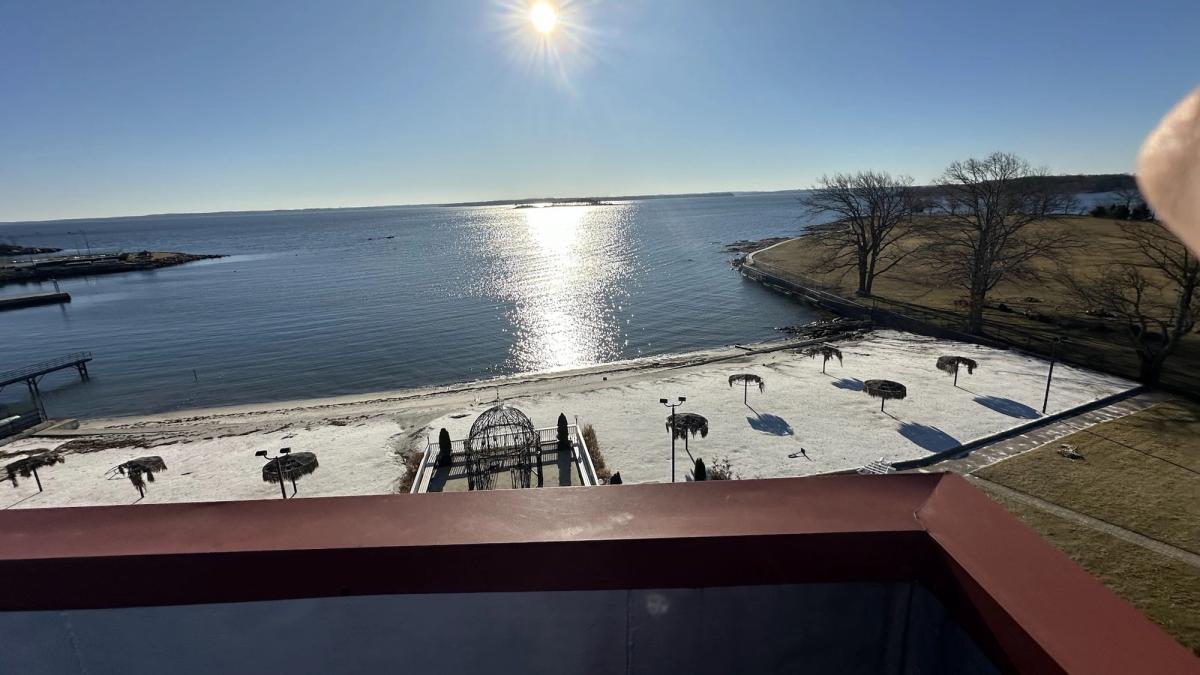
Properties directly on the Raritan Bay or Lower New York Bay get salt-air exposure that corrodes standard equipment in 4-6 years. We specify the same coastal-rated equipment used on City Island and Rockaway — corrosion-protected coils, marine-grade fasteners, sealed electrical enclosures — and we plan condenser placement to minimize direct salt-spray exposure. Less extreme than City Island (Staten Island is a peninsula, not a small island in the Sound) but still meaningful for equipment longevity.
7. Commercial and retail corridor (Staten Island Mall area, Hylan Boulevard, Forest Avenue)
Staten Island's commercial weight is concentrated along Hylan Boulevard (the longest commercial corridor in NYC), the Staten Island Mall area in New Springville, and Forest Avenue retail strips. Restaurants, medical offices, retail stores, and service businesses — most run on rooftop package units or split systems sized for the space. Hylan strip-mall restaurants and Mall food court tenants are the bulk of our SI commercial work, with the occasional larger build-out for medical or veterinary tenants.