

Manhattan's HVAC reality: the building decides what's possible
In most American cities, the homeowner picks the HVAC system. In Manhattan, the building does. Co-op boards, condo boards, building engineers, and landlords all have a say before a single screw is turned. Picking the wrong system or skipping the wrong piece of paperwork can add months to your install. Here is how we approach each Manhattan building type — and what to ask for in your specific building.
1. Pre-war co-ops and condos (UES, UWS, Park Avenue, Murray Hill)
Built 1900s-1930s. Central steam heat is owned and controlled by the building — you cannot replace your radiators or upgrade the boiler. Cooling is on you, but options are constrained: through-wall PTAC sleeves are the most common (board-friendly, nothing visible from the street), ductless mini-splits if the board allows interior wall units, or window units if the board permits them. Board approval prep typically runs 4-6 weeks; we submit the full package up front so the review goes smoothly.
2. Doorman post-war buildings (Yorkville, Lenox Hill, Murray Hill, Lincoln Square)
Built 1950s-1970s. Central HVAC with riser tie-ins is common — your unit usually has fan coils that pull from a building-wide chilled water loop. Repairs and modernization happen at the unit level: replacing fan coils, flushing chilled water lines, swapping zone valves, and upgrading thermostats. We coordinate with the building engineer for valve shut-offs, schedule freight elevator access at quote time, and submit a COI naming the building before install day.
3. Modern high-rises (Hudson Yards, Battery Park City, Midtown West, FiDi)
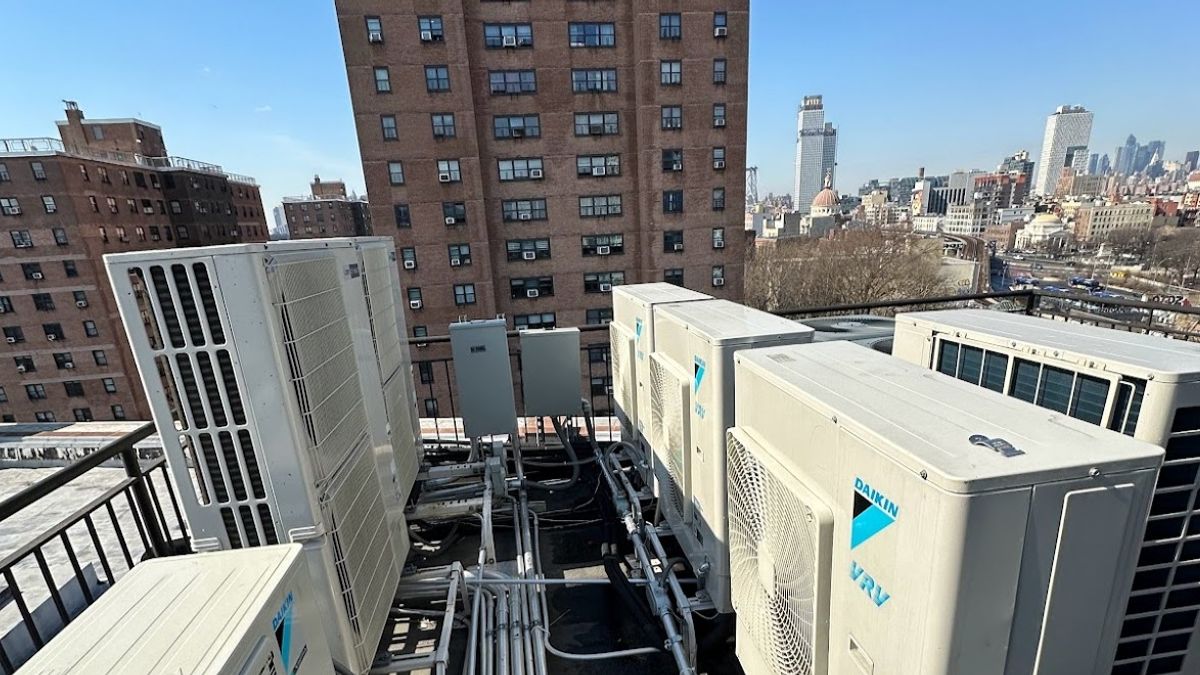
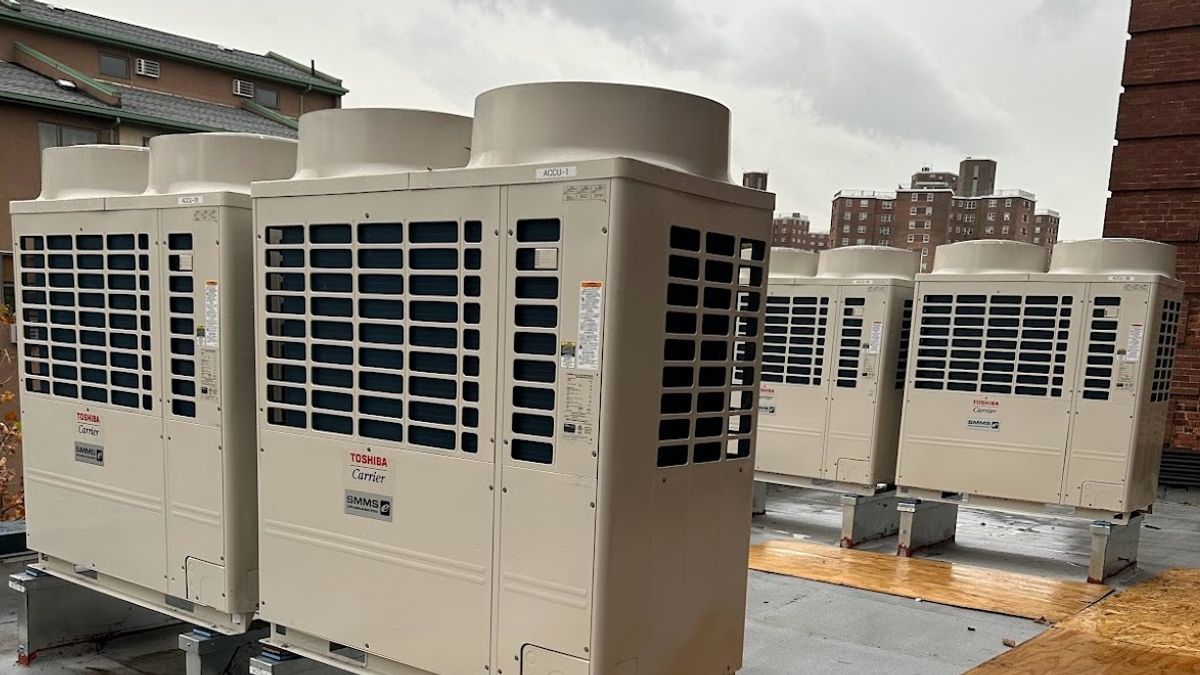
Built 2000s-present. Most have central VRF or chilled-water systems with in-unit fan coils or wall-mounted indoor units. Upgrades are usually building-driven — individual units rarely modify the central system. We service in-unit equipment, coordinate with building engineers, and handle warranty claims through the original manufacturer. For tenants in newer buildings, half the value we add is knowing who to call at the building before you call us.
4. Townhouses and brownstones (UES, UWS, Greenwich Village, Chelsea)
Manhattan has fewer townhouses than Brooklyn but stricter landmark restrictions. Most are 4-5 stories, originally heated by steam radiators. Common installs: ductless mini-splits per floor, central ducted in fully gut-renovated homes, or VRF for high-end retrofits. Landmark district approvals (Greenwich Village Historic, UES Historic, Carnegie Hill) require Landmarks Preservation Commission review for any street-visible exterior change. We design around that — rear-yard or rooftop condensers tucked behind parapets, with low-noise brackets that satisfy party-wall rules.
5. Lofts (SoHo, Tribeca, NoHo, Chelsea, Garment District)
Converted from industrial buildings 1970s-2000s. Twelve-foot ceilings, oversized windows, and exposed mechanical that owners often want to keep visible. We design VRV systems with low-profile ceiling cassettes or wall units, sized for the heavy solar gain through the original factory windows. SoHo Cast-Iron Historic District requires LPC review for any exterior equipment, so we route condensers to roof setbacks or interior light wells whenever possible.
6. Pre-war rentals (Washington Heights, Inwood, Hell's Kitchen, East Harlem)
Steam heat is building-controlled and the landlord pays for it, so you cannot turn it off in summer. Cooling is per-unit — usually sleeve PTACs the landlord installed at conversion. We service these and replace failed units; full retrofits require landlord approval and rarely happen unless the building is doing a coordinated upgrade. If you are a tenant, the right move is usually a high-quality through-wall PTAC swap to gain efficiency without changing the building's rules.
7. Commercial spaces (Midtown offices, restaurants, retail, ground-floor stores)
Manhattan commercial real estate runs on rooftop package units, split systems, and in newer Class A buildings, central VRF tied to the building's chilled water plant. Restaurants need refrigeration, makeup air, and exhaust hood compliance with NYC FDNY rules; retail needs zoned comfort and quiet operation; offices need distributed cooling with low after-hours noise. We handle every type — and your lease often dictates who pays for what, which we map out in the quote.