
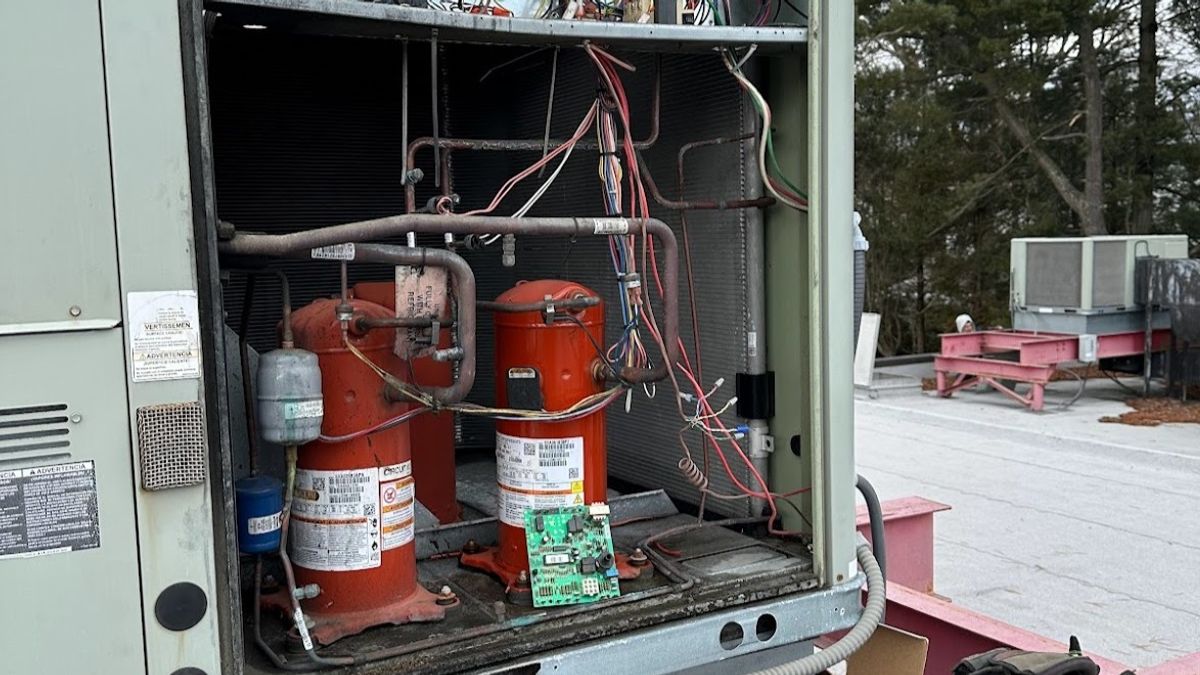
Commercial Compressor Basics Guide by Art HVAC NYC Licensed Commercial Refrigeration and Copeland Contractor Experts
Back to Blog HVAC TIPS

HVAC Compressor Basics — How It Works, Common Failures & Fixes

Apr 2, 2026 10 min read Alex Weber
Quick Read

This article covers:

  • How an HVAC compressor actually works (simple explanation)
  • 5 warning signs your compressor is failing
  • Repair vs. replacement: when each makes financial sense
  • What kills compressors early — and how to prevent it
  • Expected lifespan and maintenance that extends it

Estimated read time: 5 minutes.

If your air conditioning system were a human body, the compressor would be the heart. It’s the component that circulates refrigerant through the entire system, making cooling (and heating, in heat pumps) physically possible. It’s also the most expensive component to replace — typically $1,500–$3,000 for residential systems, and $3,000–$8,000+ for commercial units.

Understanding how your compressor works — and recognizing the early warning signs of failure — can save you thousands. A compressor problem caught early is a $200 repair. The same problem ignored for two months becomes a $3,000 replacement.
How an HVAC Compressor Works

Your compressor does one critical job: it compresses low-pressure refrigerant gas into high-pressure, high-temperature gas. This pressurization is what drives the entire refrigeration cycle:

  1. Evaporator absorbs heat — Indoor coil absorbs heat from your home’s air, turning liquid refrigerant into low-pressure gas
  2. Compressor pressurizes — Compresses the gas, raising its temperature to 150–200°F so it’s hotter than the outdoor air
  3. Condenser releases heat — Outdoor coil releases the heat into the atmosphere, turning the gas back into liquid
  4. Expansion valve drops pressure — Liquid refrigerant passes through a restriction, dropping temperature before returning to the evaporator

This cycle repeats continuously while your system runs. Modern inverter compressors can modulate speed from 10–100%, adjusting output to match actual demand rather than cycling fully on and off. This variable-speed operation is 30–50% more efficient than traditional single-speed compressors.

Warning Sign #01

Hard Starting or Stuttering at Startup

The compressor struggles to start, makes a clicking sound, trips the breaker, or takes multiple attempts to engage. This usually indicates a failing start capacitor ($150–$300 fix) or worn compressor windings (more serious). Don’t ignore it — repeated hard starts damage the compressor further.

Clicking + no start = start capacitor or relay ($150–$300)
Humming + no start = locked rotor (compressor may be seized)
Breaker tripping at startup = electrical overload
Early diagnosis prevents compressor burnout
Warning Sign #02

Unusual Noises During Operation

A healthy compressor hums steadily. Grinding, chattering, or high-pitched squealing indicate internal mechanical damage — worn bearings, broken valve reeds, or loose internal hardware. These sounds mean metal-on-metal contact is occurring inside the sealed unit.

Grinding = bearing failure (compressor replacement likely)
Chattering/clicking during run = valve reed damage
Squealing = high pressure or belt issue (belt-drive units)
Vibration = loose mounting or internal imbalance
Warning Sign #03

System Blowing Warm Air

If your AC runs but produces warm air, the compressor may not be compressing — either due to internal valve failure, refrigerant loss, or electrical issues preventing the compressor from engaging. Check that the outdoor unit’s fan is running; if so, the compressor itself is likely the problem.

Outdoor fan running + warm air = compressor not engaging
Check for tripped breaker at disconnect box
Low refrigerant can also cause warm air (leak + recharge needed)
Compressor contactor failure prevents engagement ($100–$250 fix)
Warning Sign #04

Circuit Breaker Tripping Repeatedly

A compressor drawing excessive current will trip the breaker as a safety measure. Causes include locked rotor (seized compressor), short circuit in windings, or a grounded compressor. Repeated breaker trips mean the system is trying to protect itself from a serious electrical fault.

Never keep resetting a tripping breaker — the protection is working
Locked rotor = compressor is mechanically seized
Grounded compressor = winding insulation breakdown (replacement needed)
Call a technician to diagnose before resetting
Warning Sign #05

Oil or Refrigerant Leaks Around the Unit

Dark oily residue around refrigerant line connections or the compressor itself signals a leak. Compressors use oil for internal lubrication — an oil leak means refrigerant is also escaping. Low oil levels lead to increased friction, overheating, and premature compressor seizure.

Oily spots at brazed joints = refrigerant/oil leak at connection
Oil pooling under compressor = shaft seal or gasket failure
Low refrigerant from leaks causes compressor overheating
A leak left unfixed will destroy the compressor within 1–2 seasons
COMPRESSOR REPAIR & REPLACEMENT COSTS

What Compressor Problems Actually Cost

Start Capacitor / Relay$150–$300
Contactor Replacement$100–$250
Refrigerant Leak Repair + Recharge$300–$700
Compressor Replacement$1,500–$3,000

* Residential system pricing, NYC metro area. Commercial systems 2–3x higher.

Repair or Replace?

Repair the Compressor
System is under 8 years old
Compressor is still under warranty
Issue is electrical (capacitor, contactor, wiring)
Refrigerant leak is at a connection, not the compressor
Rest of system is in good condition
Replace the Whole System
System is 12+ years old
Compressor warranty has expired
Compressor is mechanically seized or grounded
System uses R-22 refrigerant
Multiple components have failed recently
What Kills Compressors Early

The three biggest compressor killers: dirty condenser coils (cause overheating), low refrigerant from unrepaired leaks (cause oil starvation), and electrical problems like voltage spikes and loose connections (cause winding burnout). All three are preventable with annual maintenance. A $150 tune-up is the best insurance policy your $3,000 compressor has.

How to Extend Your Compressor’s Life

A compressor should last 12–15 years in residential systems and 15–20 years in commercial systems. Here’s what a good preventive maintenance program includes to achieve that:

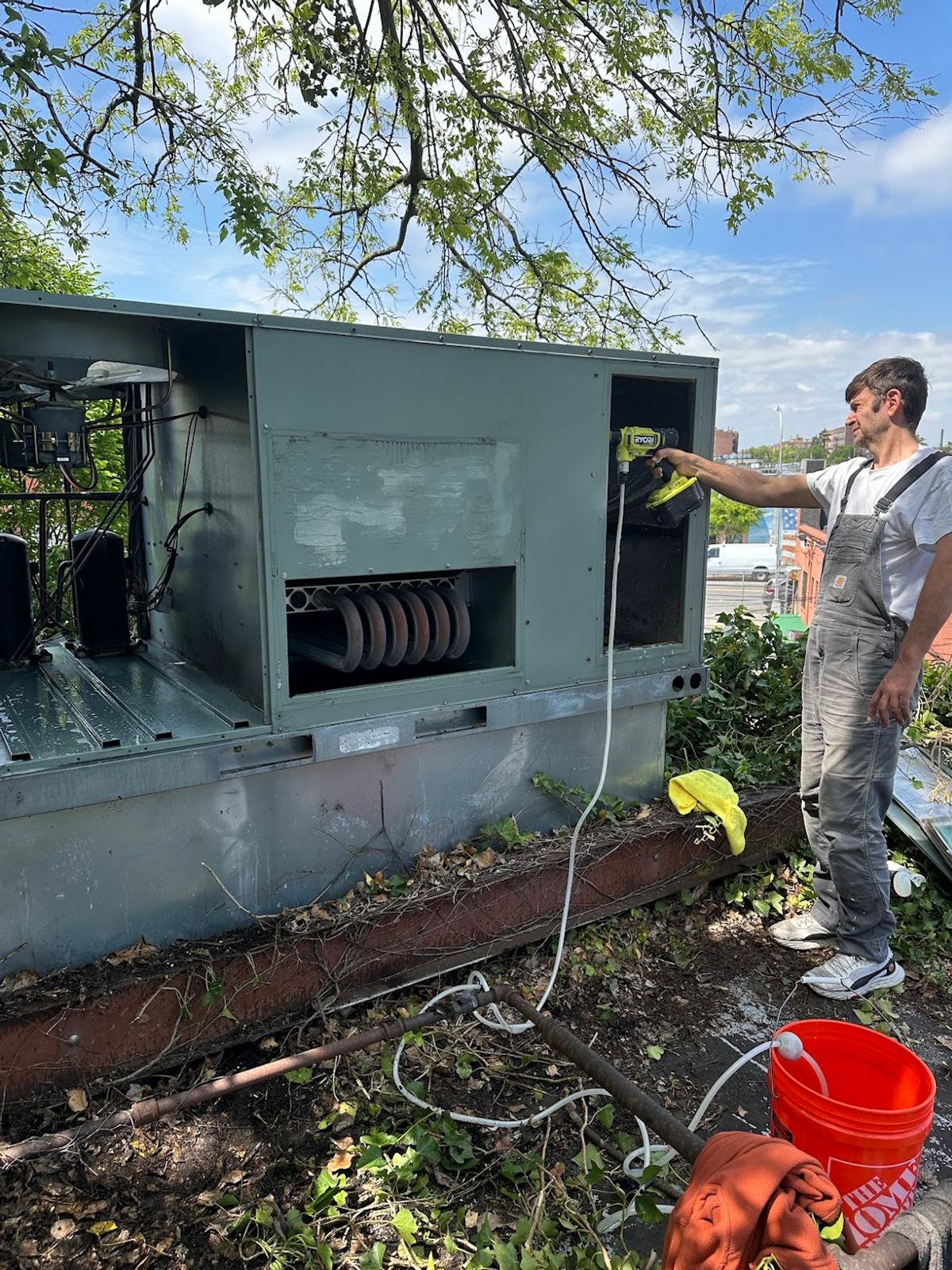
  • Clean condenser coils annually — Dirty coils force the compressor to work at higher pressures and temperatures, reducing lifespan by 30–50%
  • Fix refrigerant leaks immediately — Low refrigerant causes the compressor to overheat and run without proper oil return, accelerating wear
  • Check electrical connections — Loose connections cause voltage drops that overheat windings. Inspect and tighten annually
  • Replace the air filter regularly — A clogged filter reduces airflow across the evaporator, potentially causing liquid refrigerant to reach the compressor (liquid slugging)
  • Install a hard-start kit — For systems in areas with unstable voltage, a hard-start kit reduces the electrical stress of each startup cycle ($80–$150 installed)
The compressor is a sealed unit — once it fails internally, it cannot be repaired in the field. Every maintenance dollar spent preventing compressor failure saves $10–20 in replacement costs.

COMPRESSOR BASICS

Frequently Asked Questions

Find answers to common questions about our HVAC, plumbing, and refrigeration services.

What is a compressor in HVAC? It's an electrically driven pump that raises refrigerant vapor from low pressure to high pressure, which is what makes the refrigeration cycle possible. Without the compressor doing that pressurization work, refrigerant cannot release its captured heat at the condenser and the entire cooling process stops. Because it runs continuously during cooling season and handles high electrical loads on startup, the HVAC compressor experiences more wear than almost any other component in the system.

How much is an HVAC compressor in NYC? Replacement parts and labor typically range from $1,200 to $2,800 for a residential scroll compressor, with larger commercial units running significantly higher. The repair-vs-replace calculus depends on system age and refrigerant type. For a unit under 8 years old still using a supported refrigerant, compressor replacement often makes financial sense. For a 12-plus-year-old R-22 system, replacing the entire unit is almost always the better investment given refrigerant costs and likely failure of other aging components.

What causes compressor failure in HVAC units? The leading cause is liquid refrigerant slugging — liquid entering the compressor because of low charge, a malfunctioning metering device, or refrigerant migration during off-cycles. Overheating from inadequate airflow across the condenser coil is the second major cause. Electrical issues — voltage imbalances, weak capacitors, and short-cycling from oversized units — also account for a significant share of premature failures. Keeping coils clean, replacing capacitors on schedule, and addressing refrigerant anomalies early prevents most of these failures.

How does an HVAC compressor work in scroll versus reciprocating designs? A scroll compressor uses two interleaved spiral elements — one fixed, one orbiting — to continuously compress refrigerant toward a center outlet. The motion is smooth, so scroll compressors run quietly with less vibration. A reciprocating compressor uses pistons like an engine, compressing in discrete strokes. Scroll designs dominate modern residential and light commercial HVAC; reciprocating types appear in some commercial and specialty applications.

How to tell if HVAC compressor is bad: listen for hard starting — a loud clunk followed by a breaker trip, or the compressor humming but not engaging, which points to a failing capacitor or winding. Warm air despite the unit running, paired with normal fan noise, suggests the compressor isn't building pressure. Rattling inside the outdoor cabinet while running indicates internal mechanical damage. Measure amperage: a compressor drawing well above its nameplate RLA is weeks from failure.

Compressor Problems? Get a Fast Diagnosis.

Don’t guess whether your compressor needs a $200 fix or a $3,000 replacement. Our certified technicians will diagnose the exact issue, explain your options, and get your system running again — often the same day.

Alex Weber