
Heat Pumps Vs Traditional Heating Guide by Art HVAC NYC Licensed Commercial Heat Pump Installation Contractor Team
Back to Blog ENERGY SAVINGS

Heat Pumps vs Traditional HVAC — Which System Is Right for You?

Feb 20, 2026 10 min read Alex Weber
Quick Read

This article covers:

  • How heat pumps work differently from furnace + AC systems
  • Side-by-side comparison: efficiency, cost, comfort, and lifespan
  • Annual operating costs: traditional $2,800 vs heat pump $1,400
  • Why cold-climate heat pumps now work in NYC winters down to -15°F
  • Federal tax credits up to $2,000 that change the cost equation

Estimated read time: 5 minutes.

For decades, the standard New York home came with the same HVAC formula: a gas furnace for winter, a central air conditioner for summer, and two separate systems to maintain, repair, and eventually replace. It worked — but it was never efficient.

Heat pump technology has changed the equation entirely. A single system that handles both heating and cooling, uses 50% less energy, and qualifies for $2,000 in federal tax credits has made the traditional furnace-plus-AC setup increasingly hard to justify.

But heat pumps aren’t right for every situation. This guide breaks down exactly how the two approaches compare — on efficiency, operating cost, comfort, installation, and long-term value — so you can make the right call for your home.
How Each System Actually Works

Understanding the fundamental difference explains why heat pumps are so much more efficient:

Traditional System (Furnace + AC)

Your furnace burns natural gas to generate heat — converting fuel into warmth at roughly 80–95% efficiency (meaning 5–20% is wasted up the flue). Your air conditioner uses a separate compressor and refrigerant cycle to remove heat from indoor air and dump it outside. These are two completely separate machines with separate maintenance schedules, separate lifespans, and separate failure points.

Heat Pump

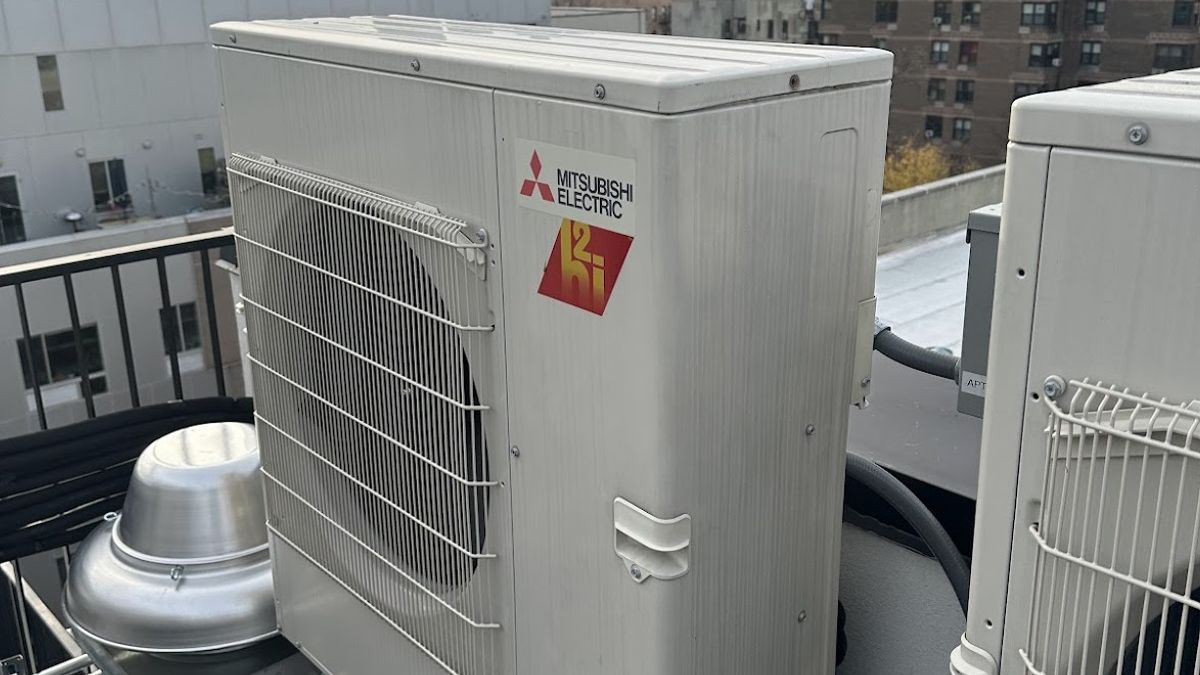
A heat pump uses the same refrigerant cycle as an air conditioner — but in reverse. In summer, it removes heat from your home (just like an AC). In winter, it extracts heat from outdoor air and moves it inside. It doesn’t generate heat — it transfers it. This is why heat pumps deliver 2–4x more heating energy than the electricity they consume.

A gas furnace gives you $0.95 of heat for every $1 of gas. A heat pump gives you $3–$4 of heat for every $1 of electricity. That’s the core math behind the switch.

Heat Pump vs. Traditional?

Heat Pump
One system heats AND cools
200–400% heating efficiency (COP 2–4)
$1,400/yr average operating cost
15–20 year lifespan
$2,000 federal tax credit eligible
No combustion = zero CO risk
Quieter than traditional AC (23–32 dB)
Traditional (Furnace + AC)
Separate furnace + air conditioner
80–95% furnace efficiency
$2,800/yr average operating cost
15–20 years per unit (two to replace)
No federal tax credit available
Gas combustion = CO monitoring required
Louder outdoor unit (65–75 dB)
The Cold Weather Myth

The #1 myth about heat pumps: “They don’t work in cold weather.” Modern cold-climate models from Mitsubishi, Daikin, and Fujitsu deliver 100% rated heating capacity at 5°F and continue operating down to -15°F. NYC’s average January low is 27°F — well within a heat pump’s peak efficiency range.

ANNUAL HEATING + COOLING COST

What You’ll Actually Pay Per Year

Traditional (Furnace + AC)$2,800/yr
Standard Heat Pump (SEER 16)$1,800/yr
High-Eff Heat Pump (SEER 20)$1,400/yr
Ductless Heat Pump (SEER 22+)$1,100/yr

* Based on a 2,000 sq ft NYC home, full-year heating and cooling. Gas at $1.20/therm, electricity at $0.22/kWh.

Warning Sign #01

Your Furnace Is Approaching End of Life

Gas furnaces last 15–20 years. If yours is 12+ years old and facing a major repair, this is the ideal time to switch — you’re already spending the money, and a heat pump replaces both your furnace AND your AC in one system.

Average furnace replacement: $3,500–$6,000
Heat pump replaces BOTH furnace + AC: $7,000–$14,000
Minus $2,000 federal tax credit + $500–$1,500 state rebates
Effective cost difference: often under $2,000
Warning Sign #02

Your Energy Bills Are Uncomfortably High

If you’re spending $250+/month on heating in winter and $200+/month on cooling in summer, a heat pump can cut those costs by 40–50%. The savings compound every year and often pay back the upfront premium within 3–5 years.

Traditional heating + cooling: ~$2,800/yr average
High-efficiency heat pump: ~$1,400/yr average
Annual savings: $1,400/yr = $21,000 over 15-year lifespan
Payback on price premium: typically 2–4 years
Warning Sign #03

You Want to Eliminate Gas from Your Home

Whether for environmental reasons, safety concerns (CO risk), or because you’re tired of gas company rate hikes, a heat pump lets you go all-electric for heating and cooling. Combined with solar panels, this can dramatically reduce or eliminate your energy bills.

No gas line = no CO monitoring needed
No combustion = improved indoor air quality
All-electric homes qualify for additional green incentives
Gas prices have risen 40%+ in NYC over the past 5 years
Warning Sign #04

You’re Eligible for Tax Credits and Rebates

The federal Inflation Reduction Act offers up to $2,000 in tax credits for qualifying heat pumps. New York state and local utilities stack additional rebates of $500–$1,500. These incentives can cut the effective cost difference between a heat pump and traditional system to near zero.

Federal: up to $2,000 tax credit (Inflation Reduction Act)
NY State: varies by utility, typically $500–$1,000
Con Edison: additional rebates for qualifying equipment
Must be ENERGY STAR certified to qualify

The NYC Climate Factor

New York’s climate is actually ideal for heat pump efficiency:

  • Moderate winters — Average January temperature is 33°F, well above the range where heat pumps lose efficiency
  • Hot humid summers — Heat pumps cool just as effectively as traditional ACs (same technology)
  • 4-season variety — A heat pump handles heating, cooling, and dehumidification with no seasonal equipment switching
  • Clean electric grid — NYC’s grid is cleaner than most U.S. cities, making electric heating lower-carbon than gas

The only scenario where a traditional furnace still has a clear advantage is during extreme cold snaps below 0°F — which NYC experiences only a handful of days per year. Most cold-climate heat pumps include a small electric backup heater for these rare occasions, adding less than $50/year to operating costs.

Sizing Is Even More Critical

Heat pump sizing is more critical than traditional systems. An oversized heat pump short-cycles, reducing dehumidification in summer and increasing wear. An undersized unit relies too heavily on backup heating in winter. Always insist on a Manual J load calculation before accepting any quote — not a rule-of-thumb estimate.

Making Your Decision

Here’s how to think about the choice:

Choose a heat pump if:

  • Your furnace or AC needs replacement in the next 1–3 years
  • You want to reduce energy costs by 40–50%
  • You’re eligible for the $2,000 federal tax credit
  • You prefer a single system with one maintenance schedule

Stick with traditional if:

  • Both your furnace and AC are under 8 years old and running well
  • Your home has no ductwork and you don’t want ductless units on walls
  • Your gas rates are unusually low (under $1.00/therm)

For most NYC homeowners, the math now favors heat pumps — especially when tax credits and rising gas prices are factored in. The question isn’t whether to switch, but when. And the right time is almost always when your current system needs its next major repair or replacement.

HEAT PUMP QUESTIONS

Frequently Asked Questions

Find answers to common questions about our HVAC, plumbing, and refrigeration services.

A heat pump system costs $7,000–$14,000 installed, compared to $5,000–$8,000 for a furnace + AC combo. However, the $2,000 federal tax credit plus state/utility rebates ($500–$1,500) bring the effective price difference to under $2,000 — which energy savings recover within 2–3 years.

Yes. Modern cold-climate heat pumps operate efficiently down to -15°F. NYC’s average winter temperature (33°F) is well within peak efficiency range. Most systems include a small electric backup heater for the handful of sub-zero days each year, adding less than $50/year.

15–20 years with proper maintenance — comparable to traditional systems. Since a heat pump replaces BOTH your furnace and AC, you maintain one system instead of two, typically reducing total lifetime maintenance costs by 30–40%.

Yes — that’s the primary advantage. A heat pump provides both heating and cooling from a single outdoor unit. It connects to your existing ductwork or operates ductless with wall-mounted units. You no longer need a separate furnace and AC.

Modern heat pumps are actually quieter. Indoor noise levels are 23–32 dB (quieter than a library), and outdoor units produce 55–60 dB (comparable to a normal conversation). Traditional AC condensers are typically 65–75 dB.

Limited Availability

Ready to Compare Your Options?

Schedule a free in-home assessment. We’ll evaluate your current system, model the energy savings of a heat pump vs. traditional replacement, and show you exactly how the numbers compare — including all available tax credits and rebates.

Alex Weber