
HVAC Maintenance for Retail and Commercial Spaces by Art HVAC NYC Licensed Commercial Preventive Contractor Team
Back to Blog HVAC TIPS

Essential HVAC Maintenance for Retail Stores & Commercial Spaces

Apr 9, 2026 10 min read Alex Weber
Quick Read

This article covers:

  • Why retail HVAC failures cost $500–$2,000/day in lost revenue
  • Seasonal maintenance schedules for retail and commercial spaces
  • The 5 most common retail HVAC problems and how to prevent them
  • Cost comparison: proactive maintenance vs. emergency repairs
  • How to choose the right maintenance plan for your business

Estimated read time: 5 minutes.

When the AC goes down in your retail store on a Saturday afternoon in July, customers don’t wait for it to be fixed. They leave. Studies show that uncomfortable store temperatures reduce foot traffic by 25–40% and cut average transaction size by 15–20%. For a store doing $5,000/day in sales, that’s $1,000–$2,000 in lost revenue — per day.

Yet most retail and commercial HVAC systems only get attention when they fail. The rooftop unit that struggled all last summer gets ignored until June, when every HVAC company in NYC is booked solid and emergency rates apply.

This guide covers the maintenance strategy that keeps your store comfortable, your customers spending, and your HVAC budget predictable.
Warning Sign #01

Hot Spots Near Store Entrance

The front of your store near the entrance gets blasted with outdoor air every time the door opens. If your HVAC can’t compensate, customers walk into a wall of heat — and their first impression of your store is discomfort.

Install air curtains at high-traffic entrances
Dedicate a separate thermostat zone for the entrance area
Verify that supply vents near doors are open and unblocked
Consider vestibule design for high-volume locations
Warning Sign #02

Rooftop Unit Failure in Peak Season

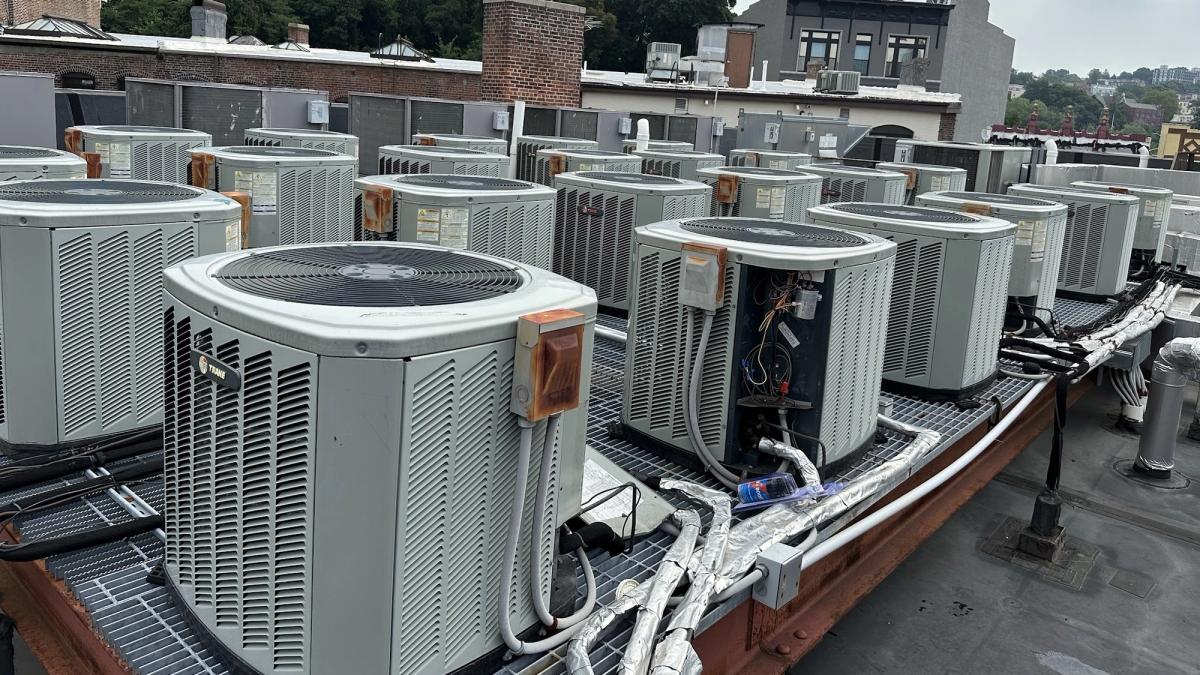
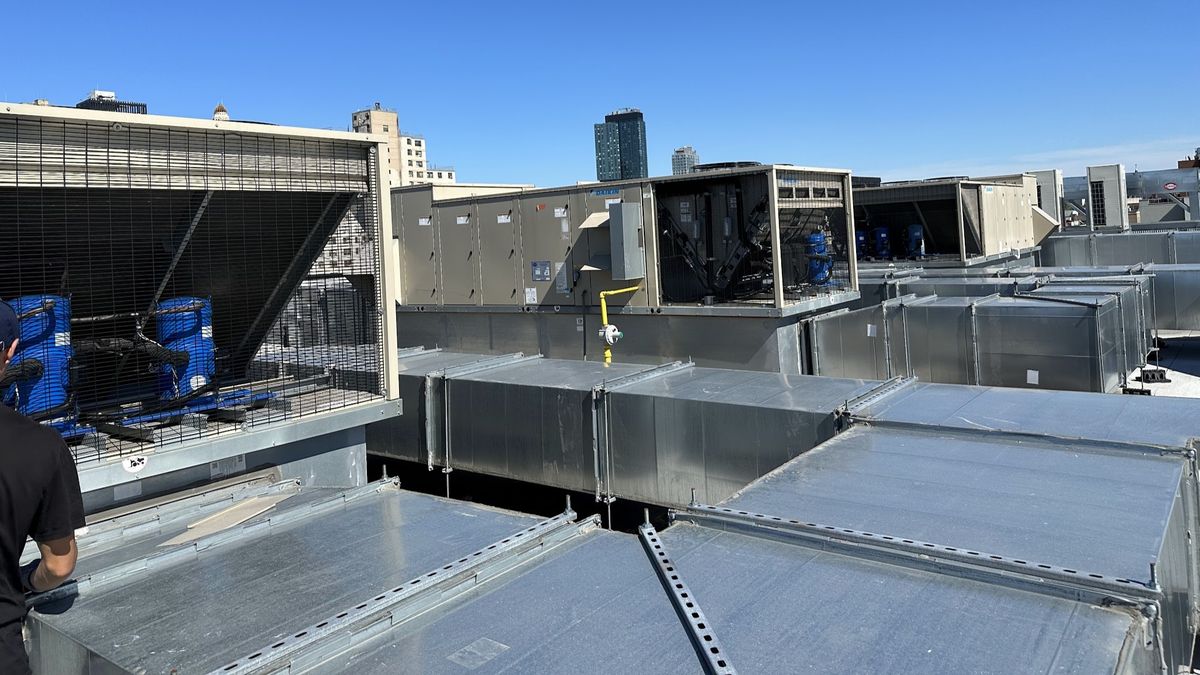
Rooftop units (RTUs) handle 90%+ of retail cooling. When they fail in July, emergency repair wait times are 24–72 hours and rates are 40–60% higher than standard. The repair itself may require parts with 3–5 day lead times.

Schedule RTU maintenance in March–April (before cooling season)
Replace belts, filters, and capacitors proactively
Clean condenser coils — rooftop grease buildup is severe in restaurant-adjacent locations
Have a backup portable cooling plan for emergencies
Warning Sign #03

Inconsistent Temperatures Between Zones

Customers in the back of the store are comfortable while the front is sweltering. Or the stockroom thermostat controls the entire floor. Multi-zone commercial systems require balanced airflow and independent controls for each area.

Verify each zone has its own thermostat and damper control
Check for blocked or disconnected ductwork in drop ceilings
Balance airflow annually — retail layouts change with seasons
Consider VRV/VRF for stores needing precise multi-zone control
Warning Sign #04

Excessive Energy Bills

If your energy costs are above $2.50/sqft/year for HVAC in a standard retail space, your system is wasting energy. Common culprits: dirty coils, failed economizers, running full-capacity during off-hours, and thermostat setpoints left at 68°F.

Audit your operating schedule — no need for full cooling when closed
Raise setpoint to 74–76°F (retail customers accept warmer than office workers)
Clean RTU coils quarterly in dusty or greasy environments
Install programmable thermostats if you don’t have them
Warning Sign #05

Poor Indoor Air Quality Complaints

Stale air, odors, or visible dust signal ventilation problems. In retail, poor IAQ triggers complaints, drives away customers, and can violate NYC ventilation codes for commercial occupancy.

Check outside air dampers — many are stuck closed or disconnected
Replace filters every 1–3 months (monthly in high-traffic stores)
Verify exhaust fans are operational (especially near food areas)
CO2 monitoring ensures adequate fresh air for occupancy levels
The Revenue Cost of HVAC Failure

A single-day HVAC failure during peak shopping season costs the average retail store $500–$2,000 in lost sales — far more than a $300 quarterly maintenance visit would have cost to prevent it. Emergency repairs add another $500–$1,500 on top of the revenue loss. Prevention isn’t just maintenance — it’s revenue protection.

Seasonal Maintenance Schedule for Retail

Spring (March–April) — Pre-Cooling Season

  • Full RTU inspection: coils, belts, bearings, electrical, refrigerant
  • Clean condenser and evaporator coils (critical for efficiency)
  • Test economizer operation and calibrate controls
  • Replace all filters and verify airflow balance

Fall (September–October) — Pre-Heating Season

  • Test heating stages and gas valve operation
  • Inspect heat exchangers for cracks (CO safety check)
  • Clean and inspect flue and venting systems
  • Verify thermostat programming for winter schedule

Monthly (Staff Tasks)

  • Replace air filters (monthly in high-traffic retail)
  • Check thermostat readings against actual room temperature
  • Inspect outdoor units for debris, damage, or unusual sounds
  • Log any temperature complaints from staff or customers
MAINTENANCE VS. EMERGENCY COSTS

What You’ll Pay: Prevention vs. Breakdown

Quarterly Maintenance Visit$250–$400
Annual Maintenance Plan$800–$1,500/yr
Emergency RTU Repair (peak)$1,000–$3,000
Lost Sales (1 day HVAC failure)$500–$2,000+

* Average for a 3,000–5,000 sqft retail space with 1–2 RTUs, NYC metro area.

Proactive Maintenance vs. Reactive?

Proactive Maintenance
Predictable $800–$1,500/yr budget
Problems caught before they cause downtime
Equipment lasts 20–25 years
Energy costs 15–25% lower
No lost sales from HVAC failures
Warranty stays valid
Reactive (Fix When It Breaks)
Unpredictable $2,000–$8,000/yr emergency costs
Failures happen during peak business hours
Equipment life shortened to 10–15 years
Energy waste from declining efficiency
$500–$2,000/day in lost sales during outages
Warranty voided by skipped maintenance
Multi-Location Management

For retailers with multiple locations, a single preventive maintenance contract covering all sites simplifies management, reduces per-location costs by 15–20%, and ensures consistent service quality across your portfolio. One vendor, one schedule, one point of contact.

Choosing the Right Maintenance Plan

Not all maintenance plans are created equal. Here’s what to look for:

  • Minimum 2 visits/year — spring pre-cooling and fall pre-heating (4 visits is better)
  • Priority emergency service — contract customers should get same-day response ahead of non-contract calls
  • Filter changes included — filters should be part of the plan, not billed separately each time
  • Detailed service reports — written documentation of findings, recommendations, and photos for your records
  • Discount on repairs — plan members should receive 10–15% off parts and labor for any repairs discovered during maintenance
The best time to set up a maintenance plan is before your busy season. For retail, that means signing a contract in February–March so your first pre-season tune-up catches everything before the summer rush.

RETAIL HVAC

Frequently Asked Questions

Find answers to common questions about our HVAC, plumbing, and refrigeration services.

How to manage HVAC maintenance in retail stores effectively means scheduling high-disruption tasks — coil cleaning, belt replacement, refrigerant checks — during pre-open hours or overnight. Routine filter changes and condensate checks take under 30 minutes per unit and can be staggered zone by zone during slow afternoon periods. A written preventive maintenance log for each unit helps track intervals and proves compliance if a landlord or health inspector requests documentation of retail store HVAC service history.

Before summer: clean condenser coils, check refrigerant charge, verify thermostat setpoints and economizer controls, and replace filters in retail air handlers. Before winter: inspect heat exchangers or heat pump reversing valves, test defrost cycles, clear condensate lines, and verify gas connections if applicable. A stuck-open economizer damper in January can add thousands of dollars in heating costs to a retail space before the malfunction is caught during a routine maintenance visit.

Research on retail environments consistently shows customer dwell time drops when indoor temperatures exceed 76 °F or fall below 68 °F. A neglected retail HVAC system that short-cycles, struggles to maintain setpoints, or produces hot spots near entrances drives customers out faster. Odors from dirty evaporator coils or standing condensate are equally harmful to retail sales performance. Comfortable, stable air conditions are directly tied to how long shoppers stay and how much they spend.

MERV 11 is a practical choice for most retail stores with high foot traffic and frequent door openings — it captures fine dust and pollen without restricting airflow to the point of straining older blower motors. MERV 13 provides better particle capture but requires confirming that the retail HVAC air handler's fan can overcome the higher pressure drop. Avoid ratings above 13 in standard commercial equipment, because airflow restriction causes coil freeze-ups and premature blower motor failures.

Each rooftop HVAC unit in a NYC retail building should have its own service record that logs refrigerant pressures, filter condition and replacement date, coil cleaning status, amperage draw on the compressor and fan motors, and any parts replaced. Photographs tied to the unit's roof identifier are useful when multiple units of the same model are present. NYC building code also requires that rooftop penetrations and equipment bases be checked for watertight integrity during any service visit to a retail building.

Keep Your Store Comfortable and Your Customers Spending

Set up a preventive maintenance plan tailored to your retail space. We’ll handle seasonal tune-ups, monthly filters, and priority emergency service — so your HVAC never costs you a sale.

Alex Weber