
Pharmacy HVAC climate control
Back to Blog HVAC TIPS

Optimizing HVAC Systems for Pharmacy Zones: Dispensary vs. Waiting Area

Apr 12, 2026 7 min read Alex Weber
Quick Read

This article covers:

  • FDA and USP temperature requirements for medication storage zones
  • How to separate dispensary, waiting area, and storage HVAC zones
  • Why standard commercial HVAC fails in pharmacy environments
  • Multi-zone system options: VRV, ductless mini-splits, and zoned RTUs
  • Energy savings from proper pharmacy zoning: 20–35% reduction

Estimated read time: 5 minutes.

A pharmacy isn't just another retail space with a cash register. Behind that counter sits tens of thousands of dollars in temperature-sensitive inventory that can become worthless — or dangerous — if the HVAC system can't maintain precise conditions. Insulin, vaccines, compounded medications, and biologics all have strict storage requirements, and a single overnight temperature excursion can destroy an entire stock.

At the same time, the waiting area where patients sit for 15–30 minutes needs standard retail comfort — 70–74°F with good air circulation. These two demands are fundamentally incompatible on a single thermostat. The solution is multi-zone climate control that treats each area as an independent environment with its own temperature setpoint, humidity target, and air quality requirements.

This guide covers the specific HVAC requirements for pharmacy environments, the system architectures that satisfy them, and how to avoid the compliance pitfalls that catch most operators off guard.
Warning Sign #01

Medication Storage Temperature Excursions

USP <797> and <800> standards require controlled room temperature storage at 68–77°F (20–25°C) for most medications, with refrigerated items at 36–46°F (2–8°C). A single documented excursion above 77°F — even for 30 minutes — can require disposal of affected inventory worth $5,000–$50,000+ and trigger Board of Pharmacy investigation.

Controlled room temperature: 68–77°F (20–25°C)
Mean kinetic temperature must not exceed 77°F
Refrigerated medications: 36–46°F (2–8°C)
Freezer items: -13 to 14°F (-25 to -10°C)
Continuous temperature monitoring with alarms is required
Excursion documentation must be reported to the Board of Pharmacy
Warning Sign #02

Humidity Damage to Medications

Excess humidity degrades tablets, capsules, and powders. Pharmacy dispensary areas should maintain 35–50% relative humidity. HVAC systems without humidity control allow summer humidity spikes to 70–80% in NYC, accelerating medication degradation and potentially invalidating expiration dates.

Target humidity: 35–50% relative humidity
NYC summer outdoor humidity: 60–85%
Standard HVAC removes some moisture but doesn't control it precisely
Dedicated dehumidification may be needed for dispensary zones
Humidity data must be logged alongside temperature data
Warning Sign #03

Cross-Contamination from Poor Air Quality

Compounding pharmacies face additional air quality requirements under USP <797>. HEPA filtration, positive pressure differentials, and controlled airflow patterns are mandated for sterile compounding areas. Standard HVAC ductwork that mixes air between zones can introduce contaminants that violate these standards.

HEPA filtration required for compounding clean rooms
Positive pressure prevents outside air infiltration
Air changes per hour (ACH): 30+ for ISO 5 clean rooms
Dedicated HVAC systems for compounding areas
Annual air quality certification required

Designing HVAC Zones for Pharmacy Environments

A properly zoned pharmacy HVAC system divides the space into at least three independent climate zones, each with its own thermostat, sensors, and control logic:

  1. Zone 1: Dispensary and Medication Storage (68–77°F, 35–50% RH). This is the critical zone. Temperature must be maintained within the USP range 24/7 — including nights, weekends, and holidays. The system needs redundancy: if the primary unit fails, a backup must activate automatically. Continuous monitoring with cellular alerts ensures someone is notified within minutes of an excursion.
  2. Zone 2: Waiting Area and Retail Floor (70–74°F). Standard comfort zone with higher occupancy loads. Requires good ventilation and air quality — especially post-COVID, patients expect clean, well-circulated air. This zone can use setback scheduling: 78°F overnight, 70–74°F during business hours.
  3. Zone 3: Back Office and Break Room (68–76°F). Lower priority comfort zone with minimal regulatory requirements. Can use wider temperature swings to save energy. Night setback to 60°F in winter, 82°F in summer.

The key principle: the dispensary zone must never be compromised for comfort in other zones. If the system has to choose between cooling the waiting area and maintaining the dispensary, the dispensary wins — always.

The 24/7 Rule for Medication Zones

Medication storage zones must maintain temperature 24 hours a day, 365 days a year — including nights, weekends, holidays, and power outages. This means: no thermostat setback in dispensary zones, backup cooling capacity (redundant unit or portable AC ready to deploy), battery-backed temperature monitoring with cellular alerts, and a documented emergency response plan for HVAC failures. A pharmacy that closes at 9 PM but lets the dispensary hit 85°F overnight has just invalidated its entire inventory.

PHARMACY HVAC SYSTEM OPTIONS

Investment by System Type

Single-Zone RTU (Not Recommended)$8,000–$15,000
Zoned RTU with VAV Boxes$18,000–$28,000
Ductless Mini-Split (Per Zone)$12,000–$22,000
VRV/VRF Multi-Zone System$35,000–$55,000

* Based on a typical 2,500–4,000 sqft pharmacy in NYC. Includes equipment, installation, and zoning controls. Does not include compounding clean room HVAC.

Multi-Zone vs. Single-Zone HVAC

Multi-Zone System (Recommended)
Independent temperature control per area (dispensary, retail, office)
Dispensary maintains 68–77°F 24/7 regardless of other zones
Energy savings of 20–35% through zone-specific scheduling
Humidity control available per zone
Redundancy options: if one zone fails, others continue operating
Meets USP and Board of Pharmacy requirements
Single-Zone System (Not Recommended)
One thermostat for entire pharmacy — constant compromise
Dispensary temperature drifts when waiting area doors open
No setback possible — must cool entire space 24/7 for medication safety
No humidity control for medication storage area
Single point of failure shuts down all climate control
Compliance risk: difficult to document zone-specific temperatures

Which HVAC System Architecture Works Best?

For most standalone pharmacies (2,500–5,000 sqft), the best options are ductless mini-split systems or VRV/VRF systems. Here's why:

  • Ductless mini-splits are ideal for retrofitting existing pharmacies. Each indoor unit operates independently with its own thermostat. Install a dedicated unit for the dispensary (set to 72°F, no setback), one for the waiting area (programmable), and one for the back office. Cost-effective, quick installation, and each zone has built-in redundancy from the other units.
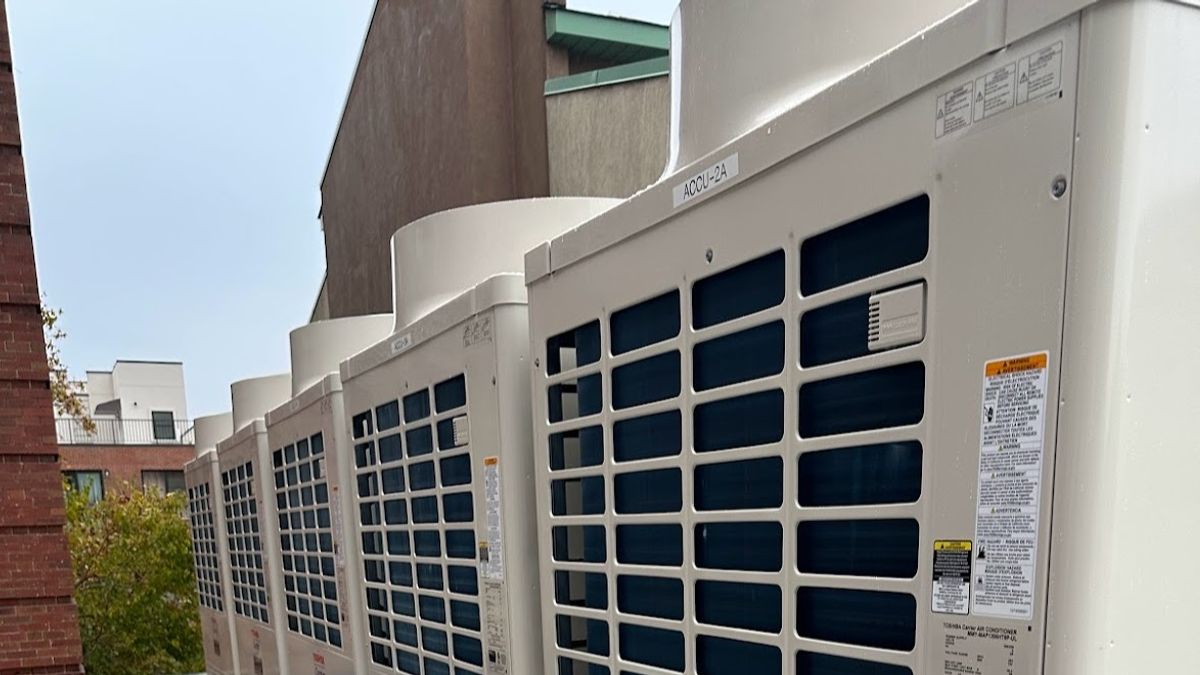
  • VRV/VRF systems are the premium choice for larger pharmacies or new construction. A single VRV outdoor unit supports multiple indoor units with precise temperature control (±0.5°F), built-in heat recovery (warming one zone while cooling another), and sophisticated controls that integrate with temperature monitoring systems.
  • Zoned RTU with VAV boxes works for pharmacies in strip malls where rooftop units are already in place. Variable air volume (VAV) boxes at each zone allow independent temperature control, though with less precision than ductless or VRV options.

Regardless of system type, pharmacy HVAC requires quarterly professional maintenance — not the bi-annual schedule adequate for standard commercial spaces. The stakes of a system failure are simply too high to defer service.

The cost difference between a single-zone system and a properly zoned pharmacy HVAC solution is $10,000–$25,000. The cost of a single temperature excursion that destroys medication inventory is $5,000–$50,000+. The math speaks for itself.
The Zoning Energy Dividend

Multi-zone pharmacy HVAC systems save 20–35% on energy costs compared to single-zone systems. The savings come from three sources: (1) setback scheduling in non-critical zones (waiting area and office) during closed hours, (2) right-sized capacity per zone instead of oversizing the entire system, and (3) VRV heat recovery that reuses waste heat from cooling zones to warm others. For a pharmacy spending $800–$1,200/month on energy, that's $2,000–$5,000 per year in savings.

PHARMACY HVAC

Frequently Asked Questions

Find answers to common questions about our HVAC, plumbing, and refrigeration services.

Most medications require controlled room temperature of 68–77°F (20–25°C) per USP standards. The mean kinetic temperature must not exceed 77°F. Refrigerated medications require 36–46°F (2–8°C), and frozen items need -13 to 14°F (-25 to -10°C). These temperatures must be maintained 24/7, including nights and weekends.

Yes. Pharmacy dispensary areas should maintain 35–50% relative humidity. Excess humidity degrades tablets, capsules, and powders, potentially invalidating expiration dates. In NYC's humid summers, standard HVAC alone often can't maintain proper humidity levels — dedicated dehumidification for the dispensary zone is recommended.

Technically yes, but it's not recommended. A single-zone system forces compromises: you can't set back temperatures in the waiting area overnight without affecting the dispensary, and door openings cause temperature swings in medication storage areas. Multi-zone systems cost 40–80% more upfront but prevent inventory losses, ensure compliance, and save 20–35% on energy through zone-specific scheduling.

A documented temperature excursion above 77°F (or below 59°F for controlled room temp) requires immediate assessment of affected medications. Depending on duration and magnitude, some or all inventory may need to be quarantined and potentially destroyed. The excursion must be documented and reported to the Board of Pharmacy. Repeated excursions can trigger inspections and jeopardize your pharmacy license.

For a typical 2,500–4,000 sqft pharmacy, multi-zone HVAC systems range from $12,000–$22,000 for ductless mini-splits to $35,000–$55,000 for VRV/VRF systems. Add $2,000–$5,000 for continuous temperature monitoring with cellular alerts. While more expensive than a standard single-zone system ($8,000–$15,000), the investment protects inventory worth $50,000–$200,000+ and ensures regulatory compliance.

Limited Availability

Pharmacy-Grade Climate Control — Protect Your Inventory

Your medications demand precise temperature and humidity control that standard commercial HVAC can't deliver. We design and install multi-zone systems specifically for pharmacy environments — protecting your inventory, your compliance, and your patients.

Alex Weber

Marketing and Sales dept