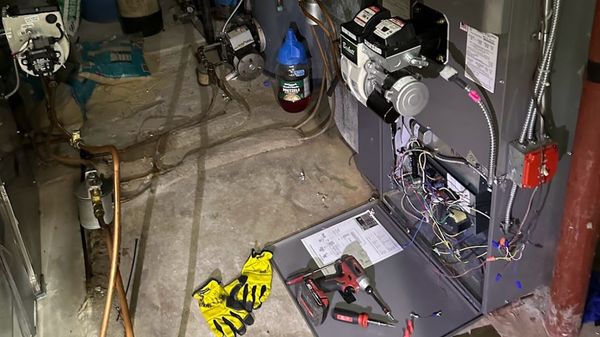
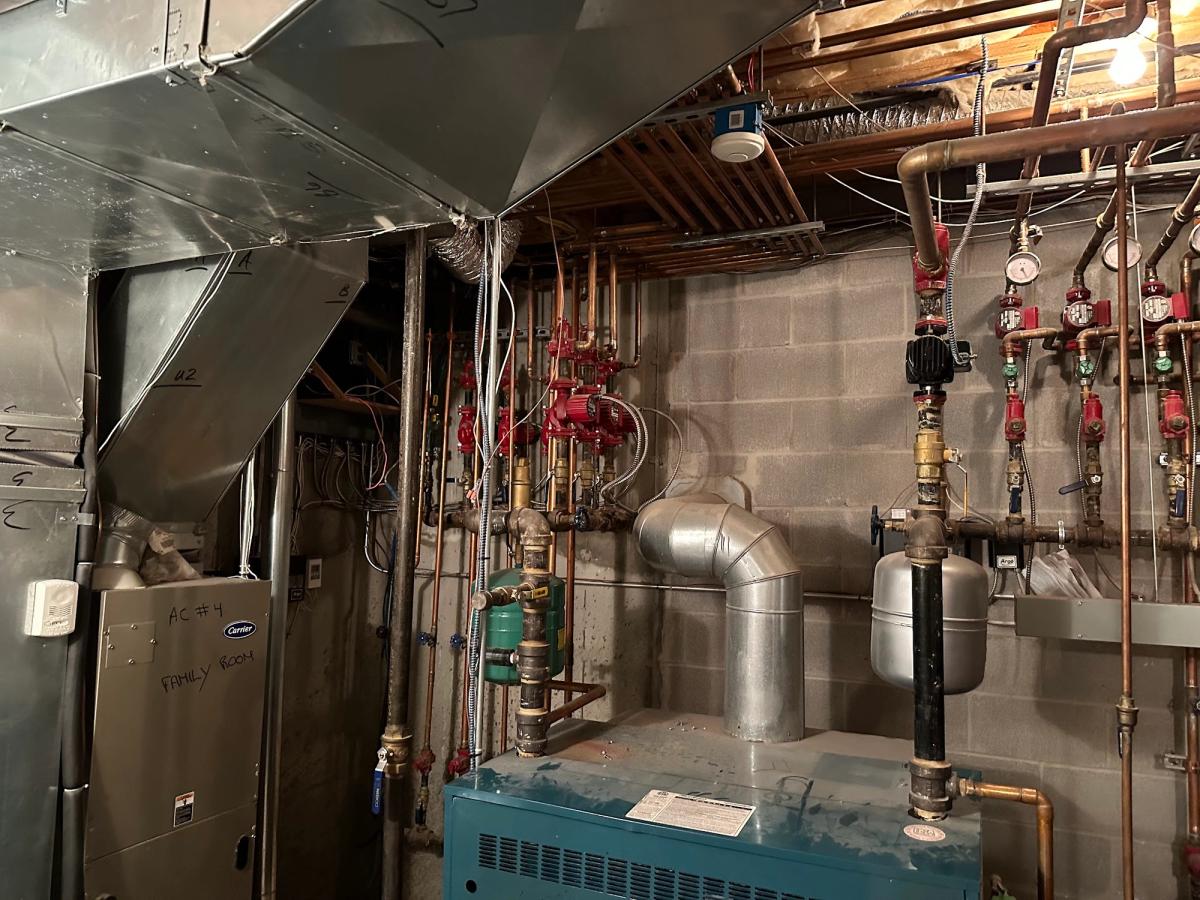
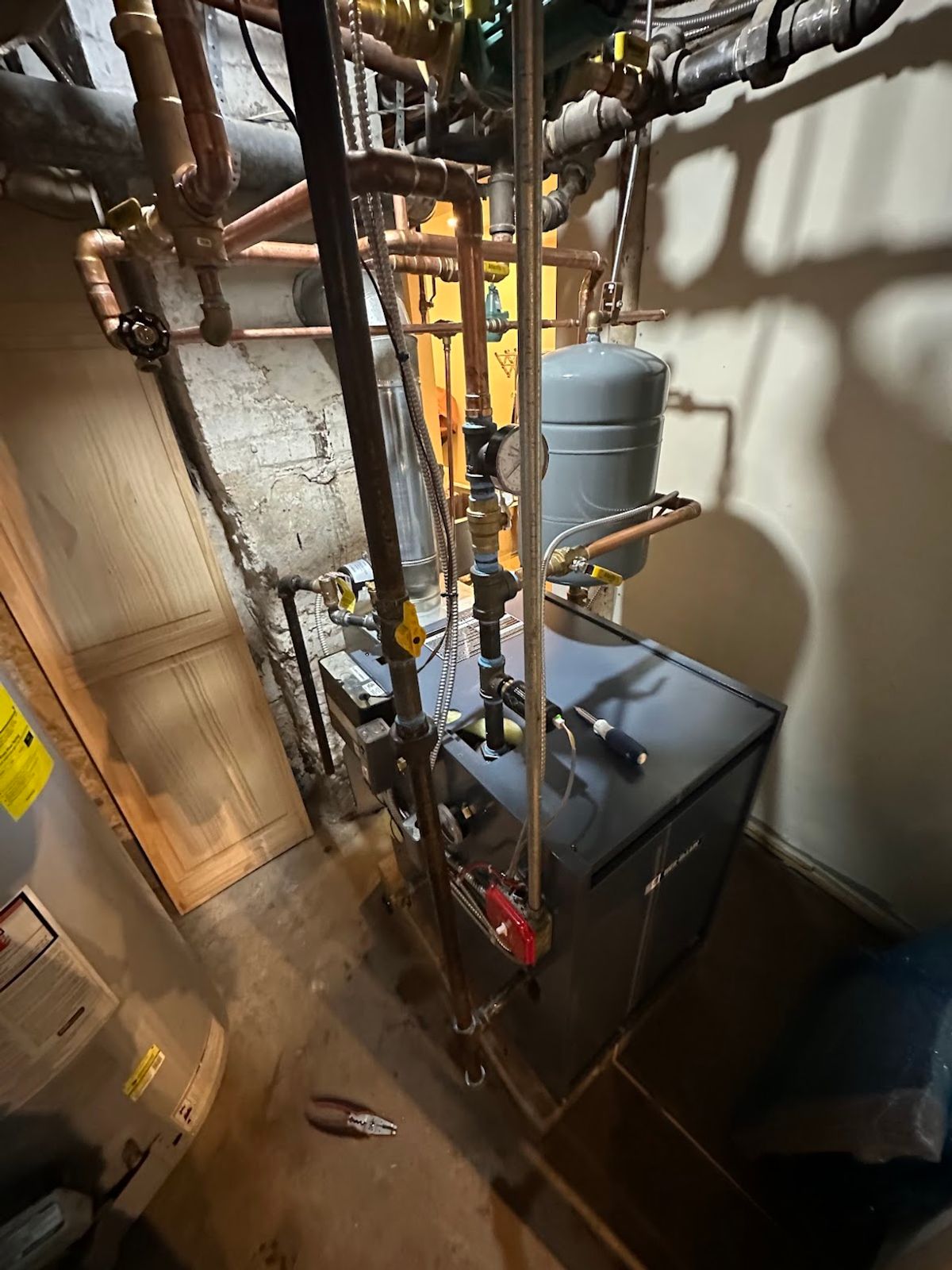
Apartment building boiler room in New York City with a cast-iron boiler, flue pipe and zone piping, ready for heat season
Back to Blog HVAC TIPS

NYC Heat Season Boiler Checklist: Getting an Apartment Building Ready for October 1

Sep 30, 2026 16 min read Alex Weber
Quick Read

This article covers:

  • What NYC law requires from October 1 through May 31: the required indoor temperature by day and by night, hot water, and what happens after a 311 heat complaint
  • An eight-point pre-season checklist for an apartment building boiler, steam or hot water, that a super can walk through with a technician this week
  • What pre-season service, the usual repairs and a boiler replacement typically cost in NYC
  • How to tell a boiler that needs a repair from one that needs replacing, and why the answer is sometimes neither
  • The paperwork: the DOB annual boiler inspection report, permits for a new boiler, and where Local Law 97 fits in

Estimated read time: 5 minutes.

In New York City, heat season is not a weather forecast. It is a legal period. From October 1 through May 31, the owner of a residential building has to keep every apartment at a required indoor temperature, day and night, whether or not the boiler is having a good week. And a tenant who is cold no longer waits for the super to pick up. They file a 311 heat complaint, it lands at HPD, the city’s housing agency, and the building’s name is now on a list.

For a property manager or a building superintendent, that makes the first cold night in October a test the boiler passes or fails in public. The good news is that most first-night failures are not mysteries. A low water cutoff that stuck over the summer. A burner nobody tuned since last spring. A flue half-blocked by a bird’s nest or crumbling chimney liner. A heat timer still set to last year’s schedule. Each of these is something a pre-season visit finds in an afternoon, and each of them is a no-heat call at 11 PM if nobody looks.

This guide is written for apartment building boilers: the steam boiler in a pre-war walk-up, and the hot water boiler in a newer building or a converted townhouse. It covers what the law asks for, a checklist you can hand to your super, what the work costs, and how to decide when to stop repairing and start pricing a boiler replacement. If you run a smaller property on a furnace, most of the checklist still applies: the flue, the combustion test and the safeties work the same way. So does the timing: heating repair in New York is easy to book in September and hard to get in the first cold week of October, and furnace repair is no different.
Step #01

1. Test the Low Water Cutoff

On a steam boiler, this is the single most important safety device in the room. The low water cutoff shuts the burner off if the water in the boiler drops too low. Without it, the burner keeps firing into an empty boiler, the cast iron overheats and cracks, and a repair turns into a replacement. Float-type cutoffs collect sludge over the summer and stick. The fix is simple, but someone has to actually test it.

Blow down a float-type cutoff and confirm the burner actually shuts off
Probe-type cutoffs: pull and clean the probe, check for scale
Confirm there are two cutoffs where the boiler requires them (primary and backup)
A cutoff that has been wired around or jumpered is an emergency, not a to-do item
During the season, float cutoffs get blown down weekly and the result goes in the boiler log
Step #02

2. Check Water Level, Pressure and the Feeder

A steam boiler should show water about halfway up the gauge glass when it is cold. A hot water boiler should hold the fill pressure it was set to, usually around 12 to 15 psi in a smaller building. If a steam boiler needs fresh water added every day, there is a leak somewhere in the pipes or the boiler itself, and that fresh water brings oxygen that corrodes the boiler from the inside.

Steam: clean the gauge glass so the super can actually read it
Steam: a water meter on the feed line shows how much makeup water the building uses
Hot water: check the expansion tank charge; a waterlogged tank is the usual reason relief valves drip
Hot water: note the pressure cold and hot, and write both down
Constant makeup water is a leak to find now, not a feeder to keep running
Step #03

3. Combustion Analysis and Burner Tune-Up

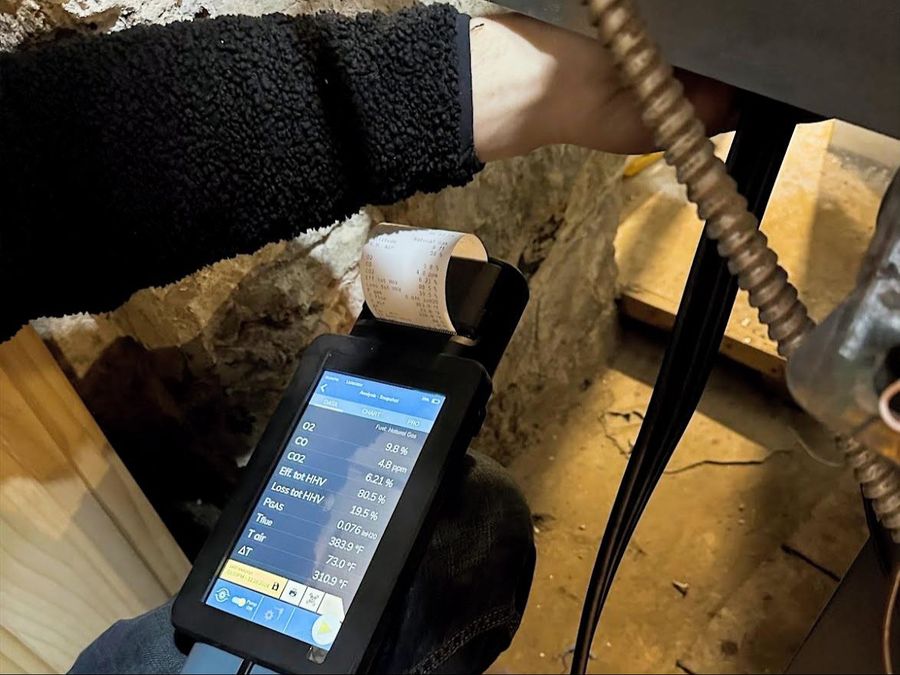
This is the test that tells you whether the boiler is burning fuel cleanly and safely. A technician puts a probe in the flue and reads oxygen, carbon monoxide, flue temperature and efficiency, then adjusts the burner until the numbers are right. A burner left untuned for a year wastes fuel, soots up the boiler and can produce carbon monoxide. You should get a printout of the readings before and after.

Clean the burner, check the ignition and flame sensor or flame rod
Oil burners: new nozzle and filter, check the pump pressure
Readings to ask for: O2, CO, flue temperature, draft and efficiency
Clean the fire side of the boiler if soot is building up
Keep the printout; it is also what an efficiency conversation starts from
Step #04

4. Inspect the Flue and Chimney

Every fuel-burning boiler has a flue: the pipe that carries exhaust out of the boiler room and up the chimney. When it is blocked or leaking, exhaust spills into the basement, the burner trips on safety, or both. One of the most common causes of a boiler that lights, runs for a few minutes and shuts down is a problem in the flue or chimney, not in the boiler itself.

Look at the flue pipe for rust, holes and loose joints
Check the chimney base clean-out for debris and fallen liner
Test the draft with the boiler running
Scorch marks or soot around the draft hood mean exhaust has been spilling
Older masonry chimneys often need a liner when a new boiler goes in
Step #05

5. Test the Safety Controls

Besides the low water cutoff, a boiler has several devices that shut it down when something is wrong: a pressure or temperature limit, a relief valve, and a flame safeguard that stops fuel if there is no flame. They sit unused most of the year, which is exactly why they need checking. A safety that has not moved in years may not move when it has to.

Steam: test the pressuretrol and confirm the high-limit cuts out
Hot water: test the high-limit aquastat
Check the relief or safety valve: no leaks, no plugs, discharge piped to a safe spot
Confirm the flame safeguard locks out when the flame is lost
Make sure the red emergency switch at the boiler room door works
Step #06

6. Steam Traps, Vents and Circulators

Half of the “boiler is not keeping up” complaints are really about the pipes. In a steam building, failed traps and stuck air vents keep steam from reaching the top floors while the lower floors bake. In a hot water building, trapped air, a weak circulator pump or a stuck zone valve leaves one riser cold. The boiler is working; the heat is not getting where it needs to go.

Steam: check the main vents and the radiator vents on the coldest apartments
Steam: test traps on two-pipe systems; a failed trap sends steam into the return line
Hot water: bleed the air out, starting at the top floor
Hot water: confirm each circulator runs and each zone valve opens
Balanced heat means fewer complaints, and a lower fuel bill
Step #07

7. Set the Controls to the Law

Most apartment buildings run the boiler from a heat timer with an outdoor sensor, and some add sensors in apartments. Check that the schedule matches the city’s day and night requirements, that the outdoor sensor is not sitting in the sun or next to a dryer vent, and that the indoor sensors are in apartments that represent the building, not the warmest unit on the second floor.

Daytime and overnight settings match the required indoor temperature
Outdoor sensor in shade, on the north side if possible
Indoor sensors in top-floor and corner apartments, where complaints start
Reset the clock after any summer power outage
Domestic hot water setting holds at least 120°F at the tap
Step #08

8. Gas, Oil and the Boiler Room Itself

The last check is the room. A boiler needs fresh air to burn properly, and the openings that bring it in are often blocked with stored boxes or closed up to stop drafts. Gas connections need a leak check. Oil tanks need a level reading and a filter. And the boiler room is not a storage room: paint, mops and old furniture next to a burner are a fire code problem as well as a fire risk.

Leak-check gas connections at the boiler and the gas valve
Oil buildings: order fuel early, check the tank gauge and change the filter
Keep combustion air openings clear
Nothing stored within a few feet of the boiler
Working carbon monoxide detector in or near the boiler room
Post who holds the boiler room key, in the lobby and on the boiler room door, as the Housing Maintenance Code requires
Flue gas analyzer printing combustion readings for oxygen, carbon monoxide and efficiency during a boiler tune-up in a NYC basement
A combustion test on a building boiler: oxygen, carbon monoxide, flue temperature and efficiency, printed on the spot. These are the numbers a pre-season tune-up should leave behind.

What NYC Law Requires During Heat Season

The rules come from the city’s Housing Maintenance Code, and HPD enforces them. They are short enough to post on the boiler room door.

  • Heat season: October 1 through May 31.
  • Daytime, 6 AM to 10 PM: when the temperature outside drops below 55°F, the inside of every apartment must be at least 68°F.
  • Overnight, 10 PM to 6 AM: the inside must be at least 62°F, no matter what the temperature is outside.
  • Hot water, all year: HPD requires a constant minimum of 120°F, 365 days a year, not only during heat season.
  • Heat complaint: a tenant calls 311 or files online. HPD contacts the building and, if heat is not restored, sends an inspector. A heat violation is Class C, “immediately hazardous,” with no grace period. If heat still is not restored, HPD’s Emergency Repair Program can hire its own contractor and bill the owner for the work plus fees. Buildings with a record of heat problems can also be selected for HPD’s Heat Sensor Program, which requires a temperature sensor in each apartment for up to four years.
  • Penalties: since December 2023, a first heat violation carries civil penalties of $350 to $1,250 per day. A repeat violation at the same building within two consecutive heat seasons runs $500 to $1,500 per day. HPD also charges $200 for each inspection that finds a third or later heat violation in the same season.

Read the overnight rule twice. Many buildings still run an old setback schedule that drops the boiler hard at night to save fuel. If the apartments fall below 62°F at 3 AM, the building is out of compliance, even if nobody has complained yet. The same goes for the top-floor corner unit that never quite warms up: the law applies to every apartment, not to the average.

The boiler does not have to be broken for the building to be in violation. It only has to be too slow, too small, or too badly balanced to keep the coldest apartment at the required temperature.
Keep a Heat Season Log

A simple notebook in the boiler room does more than you would expect. Write down the date of the pre-season service, the combustion readings, every low water cutoff blowdown, every no-heat call and what fixed it, and the indoor temperatures from your apartment sensors on cold nights. When a tenant files a heat complaint, the log shows what the building did and when. When the boiler starts to fail, the log shows the pattern: the same control every January, a feeder running more each week. And when you price a replacement, it is the first thing a good contractor will ask to see.

TYPICAL COST BY SCOPE

What Boiler Work Typically Costs in NYC

Pre-Season Tune-Up with Combustion Analysis, One Boiler$350–$900
Low Water Cutoff, Relief Valve or Pressure Control Replacement$400–$1,500
Burner Repair or Rebuild, Ignition and Flame Safeguard$800–$4,000
Steam Condensate or Boiler Feed Pump Replacement$2,500–$8,000
Boiler Replacement, Row House or Small Building (2–5 Units)$8,000–$15,000
Boiler Replacement, Apartment Building (6–30 Units)$30,000–$90,000
Larger Buildings, Multiple or Modular Boilers$90,000–$250,000+

* Typical NYC ranges for scheduled work in 2026. Replacement ranges include removal of the old boiler, piping, controls and venting; a new chimney liner, asbestos abatement on old pipe insulation, rigging through a tight basement, gas service upgrades and oil tank removal are priced separately and can move the total a lot. Emergency and after-hours work runs higher. Planning ranges, not a quote.

When the Boiler Can’t Keep Up: Repair or Replace?

Every boiler gets to a point where the next repair is money spent on a machine that will fail again next winter. The trick is recognizing that point before it arrives in January. These are the signals that matter.

  1. The boiler itself is leaking. A cracked cast-iron section, a leaking steel tube, water pooling under the boiler with no pipe leak above it. Controls, burners and pumps can be replaced; the pressure vessel is the boiler. Once it leaks, replacement is the realistic answer, and doing it on your schedule is much cheaper than doing it on the boiler’s.
  2. The apartments are cold even when the boiler runs nonstop. First rule out the pipes, because a new boiler will not fix failed steam traps or air-bound risers (see step 6 above). If the distribution checks out and the boiler still cannot hold temperature on a cold day, it is undersized for the building as it is today, or it has lost so much efficiency that its real output is far below the nameplate.
  3. The repair bills keep stacking up. A rough rule many owners use: when a single season’s repairs head past a third of what a replacement would cost, and the boiler is 25 years old or more, get a replacement price before you approve the next repair. Old steam boilers often last longer than that, so age alone is not the reason. Age plus a pattern of failures is.
  4. It still burns oil, or it was sized for a different century. No. 6 heating oil has been banned in the city since 2020, and No. 4 oil is banned in boilers from July 1, 2027. For a building still burning No. 4, this winter is the last heat season on that fuel, and the conversion needs to be planned now. Many older buildings also run boilers that are far bigger than the building needs, sized decades ago with generous margins and never revisited. An oversized boiler short-cycles, wastes fuel and wears out its controls. Replacement is the chance to size it properly.
  5. The building faces Local Law 97. If the building is large enough to be covered, its carbon emissions are now capped, and the boiler is usually the biggest source. A replacement decision made today should be made with those limits in mind. More on that in the paperwork section below.
A new boiler on a building with broken steam traps is an expensive way to keep the same complaints. We check the pipes before we quote the boiler.

Timing matters as much as the decision. A boiler replacement in an occupied building is best done between June and September, when the building only needs hot water. Once heat season starts, a replacement means a temporary boiler or a planned outage, and the permit process takes weeks either way. If this winter’s signs are pointing toward replacement, the right move is to get the site survey and the boiler replacement quote in hand now, keep the old boiler running safely through the season, and schedule the work for spring. For mixed-use and commercial properties, the same planning applies to the rest of the building’s equipment; our commercial HVAC installation team handles those projects.

Keep Repairing or Start Pricing a Replacement?

Keep Repairing When…
The problem is a control, a burner part, a pump or a valve, not the boiler itself
Combustion readings come back to normal after a tune-up
Cold apartments are explained by traps, vents or balancing
Repairs this season are a small fraction of replacement cost
The boiler is sized right for the building
The building is not facing an emissions deadline it cannot meet
Start Pricing a Replacement When…
The boiler sections or tubes are leaking
It cannot hold required temperatures even with the pipes fixed
Repairs are adding up to a third of replacement cost, on a 25-year-old boiler
Efficiency stays low after a proper tune-up
It burns oil, or it is heavily oversized for the building
Local Law 97 limits make the current setup expensive to keep
Three Things Never to Do to Get the Heat Back On

Never jumper, bypass or disable a low water cutoff. It is the reason the boiler shut off, and running a steam boiler without water is how cast iron cracks and boiler rooms get damaged. Never cap, plug or tie down a relief valve that is dripping; the drip is a symptom, usually of a waterlogged expansion tank or too much pressure, and the valve is the last thing between that pressure and the room. And never keep resetting a burner that keeps locking out: a lockout means the flame safeguard saw something wrong, often a flue or combustion problem that can put carbon monoxide into the building. If you smell gas, do not touch switches: get everyone out, then call 911 and your gas utility from outside.

The Paperwork: Inspections, Permits and Local Law 97

A boiler in a New York apartment building comes with its own paper trail. Here is what a property manager should have on the calendar.

  • Annual boiler inspection report. Low-pressure boilers in residential buildings with six or more apartments, and in commercial and mixed-use buildings, must be inspected every calendar year, whatever their size. The owner hires the inspector: a DOB-approved boiler inspector or an authorized boiler insurance company. The report has to be filed in DOB NOW: Safety within 14 days of the inspection, and any defects must be corrected within 90 days. Late filing costs $50 per month per boiler, up to $600; not filing costs $1,000 per boiler. Buildings with five or fewer apartments are exempt, and so is a boiler inside one apartment that heats only that apartment. High-pressure boilers are inspected twice a year by an authorized insurance company.
  • DOB boiler permit for a replacement. Replacing a boiler is filed in DOB NOW: Build as Boiler Equipment work, and the permit is issued only to a Licensed Master Plumber or a Licensed Oil Burner Installer. Above 1 million Btu/h of input, a registered engineer or architect also has to file plans. The new boiler cannot go into service until DOB inspects it; once that first inspection passes, no separate annual report is needed for that year.
  • Gas work. The new boiler’s gas connection, and any upgrade to the gas service it needs, is permitted plumbing work. Gas line work is performed under an NYC Master Plumber license, with full DOB permits filed. Separately, Local Law 152 requires a building’s gas piping to be inspected by a Licensed Master Plumber at least every four years; buildings in community districts 4, 6, 8, 9 and 16 are due by December 31, 2026.
  • Air permits. Boilers rated at 350,000 Btu/h and up also need a DEP registration, renewed every three years, and several smaller boilers in the same building count together toward that threshold. Very large boilers, 4.2 million Btu/h and above, need a DEP work permit and a certificate of operation instead.
  • Local Law 97. Buildings over 25,000 square feet now have yearly carbon emission limits. For apartment buildings the limit drops by roughly 40 percent in 2030, and the fine is $268 for every metric ton over the cap. Reports are due May 1 each year. Many buildings with rent-regulated apartments follow a list of required measures instead, and most of them are boiler-room work: repairing heating leaks, maintaining the heating system, insulating heating and hot water pipes, fixing steam traps, venting steam mains and risers, and installing indoor and outdoor sensors with boiler controls. In other words, the checklist above is also emissions work.

None of this has to be a scramble. A building on a maintenance plan gets the pre-season service, the safety checks and the written records on a schedule, so the inspection finds a boiler that was already looked after. We work on boiler rooms across the city, from pre-war walk-ups in Brooklyn to co-ops and mixed-use buildings in Manhattan, and the paperwork looks the same in both.

NYC HEAT SEASON & BUILDING BOILERS

Frequently Asked Questions

Find answers to common questions about our HVAC, plumbing, and refrigeration services.

Heat season in New York City runs from October 1 through May 31. During those months, residential building owners must keep apartments at the required indoor temperature: at least 68°F between 6 AM and 10 PM whenever it is below 55°F outside, and at least 62°F between 10 PM and 6 AM regardless of the outdoor temperature. Hot water must be kept at a constant minimum of 120°F, 365 days a year, not only during heat season.

From October 1 through May 31, the required indoor temperature is at least 68°F during the day, from 6 AM to 10 PM, when the outside temperature falls below 55°F. At night, from 10 PM to 6 AM, it must be at least 62°F no matter how warm or cold it is outside. The rule applies to every apartment, so a building where the lower floors are warm but the top-floor corner unit sits at 64°F in the evening is out of compliance.

HPD tries to reach the owner or managing agent to get the heat back on, may contact the tenant, and sends an inspector. If the apartment is below the required temperature, the building gets a Class C, immediately hazardous violation. Since December 2023 the civil penalties are $350 to $1,250 per day for a first violation and $500 to $1,500 per day for a repeat violation at the same building within two consecutive heat seasons. If heat still is not restored, HPD’s Emergency Repair Program can send its own contractor and bill the owner. From the third heat violation in a season, HPD also charges $200 for each inspection that finds one. The cheapest way to avoid all of this is a super who answers cold-apartment calls before they become 311 calls.

Low-pressure boilers in buildings with six or more apartments, and in commercial or mixed-use buildings, need a DOB inspection every calendar year, regardless of the boiler’s size. The owner hires the inspector, the annual boiler inspection report must be filed in DOB NOW: Safety within 14 days of the inspection, and any defects must be corrected within 90 days. Late filing costs $50 per month per boiler, up to $600, and not filing costs $1,000 per boiler. Buildings with five or fewer apartments are exempt from the DOB inspection, but an annual pre-season service is still the best protection against a mid-winter breakdown. High-pressure boilers are inspected twice a year.

A proper tune-up for an apartment building boiler covers the low water cutoff and every other safety control, water level or system pressure, the burner (cleaned, adjusted, and on oil, a new nozzle and filter), a combustion analysis with printed readings for oxygen, carbon monoxide, flue temperature and efficiency, a flue and chimney check, and a look at the controls and sensors. On steam systems it should include the main vents and a sample of traps; on hot water systems, air bleeding and a check of every circulator and zone valve. For a single boiler it typically takes a few hours and runs $350–$900 in NYC.

It depends mostly on the size of the building and what the old boiler room needs. Typical NYC ranges in 2026: $8,000–$15,000 for a row house or a building with two to five units, $30,000–$90,000 for an apartment building of roughly 6 to 30 units, and $90,000–$250,000 or more for larger buildings or setups with multiple boilers. A new chimney liner, asbestos abatement on old pipe insulation, rigging, a gas service upgrade or oil tank removal are priced separately. The DOB permit and sign-off are part of any replacement, so the best time to plan one is in spring, for installation before the next heat season.

Not automatically. Local Law 97 applies to buildings over 25,000 square feet and caps their yearly carbon emissions, with a much stricter limit from 2030 and a fine of $268 per metric ton over the cap. For some buildings, a well-maintained boiler with working steam traps, insulated pipes and proper controls is enough for the current 2024–2029 limit, and a right-sized efficient boiler may carry them further. For others, the 2030 limit points toward partial or full electrification with heat pumps. The answer comes from the building’s own emissions numbers, which the annual LL97 report already calculates. If the boiler is near the end of its life, price both options before replacing it like-for-like, because a new boiler is a 25-year decision.

Heat Season Starts October 1. Is Your Boiler Ready?

Tell us about the building: steam or hot water, how many units, how old the boiler is, and what went wrong last winter. We come out, test the low water cutoff and the safeties, run a combustion analysis, check the flue and the controls, and leave you with written readings and a clear list of what to fix now, what can wait, and whether it is time to plan a replacement.

Alex Weber