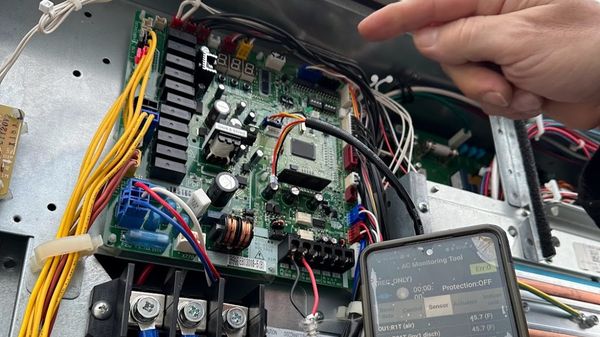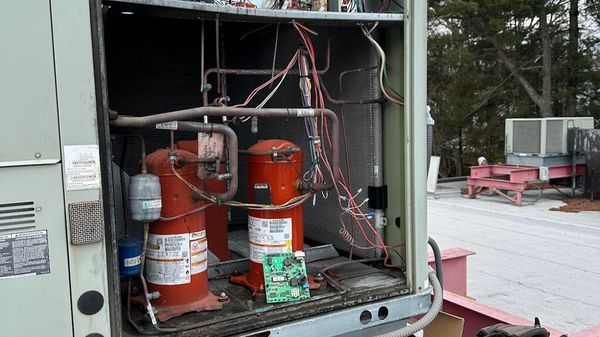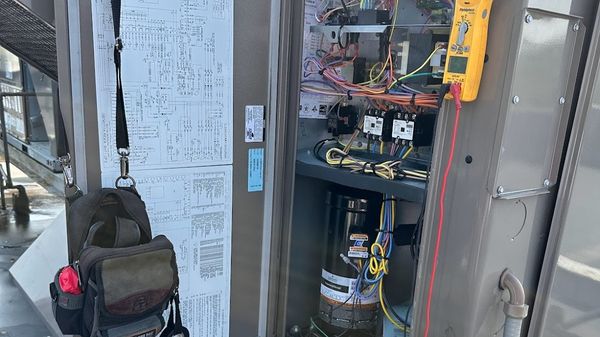
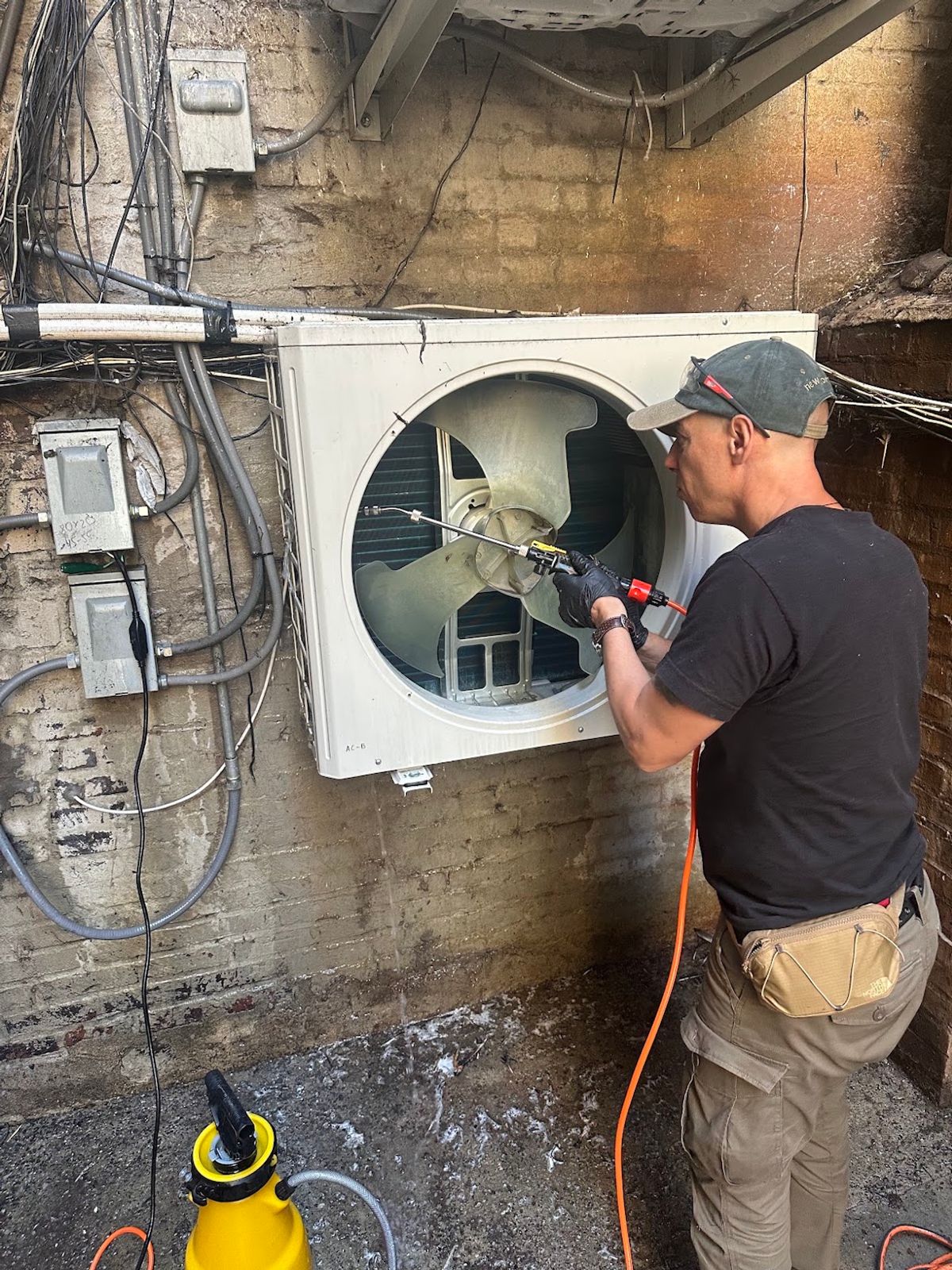
Art HVAC technician cleaning the condenser coil of a wall-mounted condensing unit in a narrow New York back alley
Back to Blog HVAC TIPS

Walk-In Cooler Not Cooling? Causes, Fast Fixes & When to Call a NYC Pro

Aug 20, 2026 11 min read Alex Weber
Quick Read

This article covers:

  • What to do in the first fifteen minutes, before you touch the equipment
  • The eight causes behind almost every “not cooling” call, in the order a technician checks them
  • Why frost on the evaporator and frost on the suction line mean two different things
  • What each repair typically runs in NYC — and which ones are a $40 fix
  • The federal leak-repair rules that changed on January 1, 2026, and what they mean for a top-off

Estimated read time: 5 minutes.

A walk-in that will not hold temperature is not one problem. It is a symptom with about eight common causes, and they sit at wildly different prices — a door gasket is forty dollars, a compressor is several thousand. The useful part, for most operators, is that the cheap causes are also the common ones. In a working kitchen, the single most likely reason a cooler is running warm is that the box is being asked to do something it was never designed to do: hold temperature with the door open, with the condenser breathing its own hot air, or with a hundred pounds of hot product loaded in at once.

Before diagnosing anything, deal with the food. New York City’s Health Code requires potentially hazardous food to be held at or below 41°F, so a cooler drifting through the mid-40s is a violation waiting for an inspector, not just an inconvenience. Check product temperature with a probe rather than reading the box thermometer — the two disagree more often than not. If product is above 41°F, move it or ice it down while you work the problem. That call is easier to make at 2pm than at 11pm, which is the honest argument for phoning an emergency refrigeration line early rather than watching the number climb.

The list below runs in the order a refrigeration technician actually works: what you can see without tools, then what needs gauges, then what needs parts. It applies to a walk-in cooler and a walk-in freezer alike, with the differences noted along the way — and to reach-ins and refrigerated display cases too, since they run the same refrigeration cycle in a smaller cabinet.
Cause #01

1. The Door — Gasket, Closer, or Simply Left Open

The most common cause in every commercial kitchen, and the one nobody wants to hear. A door held open through a delivery pours warm, humid air across the evaporator faster than the system can remove it. A gasket gone hard, torn, or short of magnet does the same thing continuously, around the clock. Frost building on the ceiling near the door, or condensation running down the inside of the panels, is an air leak — not a refrigeration fault.

Close the door on a dollar bill — if it pulls out freely, the gasket is done
Check the closer and the hinges; a door that does not self-close leaks all day
Strip curtains cut infiltration during loading and cost very little
Frost near the door rather than on the coil points at humid air getting in
A gasket set is the cheapest repair on this list by a wide margin
Cause #02

2. A Dirty or Air-Starved Condenser

The condensing unit rejects the heat the system pulled out of the box. Blanket its coil in kitchen grease and dust and it cannot. Head pressure climbs, capacity drops, and the box warms while the compressor runs without stopping. New York placement makes it worse: condensers tucked into airshafts, basements and alcoves recirculate their own discharge air, so the unit is trying to reject heat into air it just heated.

Symptom: runs nonstop, box slowly warms, compressor hot to the touch
Grease-laden dust needs coil cleaner and rinsing, not a brush
Keep three feet of clear air around the unit — no cardboard, no stock
Basement and airshaft placements need real ventilation to work at all
Condenser cleaning is the highest-value maintenance visit there is
Cause #03

3. An Iced-Over Evaporator or Failed Defrost

The evaporator inside the box runs below freezing, so moisture condenses and frosts on it. Defrost clears that frost on a schedule. When defrost fails — a burned heater, a stuck timer, a bad termination sensor — the coil packs solid until air stops moving through it. The compressor keeps running, the box keeps warming, and the coil stops being a heat exchanger and starts being a block of ice.

Light, even frost is normal; a solid white block is not
Coolers usually defrost off-cycle; freezers need electric or hot-gas heaters
A clogged or frozen drain line refreezes meltwater straight back onto the coil
Never chip ice off a coil — the fins tear and the tubing punctures
After any defrost repair the box needs hours to pull back down
Cause #04

4. Airflow Blocked Inside the Box

Evaporators throw air across the whole room for a reason: the temperature you read on the wall is only true if air is circulating. Stack cases against the coil, wrap shelving in plastic, or load the box past its shelving and you get cold spots and warm spots in the same room. This shows up as a box reading fine on the controller while product on one shelf sits at 47°F.

Keep roughly 18 inches clear in front of and under the evaporator
Do not store product against the walls or directly on the floor
Hot product loaded in bulk can lift the whole box for hours
Probe product in several places, not just the shelf nearest the door
Overloaded boxes are the most common false alarm we get called out for
Cause #05

5. Low Refrigerant — Which Means a Leak

Refrigerant is not consumed. If the charge is low it left through a hole, and the hole is usually a flare, a braze joint, a Schrader core, or a coil that kitchen acids have eaten through. A system low on charge still runs; it simply cannot pull the box down, and frost creeps back along the suction line. Adding gas without finding the leak buys a few weeks — and since January 1, 2026 it may not be lawful for your equipment.

Symptom: runs constantly, box holds 8–15°F above setpoint
Frost creeping down the suction line is a classic low-charge sign
A leak search means nitrogen and an electronic detector, not a guess
From Jan 1, 2026 federal rules cover HFC appliances holding 15 lb or more
For commercial refrigeration, a 20% annual leak rate triggers a duty to repair
Cause #06

6. Controls Out of Calibration or Failing

The box does not know its own temperature; a sensor tells it. Sensors drift, get knocked out of their holder, or end up sitting in the discharge airstream where they read cold while the room is warm. Add the electromechanical parts — contactor, relay, pressure controls — and a meaningful share of no-cooling calls turn out to be a control problem on a mechanically healthy system.

Verify with a calibrated probe before believing the display
A sensor in the wrong airstream reads several degrees off
Pitted contactor points are a common no-start cause
A low-pressure control cutting out early mimics low charge exactly
Control repairs are usually same-visit and inexpensive
Cause #07

7. A Failed Fan Motor — Condenser or Evaporator

Both coils need air moving across them. A dead condenser fan sends head pressure through the roof and puts the compressor on its overload within minutes. A dead evaporator fan leaves the coil freezing solid with no air moving through the box. Either way the compressor may sound perfectly normal, which is why “the unit is running” is not evidence that anything is working.

Listen at both coils — running compressor, still fan blades is the tell
Condenser fan failure often trips the compressor on overload
Evaporator fan failure ices the coil within hours
Motor bearings usually get noisy weeks before they quit
Fan motors are stocked parts and typically a same-day repair
Cause #08

8. The Compressor Itself

The expensive one, and the least common. A failing compressor short-cycles on its internal overload, draws high amps, hums without starting, or runs with almost no pressure difference between suction and discharge. Before condemning it, a technician checks the cheaper suspects above — because a compressor that has burned out usually did so because of something else: a leak that starved it of oil, a dirty condenser that cooked it, or a contactor that chattered.

Symptom: hums and trips, or runs with no pressure differential
Most compressor failures are the consequence of an untreated fault
Always ask what killed it before paying to replace it
Past about ten years, replacing the condensing unit often wins
A burnout needs a full system cleanup, not just a new compressor
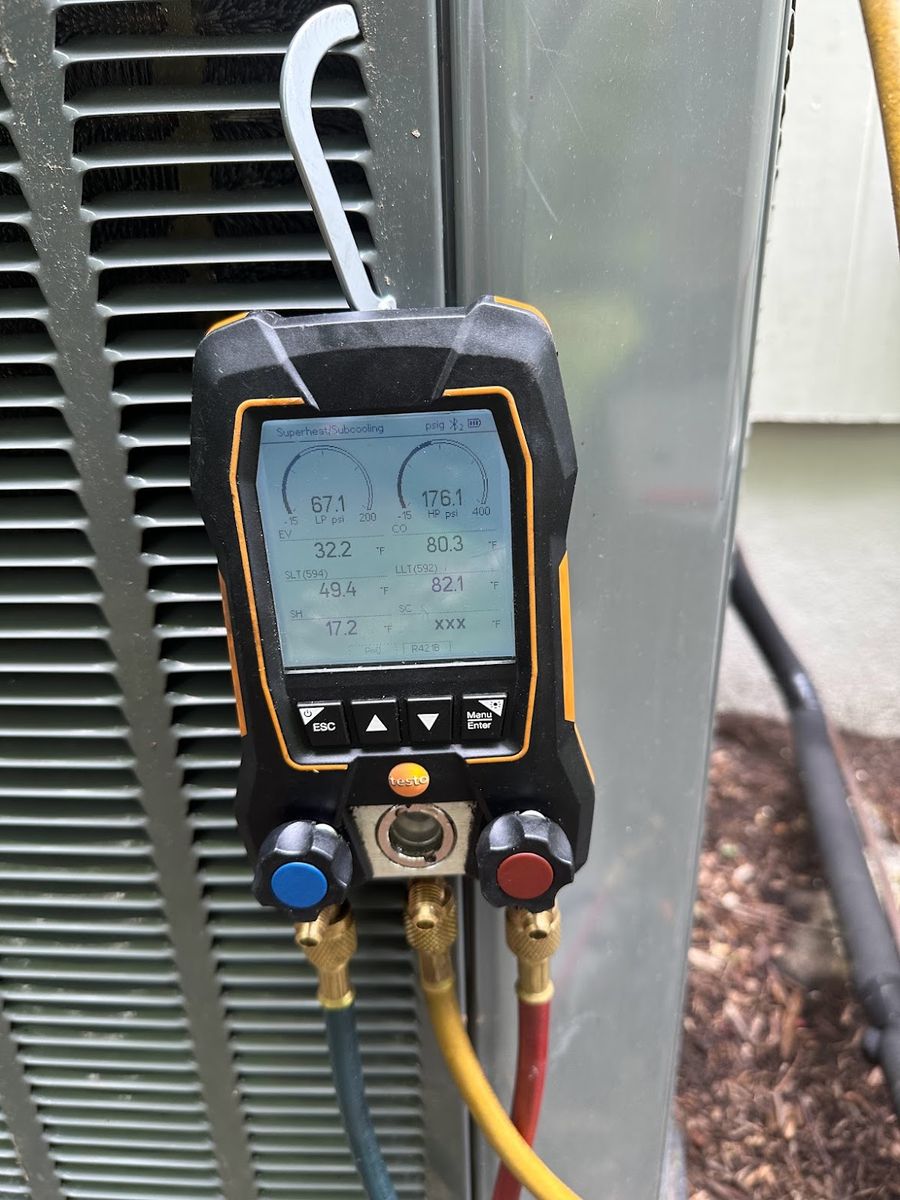
Digital manifold gauges reading suction and discharge pressures, superheat and subcooling on a commercial refrigeration condensing unit
Superheat and subcooling on a commercial refrigeration system. Numbers like these are what separate “the charge is genuinely low” from “something else — airflow, a restriction, a control — is making it look that way.”
The First Fifteen Minutes

Do this before you touch the equipment. One: probe the product, not the box — several items, in several places. Two: if anything reads above 41°F, move it to a working box or ice it down, and write down the time and the temperature, because that log is what protects you in an inspection. Three: look at the door and only the door — gasket, closer, anything propping it open. Four: walk to the condensing unit and hold a hand near the discharge air; a unit blowing hot air hard is working, a unit blowing nothing has a fan or a compressor problem. Five: look at the evaporator inside the box for ice. Those five checks take a quarter of an hour, cost nothing, and hand a technician the three facts that shorten the visit.

TYPICAL REPAIR COST BY CAUSE

What Walk-In Repairs Typically Cost in NYC

Door Gasket, Sweep or Strip Curtain$40–$300
Diagnostic Visit + Condenser Coil Cleaning$250–$600
Fan Motor, Defrost Heater, Timer or Controls$400–$1,200
Leak Search, Repair & Recharge$600–$2,500
Compressor or Condensing Unit Replacement$3,000–$9,000+

* Typical NYC ranges for parts and labor on a scheduled visit. The everyday walk-in repairs sit in the first three rows; the last two are the less common jobs. Nights, weekends and holidays run higher, and proprietary or long-lead parts push past these figures. Diagnostics are usually credited toward the repair. Planning ranges, not a quote.

Cooler vs. Freezer — Same Symptom, Different Read

Walk-In Cooler (35–38°F)
Product must stay at or below 41°F — that is the legal line, not the setpoint
Light frost on the coil is normal; most coolers defrost off-cycle
A few hours of drift is usually recoverable without losing inventory
Most likely causes: the door, a dirty condenser, blocked airflow
Heavy condensation inside points at infiltration, not at the machine
Pull-down after a repair takes a few hours
Walk-In Freezer (−10 to 0°F)
Product that has softened has already lost quality, whatever it reads later
Needs a real defrost cycle — electric or hot gas — on a timer
Failures show up faster and cost more; move product early
Most likely causes: failed defrost, an iced coil, low charge
A frozen drain line refreezes meltwater straight back onto the coil
Pull-down after a repair can take a day or more

When to Stop Troubleshooting and Call

Most of what is above is safe to check yourself, and checking it makes the service call shorter and cheaper. A few situations are not worth a minute of do-it-yourself:

  1. The box is above 41°F and climbing. This is a food-safety clock, not a repair schedule. Move product, log temperatures, and get a technician moving. Every hour spent investigating is inventory you may end up discarding anyway.
  2. The compressor is tripping the breaker. Resetting a breaker on refrigeration equipment more than once is how a struggling compressor becomes a burnout, and a burnout contaminates the whole system with acid. One reset to confirm the symptom; after that, leave it off.
  3. The coil is a block of ice. Shut the box down and let it defrost on its own or with fans — never with a pick, a screwdriver, or a heat gun. Punctured evaporator fins mean a refrigerant leak on top of the original problem, and the job moves from a defrost part to an emergency refrigeration repair with a coil replacement attached.
  4. You are adding refrigerant more than once a season. That is not maintenance, it is a leak with a subscription. Beyond the running cost, federal rules that took effect on January 1, 2026 extended leak-repair, verification and recordkeeping obligations to appliances holding 15 pounds or more of HFC refrigerant — and repeated top-offs on a leaking system are exactly what those rules exist to end.
  5. The same fault keeps coming back. A defrost heater that fails twice in a year, a contactor replaced every spring, a compressor that trips every August — these are downstream symptoms. Something upstream is causing them, and it almost always costs less to find than to keep paying for the same part.
Almost every emergency refrigeration call we take on a Friday night was visible as a maintenance item in the spring.

The pattern is consistent enough to plan around. Condenser coils foul on a schedule you could predict from the kitchen’s menu; gaskets harden over a couple of seasons; defrost heaters fail without warning but announce themselves first as ice that clears a little more slowly each week. A quarterly refrigeration maintenance visit catches the first two outright. We cover walk-in coolers and freezers and commercial ice machines across the boroughs — Manhattan kitchens especially, where condensers live in airshafts and basements and the summer failure rate reflects it. And if the box has simply stopped fitting what the business now does, that is a custom cold storage conversation rather than a repair one.

Three Things Not to Wait On

Product above 41°F, a compressor tripping its breaker repeatedly, or a sharp chemical smell around the condensing unit are not troubleshooting items. The first is a health-code and inventory problem that gets worse every hour it runs. The second risks a compressor burnout that turns a repair into a system replacement. The third can mean an overheating motor or a refrigerant leak in an enclosed space, which is a ventilation and safety question before it is a refrigeration one. Shut the unit down at the disconnect, move product, and get someone in.

WALK-IN COOLER PROBLEMS

Frequently Asked Questions

Find answers to common questions about our HVAC, plumbing, and refrigeration services.

Running and cooling are two different things. The most common answer is that the condenser cannot reject heat — a coil packed with grease and dust, or a unit stuck in an airshaft breathing its own discharge air. Next most common is a door problem letting warm, humid air in faster than the system removes it. After that, a failed condenser or evaporator fan, which leaves the compressor running against a coil with no air across it. Check the door and the condenser coil first; between them they account for a large share of the calls we take.

Most walk-in coolers are set between 35°F and 38°F. The number that matters is not the setpoint but the product temperature: New York City’s Health Code requires potentially hazardous food to be held at or below 41°F, so the setpoint has to leave headroom for door openings, deliveries and defrost cycles. Freezers typically run between −10°F and 0°F. Verify with a calibrated probe in the product rather than trusting the controller display, because a sensor sitting in the wrong airstream can read several degrees off.

Longer than most people expect if the door stays shut, and much shorter if it does not. A well-insulated, full box loses temperature slowly, but the clock that counts is product temperature, not box temperature — once food goes above 41°F you are into time-based decisions a health inspector will ask about. Keep the door closed, probe product rather than air, log the readings with times, and move what you can into a working box. That log is what lets you defend the decisions afterwards.

A light, even coat of frost is normal — the coil runs below freezing and moisture condenses on it. What is not normal is a solid block of ice that does not clear after a defrost cycle, or frost that returns within an hour of defrosting. That points at a failed defrost heater, a stuck timer or termination sensor, or a blocked drain line refreezing meltwater back onto the coil. Frost creeping down the suction line outside the box is a different signal entirely and usually means low charge or an airflow restriction.

Refrigerant is not consumed, so a low charge always means a leak. Topping off without finding it buys a few weeks, costs the same money again, and risks the compressor, which depends on refrigerant flow to return its oil. There is a regulatory dimension now as well: federal rules effective January 1, 2026 apply leak repair, verification and recordkeeping requirements to appliances holding 15 pounds or more of HFC refrigerant, with a 20% annual leak rate as the trigger for commercial refrigeration. A proper leak search with nitrogen and an electronic detector costs less than the second recharge.

It depends on age and on cause. On a unit under about eight years old with a clear external reason for the failure — a dirty condenser, a chattering contactor, a leak that starved it of oil — replacing the compressor and fixing the cause is usually worth it. Past ten years, or after a burnout that has contaminated the system with acid, replacing the whole condensing unit is often cheaper once you count the cleanup, the labor and the efficiency you gain. Ask any contractor to tell you what killed the compressor before approving either path; if they cannot say, that is your answer about the quote.

Walk-In Down, or Drifting the Wrong Way?

Tell us what the box is reading, what the product is reading, and what you have already checked — that is usually enough for us to bring the right parts on the first trip. We service walk-in coolers and freezers, reach-ins, display cases and ice machines across all five boroughs, including the nights and weekends when refrigeration decides to quit.

Alex Weber