Ductless Mini-Split Installation in NYC by Art HVAC Licensed Commercial Mini-Split Heat Pump Contractor Expert Team
Back to Blog HVAC TIPS

What Is a Mini-Split HVAC System — And Is It Right for Your NYC Apartment?

Jun 17, 2026 8 min read Alex Weber
Quick Read

This article covers:

  • What a ductless mini-split actually is — and how it differs from window units and central air
  • The four core components and how refrigerant (not air) carries heating and cooling between them
  • Why mini-splits fit NYC apartments, brownstones, and pre-war co-ops with no room for ducts
  • The co-op/condo board approval, DOB permit, and façade rules that govern the outdoor unit
  • How a mini-split doubles as a heat pump — and where it fits NYC’s Local Law 97 electrification push

Estimated read time: 5 minutes.

If you live in a NYC apartment, your options for climate control have historically been grim: a noisy window unit that blocks light and leaks air all winter, or an aging steam radiator you cannot actually control. A ductless mini-split is the third path — and for most apartments, brownstones, and co-ops it is the single biggest comfort upgrade you can make.

A mini-split is a ductless heat pump system. Instead of pushing conditioned air through sheet-metal ducts the way central air does, it moves heat directly using refrigerant, through a slim line set that runs between a small outdoor unit and one or more wall-mounted indoor heads. Because there are no ducts, there is nothing to retrofit into a finished pre-war ceiling — which is exactly why ductless mini-split systems have become the default solution for NYC housing.

The “split” in the name refers to the system being divided into two halves: the compressor and condenser live outside, and the evaporator lives inside. The two are tied together by refrigerant lines rather than ductwork, and a single outdoor unit can serve anywhere from one to five (or more) indoor heads — the basis of multi-zone climate control.

Warning Sign #01

1. The Outdoor Condenser (the Heat Pump)

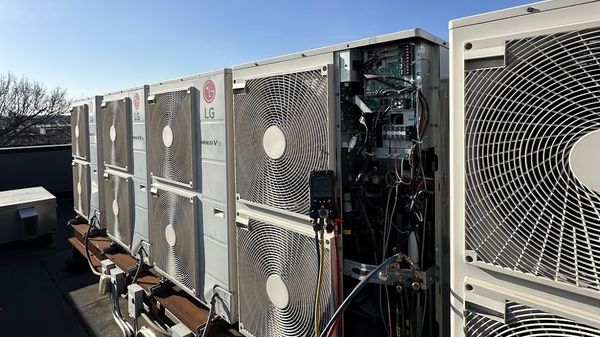
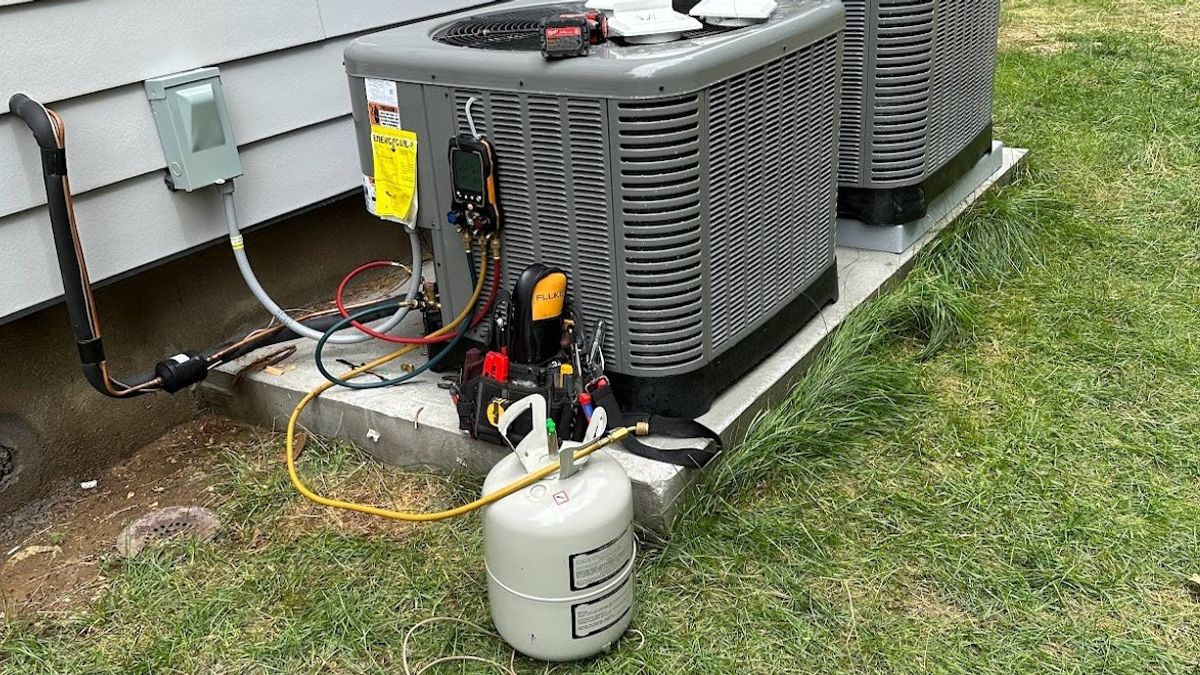
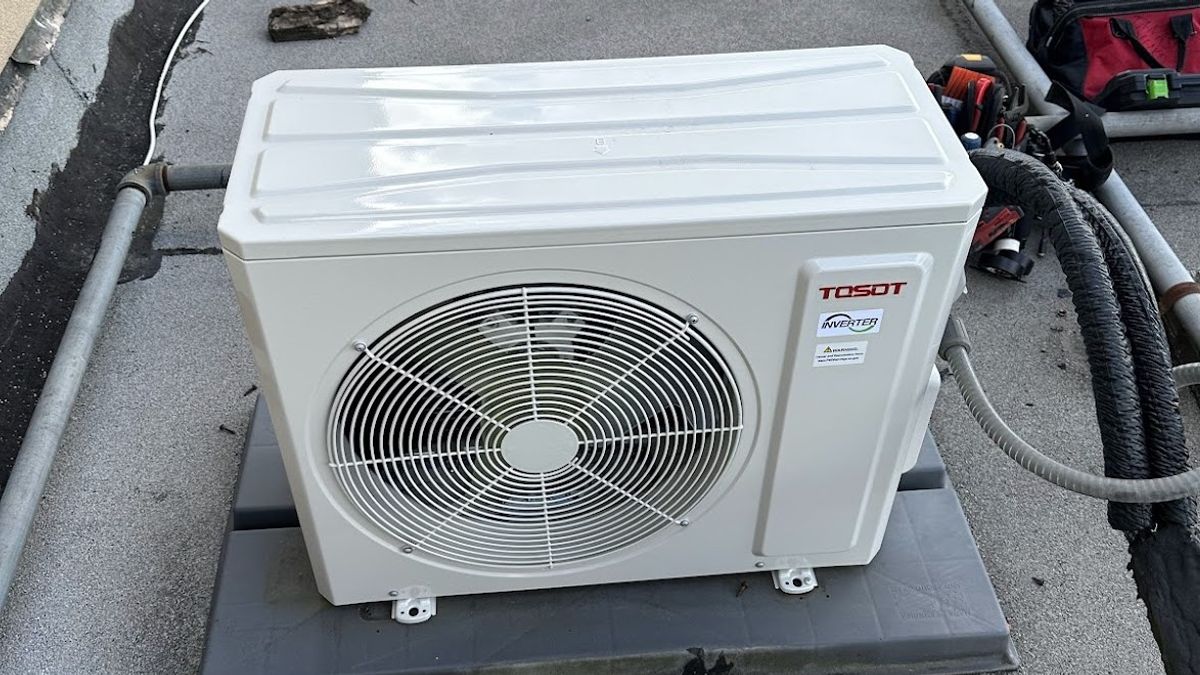
The outdoor unit houses the compressor and condenser coil. In cooling mode it rejects heat from your apartment to the outside; in heating mode it reverses, pulling heat from outdoor air — even cold winter air — and delivering it indoors. Modern cold-climate units produce useful heat down to roughly -13°F, which covers a NYC winter.

Mounts on a roof, balcony, rear-façade bracket, or ground pad
One condenser serves 1–5+ indoor heads depending on capacity
Sized in BTU/h — a typical NYC bedroom needs 6,000–9,000 BTU
Cold-climate (hyper-heat) models hold capacity below 0°F
Outdoor placement is the #1 thing co-op and condo boards scrutinize
Warning Sign #02

2. The Indoor Air Handlers (Heads)

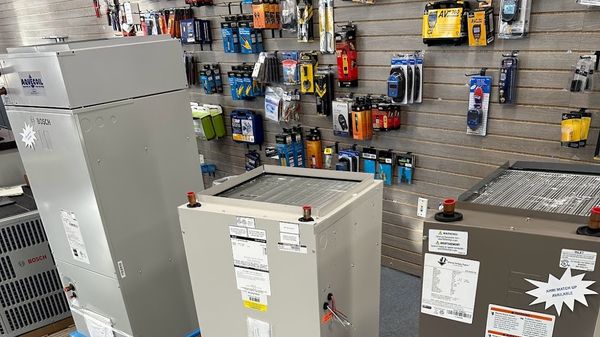
Indoor units — usually wall-mounted heads, but also ceiling cassettes, floor consoles, or slim ducted air handlers — contain the evaporator coil and a quiet variable-speed fan. Each head conditions its own room and has its own remote or thermostat, so you heat and cool only the rooms you are using.

Wall heads run as quiet as 19–25 dB — quieter than a whisper
Each head is its own zone with independent temperature control
Ceiling cassettes and slim-duct units hide equipment in design-sensitive rooms
No head should be oversized — short-cycling kills efficiency and comfort
Built-in multi-stage filtration helps indoor air quality
Warning Sign #03

3. The Refrigerant Line Set & Conduit

A line set — two insulated copper pipes plus a condensate drain and control wiring — connects each indoor head to the outdoor unit. It is typically run inside a slim paintable conduit along the exterior, or concealed through a closet or chase. Line-set length and the number of bends affect both performance and price.

Standard runs are 15–25 ft; longer runs need extra refrigerant
Condensate must drain to an approved point — not a sidewalk or neighbor’s terrace
Exterior-wall penetrations need proper sealing and sometimes DOB sign-off
Routing through pre-war walls is the trickiest part of a NYC install
Clean conduit routing separates a professional job from an eyesore
Warning Sign #04

4. The Inverter Compressor (Why It Is So Efficient)

Unlike a window unit that slams fully on and off, a mini-split uses an inverter-driven compressor that ramps its speed up and down to match the exact load. It runs long and slow at low power instead of short and hard — which is why mini-splits routinely hit SEER2 ratings of 18–30+ and use far less electricity than window units or electric baseboard.

Inverter compressors modulate from roughly 10% to 100% capacity
SEER2 18–30+ vs. about 10–12 for a typical window unit
Strong HSPF2 heating efficiency beats electric resistance heat
Steady low-speed operation removes more humidity — key in NYC summers
Lower peak draw is easier on older apartment electrical panels
A Real NYC Example

Take a typical 700 sq ft one-bedroom in a Brooklyn brownstone. A two-zone mini-split — one 9,000 BTU head in the bedroom, one 12,000 BTU head in the living room, both fed by a single outdoor unit on a rear bracket — replaces two window ACs and a pair of electric space heaters. The result: quiet, even temperatures year-round, summer cooling bills 30–50% lower than the window units, and a system that also heats efficiently down into the teens. The catch is never the equipment — it is getting the outdoor unit and line-set routing approved, which is where the real NYC work happens.

TYPICAL MINI-SPLIT CONFIGURATIONS (NYC, INSTALLED)

What Different Setups Cost to Install

Single-Zone (1 head)$3,000–$6,000
Two-Zone (2 heads)$6,000–$11,000
Three-to-Four Zone$11,000–$18,000
Whole-Apartment Multi-Zone (5+)$18,000–$30,000+

* Installed price ranges for NYC apartments and brownstones — equipment, line sets, mounting, and basic electrical. Co-op rigging, long line sets, and panel upgrades push toward the upper end. See our dedicated cost guide for line-item detail.

Mini-Split vs. Window Units in a NYC Apartment

Ductless Mini-Split (Recommended)
Heats and cools from one system — no separate winter heat needed
30–50% lower electric bills thanks to inverter efficiency
Whisper-quiet (19–30 dB) — no street noise pouring through a gap
Frees every window for light, egress, and security
Multi-stage filtration improves indoor air quality
Adds resale value and supports building electrification goals
Window Units + Space Heaters (The Old Way)
Cooling only — you still need radiators or electric heat in winter
Cheap to buy but expensive to run, especially electric heat
Loud compressor cycling and outside noise through the seal
Blocks a window, weakens security, and leaks air year-round
Minimal filtration; drips and dust are common complaints
Hauled in and out seasonally; adds nothing to the home’s value

Getting a Mini-Split Into a NYC Apartment: Approvals and Installation

The technical install is the easy part. In NYC, the real project is getting permission to place an outdoor unit and route a line set on a building you may not fully own or control. Here is the realistic path — whether you are in a co-op, condo, or rental — and where licensed heat pump installation fits in.

  1. Confirm ownership and approval rights. Co-op shareholders and condo owners almost always need board approval for anything touching the façade, roof, or exterior walls. Renters need written landlord consent. Start here before you get attached to a layout.
  2. Choose the outdoor-unit location. Rear-façade brackets, rooftops, setbacks, and balconies are the usual candidates. Boards care about visibility from the street, weight on the structure, noise to neighbors, and drainage. A good contractor proposes the least-intrusive spot first.
  3. File DOB permits and the alteration agreement. Most NYC mini-split installs require DOB mechanical and electrical permits, and co-ops require a signed alteration agreement plus the contractor’s license and insurance (COI). Refrigerant and electrical work must be done by licensed trades.
  4. Plan the line-set route and electrical capacity. The installer maps the cleanest concealed path and verifies your panel can handle a new dedicated circuit. Pre-war apartments on 60–100A service sometimes need a subpanel or service upgrade — factor this in early.
  5. Install, commission, and document. Mounting, line-set brazing, vacuum and pressure test, refrigerant charge, and a commissioning report. Keep the documentation — boards and future buyers will ask for it.
The equipment rarely fails a NYC mini-split project. Approvals, outdoor-unit placement, and clean line-set routing do. Solve those first, and the install itself is a one-to-two-day job.

We handle these projects across Manhattan and Brooklyn, and the building-specific rules vary block to block — which is why a site visit beats any generic quote.

Mini-Splits and Local Law 97

Because a mini-split is a heat pump, it heats with electricity instead of burning gas or oil — which matters more in NYC every year. Local Law 97 caps building carbon emissions, and many co-ops and condos are now planning to electrify heating to avoid escalating fines. Replacing gas or steam heat with high-efficiency heat pumps is one of the most effective moves a building can make, and ConEd plus NYSERDA’s Clean Heat program currently offer rebates that meaningfully lower the cost. If your building is mapping out its decarbonization plan, mini-splits are very likely part of the answer.

MINI-SPLIT HVAC

Frequently Asked Questions

Find answers to common questions about our HVAC, plumbing, and refrigeration services.

A mini-split HVAC system is a ductless heat pump made of a small outdoor compressor unit connected by refrigerant lines to one or more indoor air-handling heads. It both cools and heats, moving heat with refrigerant instead of blowing air through ducts. That ductless design is what makes a mini-split HVAC system practical for NYC apartments and brownstones where running new ductwork is not possible.

For most NYC apartments, yes. A mini-split delivers quiet, efficient heating and cooling without ducts or window units, and a single outdoor unit can serve several rooms. The main hurdle is not the technology — it is approval: co-op and condo boards control the façade and roof where the outdoor unit mounts, so you will need board sign-off and usually DOB permits before installation.

Yes. A mini-split is a heat pump, so it heats as well as cools. Cold-climate (hyper-heat) models maintain strong output well below freezing — into the negative teens Fahrenheit — which covers NYC winters. Many residents use a mini-split as their primary heat, often cutting heating costs versus electric baseboard and qualifying for Clean Heat rebates.

Generally one head per room or open zone you want to control independently. A studio may need a single 9,000–12,000 BTU head; a two-bedroom typically uses three to four heads on one or two outdoor units. Proper BTU sizing per room matters more than total tonnage — an oversized head short-cycles, leaving the room humid and the bill higher.

Almost always. Co-op shareholders and condo owners need board approval because the outdoor unit and line set touch shared structure and the building façade. Renters need landlord consent. Most installs also require DOB mechanical and electrical permits and a licensed contractor’s insurance. Securing approvals is the first real step — well before scheduling the install.

Thinking About a Mini-Split for Your Apartment?

We design and install ductless mini-split systems across NYC — from single-room studios to whole-apartment multi-zone setups. We handle the BTU sizing, the cleanest outdoor-unit placement, and the co-op board and DOB paperwork, so you get comfort without the headache.

Alex Weber