How to Choose an HVAC System Guide by Art HVAC NYC Licensed Commercial HVAC Installation and Consultation Contractor
Back to Blog HVAC TIPS

How to Choose the Right HVAC System for Your Home — Pro Guide

Mar 22, 2026 10 min read Alex Weber
Quick Read

This article covers:

  • Four HVAC system types compared: central AC, mini-splits, heat pumps, and VRV
  • How to avoid the #1 sizing mistake that wastes thousands on energy bills
  • SEER2, HSPF2, and ENERGY STAR ratings decoded in plain English
  • Real operating cost differences — from $2,400/yr down to $750/yr
  • Red flags to watch for when getting contractor quotes

Estimated read time: 5 minutes.

Your HVAC system accounts for nearly half of your home’s total energy consumption. In New York’s climate — where summers push past 95°F and winters drop below freezing — choosing the wrong system doesn’t just mean discomfort. It means years of inflated utility bills, unnecessary repair calls, and a home that never quite feels right.

We’ve helped hundreds of NYC homeowners navigate this decision over the past 15 years of installing and servicing HVAC systems. The patterns are clear: families who take time to understand their options, get proper sizing calculations, and compare efficiency ratings end up saving $500–$1,200 per year compared to those who simply pick the cheapest quote.

This guide walks you through everything you need to make a confident, informed choice — whether you’re replacing a failing system or building new.
Warning Sign #01

Rooms That Won’t Stay Comfortable

You crank the thermostat down, but the upstairs bedroom still feels like a sauna while the basement is freezing. Uneven temperatures across your home almost always point to a system that’s incorrectly sized or poorly matched to your ductwork layout.

Check for 5°F+ temperature differences between rooms
Inspect ductwork for leaks, kinks, or disconnected runs
Consider whether your system matches your home’s current insulation level
Warning Sign #02

System Runs Constantly or Shuts Off Too Quickly

An undersized unit works overtime without ever reaching your desired temperature. An oversized unit blasts cold air, hits the setpoint in minutes, then shuts off — only to restart a few minutes later. Both patterns waste energy and accelerate component wear.

Short-cycling (on/off every 5–10 min) = likely oversized
Non-stop running on moderate days = likely undersized
Both issues increase repair frequency by 40–60%
Warning Sign #03

Humidity That Won’t Quit

If your home feels clammy even when the AC is running, your system likely can’t properly dehumidify. This is especially common with oversized units that cool too fast to remove moisture from the air — a major issue in New York’s humid summers.

Ideal indoor humidity: 30–50%
Oversized systems cool air faster than they dehumidify
Consider a system with variable-speed compressor for better moisture control
Warning Sign #04

Energy Bills Higher Than Your Neighbors’

Comparing utility costs with neighbors in similar-sized homes is one of the fastest reality checks. If you’re paying significantly more, your system is likely operating below its rated efficiency — or was never the right fit for your home.

Request an energy audit from your utility provider
Compare your cost-per-sqft with neighborhood averages
A 20%+ difference signals a system mismatch or duct issue

The 4 Main HVAC System Types

Not every system works for every home. Your best option depends on whether you have existing ductwork, how many zones you need, and whether you want separate or combined heating and cooling. Here’s how they stack up:

  • Central Air Conditioning — The traditional choice for homes with existing ductwork. A single outdoor unit connects to an indoor air handler, distributing cooled air through ducts to every room. Reliable and cost-effective to install if ducts are already in place, but efficiency drops if ductwork is old or leaky.
  • Ductless Mini-Splits — Perfect for homes without ductwork, additions, or converted spaces like attics and garages. Individual wall-mounted units let you control each room independently. Higher upfront cost per zone, but zero duct losses mean up to 30% better efficiency than central systems.
  • Heat Pumps — The most versatile option available today. A single system handles both heating and cooling by transferring heat rather than generating it — cutting energy use by up to 50% compared to traditional furnace-plus-AC setups. Modern cold-climate models work efficiently down to -15°F.
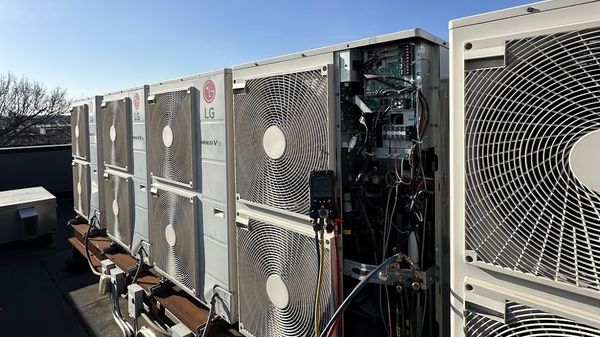
  • VRV/VRF Systems — Commercial-grade precision for large homes or buildings with complex zoning needs. One outdoor unit can serve dozens of indoor units, each with independent temperature control. The highest efficiency available, but the premium price makes sense mainly for properties over 3,000 sq ft.
NYC Climate Insight

If you’re still thinking heat pumps can’t handle New York winters — think again. Cold-climate models from Mitsubishi, Daikin, and Fujitsu now deliver full heating capacity at 5°F and continue operating down to -15°F. Combined with the $2,000 federal tax credit, a heat pump is the single best investment for most NYC homeowners.

Why Correct Sizing Is the Single Most Important Decision

Here’s a fact that surprises most homeowners: an oversized HVAC system performs worse than a correctly sized one. It costs more to run, breaks down more often, and leaves your home feeling damp and uncomfortable.

The only reliable way to determine the right size is a Manual J load calculation — an engineering assessment that factors in your home’s square footage, ceiling height, insulation R-values, window count and orientation, local climate data, and even how many people live in the home. At Art HVAC, we include this calculation free with every installation estimate.

The difference between a correctly sized and oversized system can add $300–$600 per year in wasted energy — plus significantly higher repair costs over the system’s lifetime.
ANNUAL OPERATING COST BY SYSTEM TYPE

What Each System Actually Costs to Run

Window Units (EER 10)$2,400/yr
Central AC + Gas (SEER 14)$1,500/yr
Heat Pump (SEER 20)$900/yr
Mini-Split (SEER 22)$750/yr

* Estimated for a 2,000 sq ft NYC home, full-year heating and cooling. Actual costs depend on insulation, usage patterns, and utility rates.

Efficiency Ratings Decoded

HVAC efficiency ratings look like alphabet soup — but understanding three key numbers will save you from overpaying for a system that underperforms.

  1. SEER2 (Seasonal Energy Efficiency Ratio) — The primary cooling efficiency metric. The federal minimum is 14.3 for northern states. Look for SEER2 16+ for solid efficiency, 20+ for premium performance. Each point above the minimum saves roughly 7% on cooling costs.
  2. HSPF2 (Heating Seasonal Performance Factor) — Measures heating efficiency for heat pumps specifically. The minimum is 7.5; aim for HSPF2 10+ in cold climates like New York. High HSPF2 means lower heating bills during our 5-month winter season.
  3. ENERGY STAR Certification — Not just a marketing label. ENERGY STAR systems must exceed federal minimums by 15–25%, and qualifying units are eligible for the $2,000 federal tax credit under the Inflation Reduction Act. Many NYC utility companies stack additional rebates — sometimes $500–$1,000 more.
Contractor Red Flag

If a contractor quotes you a system size without visiting your home and performing a Manual J calculation — walk away. “One ton per 500 square feet” rules of thumb ignore insulation, windows, ductwork condition, and dozens of other factors. This shortcut is the #1 reason homeowners end up with oversized, inefficient systems.

Making the Right Choice

Choosing an HVAC system isn’t just about the sticker price — it’s about total cost of ownership over 15–20 years of daily use. A system that costs $2,000 less upfront but runs $600/year more in energy will cost you $7,000 extra over its lifetime.

Here’s our recommended approach:

  • Get at least two in-home estimates with Manual J calculations
  • Compare total cost of ownership, not just install price
  • Ask about available rebates, tax credits, and financing options
  • Check contractor licenses, insurance, and recent reviews
  • Ask about warranty coverage and maintenance plan options

The best time to make this decision is before your current system fails — when you have time to research, compare, and negotiate rather than scrambling for an emergency replacement in the middle of a heat wave.

HAVE QUESTIONS?

Frequently Asked Questions

Find answers to common questions about our HVAC, plumbing, and refrigeration services.

A complete residential system typically costs $5,000–$15,000 installed, depending on type, capacity, and complexity. Central AC runs $5,000–$8,000, heat pumps $7,000–$12,000, and ductless mini-splits $3,000–$5,000 per zone. VRV systems for larger homes start at $15,000+.

Ductless mini-splits and heat pumps lead in efficiency, with SEER2 ratings of 20–30+. They eliminate duct losses and use inverter-driven compressors that adjust output continuously. For whole-home comfort, a heat pump offers the best balance of efficiency and coverage.

A straightforward replacement takes 1–2 days. Ductless mini-split installation typically takes 1 day per 2–3 zones. Full ductwork installation or modification can add 2–3 additional days. VRV systems for larger properties may require 3–5 days.

Yes. The federal Inflation Reduction Act offers up to $2,000 in tax credits for qualifying heat pumps and ENERGY STAR systems. New York state and local utility companies often add $500–$1,500 in additional rebates. Our team helps you identify and apply for every available incentive.

In many cases, yes — but it depends on duct condition. Leaky or undersized ductwork can reduce a new system’s efficiency by 20–30%. We inspect existing ducts during the load calculation and recommend sealing or replacement only when it will meaningfully improve performance.

Limited Availability

Need Help Choosing the Right System?

Schedule a free in-home consultation with a full Manual J load calculation included. Our certified technicians will assess your home, explain your options, and provide a transparent, no-obligation estimate.

Keep Your Current System or Upgrade?

Keep Your Current System
System is under 10 years old
Energy bills are stable year-over-year
Only minor or infrequent repairs needed
Home comfort is consistent across rooms
System uses modern R-410A refrigerant
Time to Upgrade
System is 12+ years old or declining
Energy bills have increased 20%+ over 2 years
Repair costs approaching 50% of new system
Rooms have uneven temperatures or humidity issues
You want to add zones or switch to heat pump
Alex Weber