Heat Pump Installation In Nyc By Art Hvac Licensed Commercial And Residential Air Source Heat Pump Contractor Team
Back to Blog HVAC TIPS

Heat Pump or Standard AC? How to Tell Which System You Have

Jun 24, 2026 8 min read Alex Weber
Quick Read

This article covers:

  • Why a heat pump and a cooling-only AC look identical from the outside — and the one part that makes them different
  • The 30-second thermostat test that settles it without any tools
  • How to read your outdoor unit’s model number and yellow EnergyGuide label
  • What a reversing valve looks like and where to find it
  • Why knowing the difference changes your maintenance, your winter bills, and your rebate eligibility in NYC

Estimated read time: 5 minutes.

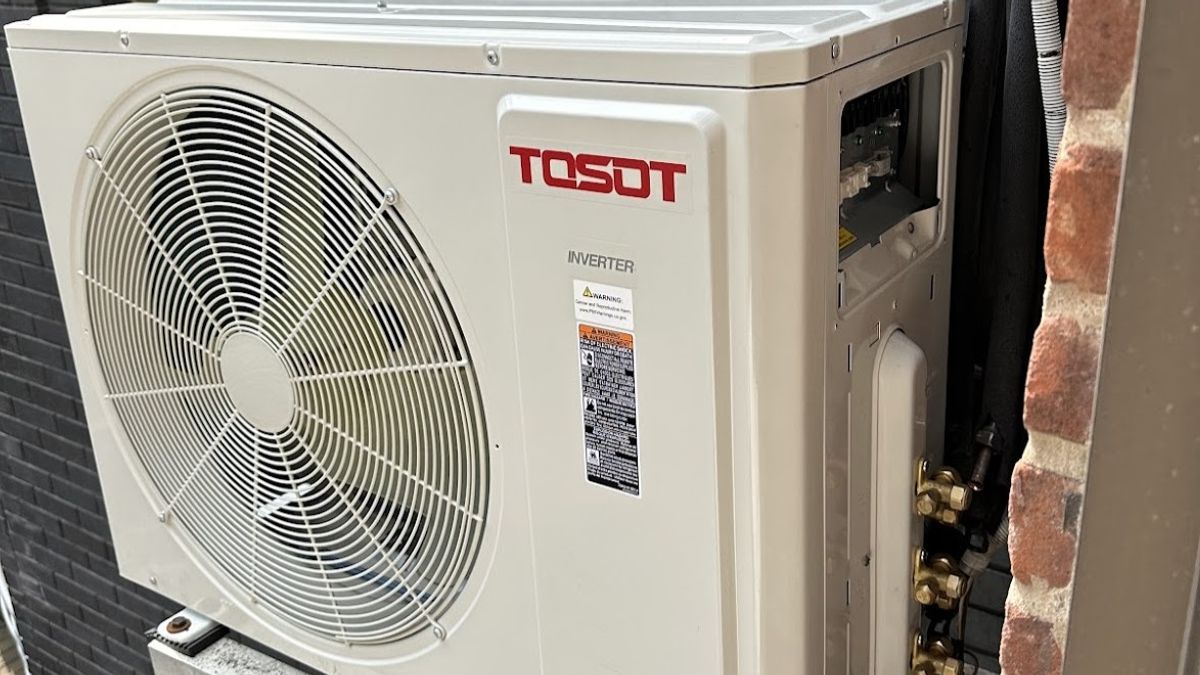
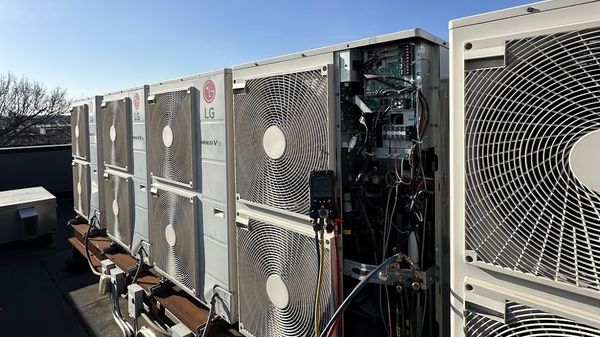
Stand in front of the outdoor unit beside most NYC homes and you genuinely cannot tell, at a glance, whether it is a heat pump or a plain air conditioner. Both are a metal box with a fan on top and a coil wrapped around the sides. Both sit on a pad, a roof, or a rear-façade bracket. The difference is on the inside — and it changes how the system heats your home, what it costs to run, and how it should be serviced.

An air conditioner only moves heat in one direction: it pulls heat out of your home and dumps it outside. A heat pump does the same thing in summer — but it can also run in reverse, pulling heat from outdoor air and bringing it inside to warm the house in winter. That reversal is made possible by a single component an AC does not have: the reversing valve.

If you have a cooling-only AC, something else heats your home — usually a gas furnace or boiler, or electric resistance heat. If you have a heat pump, the same outdoor unit that cools you in July is also heating you in January. Here is how to find out which camp you are in.
Warning Sign #01

1. The Thermostat Test (No Tools, 30 Seconds)

The fastest check. Set your thermostat to HEAT and raise the target a few degrees above room temperature, then walk outside to the unit. If the outdoor unit fans up and runs while you are calling for heat, you have a heat pump. A cooling-only AC stays silent in heat mode — because something else (a furnace or boiler) is doing the heating.

Do it on a day when heat is not already running
Wait one to two minutes for the system to respond
Heat pump → outdoor fan and compressor run, vent air turns warm
Cooling-only AC → outdoor unit stays off in heat mode
If only the indoor furnace runs, it is not a heat pump
Warning Sign #02

2. Look for “Emergency” or “Aux” Heat on the Thermostat

Heat pumps are almost always paired with a backup heat source, so their thermostats carry a setting standard AC systems do not: Emergency Heat (often “Em Heat” or “Aux”). If your thermostat has an emergency-heat mode, or shows “AUX” when it is very cold, you are looking at a heat pump.

“Em Heat” / “Emergency Heat” toggle = heat pump
“AUX” indicator in deep cold = heat-pump backup engaging
A plain Heat / Cool / Off thermostat with no Aux = usually cooling-only
Smart thermostats label it “Aux heat” in the settings
One of the most reliable quick tells
Warning Sign #03

3. Find the Reversing Valve

The reversing valve is the part that lets a heat pump switch between heating and cooling — and an AC simply does not have one. With the power off, look through the top grille of the outdoor unit for a brass cylinder, a little larger than a thick marker, with three copper pipes coming out of one side and a small solenoid coil on top. See it, and you have a heat pump.

Power the unit OFF before inspecting
Look for a horizontal brass cylinder with three pipes on one side
A small electrical solenoid coil sits on top of it
No reversing valve = cooling-only air conditioner
Unsure? Photograph it and ask your technician
Warning Sign #04

4. Read the Model Number and the Yellow EnergyGuide Label

Every outdoor unit has a data plate with a model number, and many still carry the bright-yellow EnergyGuide sticker. Heat-pump model numbers usually contain “HP” or “H”; cooling-only condensers lean on “AC,” “C,” or “CU.” The label is decisive: a heat pump lists a heating-efficiency rating (HSPF or HSPF2) next to its SEER2; an AC lists SEER2 only, because it does not heat.

Model contains “HP” or “H” → heat pump
Model contains “AC,” “CU,” “C” → cooling-only condenser
EnergyGuide shows HSPF2 + SEER2 → heat pump
EnergyGuide shows SEER2 only → air conditioner
Still unsure? Search the exact model number on the maker’s site
Warning Sign #05

5. Does It Run in Winter? Watch for the Defrost Cycle

A cooling-only AC sits idle all winter. A heat pump runs year-round — and on cold, damp days you may see it briefly steam or “smoke,” blow cold for a few minutes, then resume. That is the normal defrost cycle melting frost off the outdoor coil, not a malfunction. An AC never does this because it never runs for heat.

Outdoor unit running on a cold day = heat pump
Occasional steam or vapor off the coil in winter = normal defrost
A brief whoosh and cold blow, then back to heat = defrost ending
An AC condenser is dormant from roughly October to April
Frost that never clears, though, is a service call
The 30-Second Answer

If you only do one thing: put the thermostat in HEAT, turn it up, and go listen to the outdoor unit. Running and blowing warm air with no separate furnace? Heat pump. Dead silent while something inside makes the heat? Standard AC. Everything else on this page just confirms what that one test tells you.

RELATIVE WINTER HEATING COST, TYPICAL NYC HOME

What Each System Typically Costs to Heat (NYC Winter)

Modern High-Efficiency Heat PumpLowest
Gas Furnace (paired with AC)Moderate
Older / Low-Efficiency Heat PumpHigher
Electric Baseboard / ResistanceHighest

* A directional comparison, not a quote — actual cost depends on your home, your rates, and your equipment’s age and efficiency. The takeaway: an efficient heat pump is usually the cheapest electric option and competitive with gas, which is why NYC’s electrification programs favor it.

Heat Pump vs. Standard AC — Side by Side

Heat Pump
Heats and cools from one outdoor unit
Runs year-round, including a normal winter defrost cycle
Has a reversing valve and (usually) Emergency / Aux heat
EnergyGuide lists both SEER2 and HSPF2
Qualifies for NYC Clean Heat and electrification rebates
Needs a tune-up before both the cooling and heating seasons
Standard AC (Cooling Only)
Cools only — a separate furnace or boiler provides heat
Sits idle all winter; the outdoor unit is dormant
No reversing valve; thermostat has no Emergency heat
EnergyGuide lists SEER2 only (no heating rating)
Not eligible for heat-pump heating rebates
Service the AC in spring; heat is maintained separately

Why It Actually Matters That You Know

This is not trivia. Which system you have changes four practical things — how it is maintained, what it costs you in winter, what rebates you can claim, and how you plan its eventual replacement.

  1. Maintenance timing and scope. A heat pump works in both seasons, so it needs a tune-up before summer and before winter — coil cleaning, a refrigerant check, and a defrost-control test. A cooling-only condenser only needs spring service; your furnace or boiler is maintained on its own schedule.
  2. Your winter energy bill. If you have a heat pump, it is your primary heat, and its efficiency (HSPF2) drives your electric bill directly. Knowing that lets you judge whether an aging, low-efficiency unit is quietly costing you money every cold month.
  3. Rebates and NYC electrification. Heat pumps — not air conditioners — qualify for Con Edison and NYSERDA Clean Heat incentives, and they are central to how buildings meet Local Law 97 carbon caps. If you already have one, you may be leaving rebate money on the table; if you have a cooling-only AC, switching is the upgrade that unlocks them.
  4. What to tell a technician. When you call for service, “I have a heat pump” versus “I have a cooling-only AC and a gas furnace” sends a different truck, different parts, and a different diagnosis. Getting it right saves a wasted visit.
  5. Planning a replacement. If your cooling-only AC is near end of life, replacing it with a heat pump means one system that also handles heat — often the smartest move in a NYC home given today’s rebates and rising gas costs.
The label on the box matters less than what the box can do: a heat pump heats and cools, an air conditioner only cools. Everything about how you run and maintain it follows from that one fact.

We diagnose and service both across Manhattan and Brooklyn — and if you are not sure what you have, a quick look at the outdoor unit and thermostat tells us in minutes.

Thinking About Switching to a Heat Pump?

If the checks above tell you that you have a cooling-only AC plus an aging gas furnace, you are a prime candidate for a heat pump on your next replacement. Because a heat pump both heats and cools, it can retire the furnace entirely, and Con Edison plus NYSERDA’s Clean Heat program currently offer rebates that meaningfully lower the install cost. With Local Law 97 pushing buildings to cut carbon, electrifying heat with a high-efficiency heat pump is increasingly the default upgrade in NYC — not a niche choice.

HEAT PUMP VS AC

Frequently Asked Questions

Find answers to common questions about our HVAC, plumbing, and refrigeration services.

Nearly identical — both are a fan-topped metal box with a coil. The visible giveaways are subtle: a heat pump often sits slightly elevated on feet or a stand so winter defrost water can drain, and inside it has a reversing valve an AC lacks. The reliable tests are the thermostat heat test and the EnergyGuide label, not appearance.

Not at all — that is the sign you have a heat pump, which heats your home by running year-round. Seeing it briefly steam or blow cold for a few minutes in cold weather is the normal defrost cycle clearing frost off the coil; it resumes heating on its own. Frost or ice that never clears is the exception and warrants a service call.

Emergency or “Aux” heat is the backup heat source that comes with a heat pump — usually electric resistance strips or, in a dual-fuel setup, a gas furnace. It engages automatically in very cold weather or if the heat pump itself fails. Only heat-pump systems have it, so its presence is a strong sign you have a heat pump.

No — the reversing valve and heat-pump controls are built into the equipment, so a cooling-only condenser cannot be converted. But when your AC is due for replacement, swapping it for a heat pump is straightforward and often the better long-term choice in NYC, since one system then handles both heating and cooling.

For cooling, a modern heat pump and a modern AC of the same efficiency cost about the same to run. The difference is in winter: a heat pump also heats, and an efficient one usually heats for less than electric baseboard and competitively with gas. An older, low-efficiency heat pump is where winter bills climb — another reason to know exactly what you have.

Not Sure What System You Have?

Our technicians can identify your system in minutes, tell you its real condition and efficiency, and lay out your options — a tune-up, a repair, or a heat-pump upgrade that unlocks NYC rebates. No pressure, just a clear answer.

Alex Weber