
VRF and VRV Systems in Manhattan: Installation, Replacement and Service
A VRF system (Daikin's name for it is VRV) heats and cools a whole floor or a whole house room by room, from one set of condensing units and a network of copper refrigerant lines. We handle VRF installation, replacement and service in Manhattan offices, shops and restaurants, medical suites, townhouses and large apartments. In this borough the design starts with three questions: where the condensing units can sit, how much refrigerant the smallest room can take, and who has to sign off.

- VRV/VRF system, 3–8 zones: $15,000–$45,000
- Larger systems: quoted per project
- Free installation estimates
- Daikin, LG and Mitsubishi systems serviced
Which VRF Setup Fits Your Manhattan Space
Think of VRF as a kit with interchangeable parts. The same condensing units can feed ceiling cassettes, units hidden above a ceiling, wall units or units tucked into a window cabinet. What changes from space to space is which parts you choose, whether the system has to heat and cool at the same time, and where the outdoor side lives. Pick the space closest to yours.
An office floor or a full office suite
Rooms on an office floor rarely agree. A corner office collects the afternoon sun, a conference room fills up at ten, and the server closet runs warm in January. A heat recovery VRF can cool some rooms while it heats others, moving the heat it pulls out of the warm rooms into the ones that need it, much as your refrigerator moves heat out of the food and into the kitchen.
- Heat pump or heat recovery
- Heat recovery when some rooms want heat while others want cooling; a heat pump system when the whole floor wants the same mode at the same time.
- Indoor units
- Ceiling cassettes in open areas, ducted units above the ceiling for private offices, a wall unit for the server closet.
- Condensing units
- On the roof, on steel rails or dunnage. In a building with a condenser water loop, a water-cooled VRF can sit indoors and reject its heat into that loop.
- Who signs off
- Your landlord, under the lease; the DOB, through the filing.
- Watch for
- Building air that stops at night. A landlord only has to run the building-wide system during the hours in your lease, so a server room or late hours may call for a system of your own.
From our jobs In Midtown West, a Mitsubishi VRF system with four outdoor units, ducted and wall-mounted indoor units and a ventilation unit gets our maintenance twice a year.
How heat recovery worksA shop, showroom or restaurant dining room
A storefront works hard for its size: glass across the front, a door that opens all day, a crowd at lunch and an empty room at three. VRF follows those swings zone by zone and keeps the outdoor equipment off the sidewalk. If the system serves only your space, the lease will likely make it yours to repair, maintain and replace, so plan for service access from the first drawing.
- Heat pump or heat recovery
- A heat pump system for one open sales floor; heat recovery when back rooms need cooling while the front needs heat.
- Indoor units
- Ducted units above the ceiling feeding slot diffusers along the glass, or ceiling cassettes; a small unit of its own for the stock room or office.
- Condensing units
- On the roof if your lease gives you roof rights; otherwise a rear yard or a setback, within the noise limits at the neighbors’ windows.
- Who signs off
- The landlord and the DOB; in a landmarked building or historic district, also the Landmarks Preservation Commission. You or your architect apply; we prepare the drawings and spec sheets.
- Watch for
- The building’s rules on work hours and freight elevator use, which set the install schedule for a shop that stays open.
A medical or dental suite
A medical suite is a string of small rooms: exam rooms, a lab corner, a waiting room that is full in the morning and empty after five. Each room getting its own control is what VRF does well. The catch is the refrigerant. One circuit can serve every room, so if it leaks, the smallest room on that circuit has to be able to take the whole charge safely, and a small exam room ends up deciding how big the circuit can be.
- Heat pump or heat recovery
- Heat recovery if inside rooms need cooling while rooms on the windows need heat; a heat pump system for a small suite that faces one way.
- Indoor units
- Small cassettes or ducted units, and wall units where the ceiling is too tight.
- Refrigerant per room
- With R-410A, 26 pounds per 1,000 cubic feet of the smallest room on the circuit. With R-32 or R-454B, the limit comes from ASHRAE 15, and leak detectors with shutoff valves can cut how much of the charge a leak could release.
- Who signs off
- The landlord or the building, and the DOB. On an A2L system, a special inspector witnesses the pressure test.
- Watch for
- A circuit that comes out too big for the smallest room. Splitting the suite across two smaller circuits, or giving that room its own system, solves it.
A townhouse or brownstone
A townhouse stacks four or five floors of rooms that want different things: a top floor that bakes in July, a garden level that stays cool, bedrooms that need quiet at night. VRF gives each room its own unit and control from one set of condensing units, with copper lines running up through closets instead of ducts. In a historic district, the hard part is usually the roof.
- Heat pump or heat recovery
- A heat pump system: most of the house wants heating or cooling at the same time.
- Indoor units
- Wall units in the bedrooms, a slim ducted unit hidden in a closet or ceiling for the open parlor floor.
- Condensing units
- On the roof, set back from the front parapet, or in the rear yard. At a neighbor’s open window, one unit may not exceed 42 dB(A) and several together 45 dB(A).
- Who signs off
- The DOB, and the Landmarks Preservation Commission for a landmarked house or one in a historic district.
- Watch for
- LPC can ask for a sightline drawing from across the street that includes the steel the units stand on, and sometimes a full-size mock-up on the roof.
A full-floor or combined apartment
In a big apartment, VRF can run the whole home from one outdoor unit, with the indoor units out of sight: in cabinets under the windows, above a dropped ceiling or in a closet. Hidden units have a weak spot people forget about. A unit placed away from a drain needs a small condensate pump to push its water out, and a pump that stops working shows up as a stain on the floor or the ceiling below.
- Heat pump or heat recovery
- A heat pump system. One apartment rarely needs heating and cooling in the same hour.
- Indoor units
- Concealed floor-standing units in window cabinets, slim ducted units, wall units in the smaller rooms.
- Condensing units
- On the roof or a terrace, wherever the building and the noise limits allow.
- Who signs off
- Your co-op board or condo board, under the alteration agreement, and the DOB.
- Watch for
- Condensate pumps and the insulation on the refrigerant lines inside each cabinet. When either one fails, it shows up as water damage.
From our jobs On the Upper West Side, we service LG VRF systems in apartments with concealed floor-standing indoor units, each with its own condensate pump; on a maintenance visit we clean and test every pump.
What a co-op or condo board asks forEvery option starts with a load calculation, room by room. ART HVAC is an official Daikin partner, and we also service LG and Mitsubishi systems; Daikin's VRV lines and indoor unit styles are on our Daikin page.
The Refrigerant Check Behind Every VRF Design
A VRF system is one long refrigerant circuit with branches into many rooms. That is its strength, and it is also why the city's Mechanical Code caps how much refrigerant one circuit may hold: if a pipe or a coil leaks, the refrigerant can collect in whichever room it reaches. So before anyone picks indoor units, we check each circuit against the smallest room it serves.
R‑410A systems: the smallest‑room rule
For R‑410A, the code's limit is 26 pounds of refrigerant per 1,000 cubic feet, counted in the smallest enclosed room the circuit serves. Take a 10‑by‑12‑foot office with a 9‑foot ceiling: 1,080 cubic feet, or about 28 pounds for the entire circuit, every foot of piping included, not just the unit in that room. Rooms joined by permanent openings count as one space, and a ceiling plenum that carries return air adds to the room's volume. A door doesn't count, because it can be shut.
R‑32 and R‑454B systems: the rules since May 15, 2026
New VRF lines are moving to A2L refrigerants such as R‑32, and for those the Department of Buildings adopted rules that took effect on May 15, 2026 and bring in the ASHRAE 15 standard. The allowed charge is worked out room by room. Where the standard calls for it, the system needs its own refrigerant detectors and automatic responses, such as safety shutoff valves that close off a leaking branch. Two details matter in a building with corridors and many floors: the calculation also covers rooms the piping only passes through, and A2L piping may run through a building's public corridors only inside a second pipe and a two‑hour fire‑rated enclosure. The pressure test is witnessed by a special inspector.
Can a new system still use R‑410A?
For the most part, no. New York's Part 494 bars new VRF systems on refrigerants with a global warming potential over 700, which rules out R‑410A, from January 1, 2026. The state then let R‑410A systems that Daikin, LG, Mitsubishi Electric and Samsung listed in a joint variance be installed until January 1, 2027, and the federal rule ends installs of R‑410A VRF systems built from parts made before 2026 on that same date.
| R‑410A (Group A1) | R‑32 or R‑454B (Group A2L) | |
|---|---|---|
| New installs in New York | Only systems covered by the state variance, until January 1, 2027 | Allowed |
| Charge limit per circuit | 26 lb per 1,000 cu ft of the smallest room | Worked out room by room under ASHRAE 15 |
| DOB permit exemption | Systems up to 25 tons | Not covered |
| Pressure test after installation | Required | Required, witnessed by a special inspector |
Existing R‑410A systems can keep running and be repaired; the bans apply to new systems. Replacing enough of a system can make it count as new under the state rule, though, so a big replacement should be planned for an A2L refrigerant from the start.
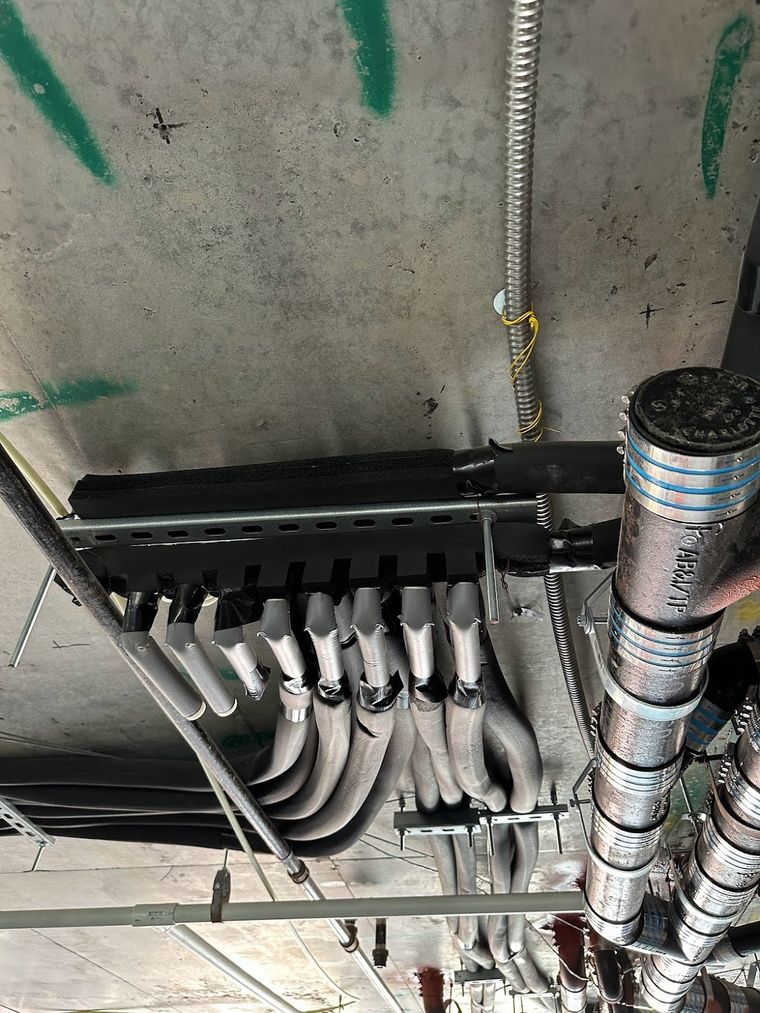
From Walk-Through to Startup: A Manhattan VRF Project, Step by Step
A VRF job touches the roof, every room it serves and the paperwork of at least one building. Here is the usual order, and who does each part.
-
Walk-through, load calculation and the refrigerant check
ART HVAC
We walk each room, the roof and the electrical room, and read the lease or alteration agreement, since it decides what you may add. The load calculation sizes every room for its sun, people and equipment; then each circuit is checked against the smallest room it serves, and one that comes out too big gets split or gets the detectors and shutoff valves the A2L rules allow for.
-
Drawings and spec sheets for the building
ART HVAC prepares them; the landlord or board reviews
The package shows the roof or terrace layout with the steel the units stand on, the piping route floor by floor, and each unit's sound rating. The Noise Code allows 42 dB(A) for one unit and 45 dB(A) for all of them together, measured 3 feet from a neighbor's open window, so on a roof with several modules the total is what we design to. When the managing agent asks, we send a certificate of insurance naming the building.
-
Landmarks, if the building is protected
You or your architect apply; we prepare the drawings and spec sheets
In a landmarked building or a historic district, rooftop units need a Landmarks Preservation Commission permit. Staff can approve units that can't be seen from the street, and minimally visible ones when hiding them isn't possible. Expect a sightline drawing taken at eye level from across the street, steel and parapet included, and possibly a full‑size mock‑up on the roof.
-
DOB filings
ART HVAC handles the DOB filing; a licensed master electrician files the electrical permit
A VRF on R‑32 or R‑454B falls outside the DOB's permit exemption for small refrigerating systems, which covers only Group A1 refrigerants such as R‑410A, and only up to 25 tons. New steel on the roof is structural work and new circuits are electrical work, and each has its own filing even where the mechanical side would be exempt.
-
Rigging day
Rigging crew, then ART HVAC
Condensing units go up by crane, or by hoist or freight elevator when the units and the building allow it. A crane standing on a Manhattan street needs a DOT permit, the job generally needs a crane notice filed with the DOB, and the lift is booked with the building.
-
Piping, pressure test and commissioning
ART HVAC; on A2L systems a special inspector witnesses the test
We braze the piping, hold it under nitrogen pressure and pull a deep vacuum before any refrigerant goes in. Then every indoor unit is addressed and run in both modes, the charge is set to the manufacturer's figure, the controls are programmed zone by zone, your staff learn the system, and we register the manufacturer warranty. Our price list puts a 3 to 8 zone install at 3 to 10 days.
-
A service plan from the first season
ART HVAC
A VRF system keeps its own history of fault codes, and our diagnostics start there. Our VRF maintenance agreements in the borough run twice a year, before the cooling season and before the heating season. Every maintenance visit ends with a written condition report.
VRF System Costs in Manhattan and What Drives Them
Our NYC price list has one VRF line, for systems of 3 to 8 zones. Anything bigger is priced from its own drawings, and so is work on a system that is already in place, because no two buildings route their piping the same way.
- VRV/VRF system, 3 to 8 zones
- $15,000–$45,000
- Condensing unit, indoor units, piping, central controller, electrical, commissioning, staff training and warranty registration.
- Larger systems and whole floors
- Quoted per project
- From the load calculation and the drawings.
- Repairs, diagnostics and maintenance agreements
- Quoted on site
- Priced in writing before any work.
What moves the price here
- Getting the units up
- A crane on the street, with its permits, costs more than a hoist or the freight elevator.
- Steel on the roof
- New rails or dunnage, and the structural filing that comes with them.
- The piping route
- How many floors and feet lie between the roof and the indoor units, the shafts available, and the sleeved, fire‑rated runs A2L piping needs in public corridors.
- Heat recovery
- Branch boxes and a three‑pipe layout cost more than a heat pump system.
- Indoor unit types
- Concealed ducted units bring ductwork and access panels; cassettes and wall units are simpler to fit.
- Your building’s schedule
- Night or weekend work and freight elevator bookings stretch the job and its labor.
Installation estimates are free. We look at the space, the roof and the electrical room, then send a written, itemized estimate. Repairs on an existing VRF system are quoted on site, before any work; residential repair ranges are on our price list.
Con Edison incentives. Con Edison's commercial program pays customers who move a building's heating to electricity, and VRF heat pumps count, in existing buildings and gut rehabs but not in new construction. The work goes through a contractor on Con Edison's participating list, and apartment buildings with five or more units have a separate multifamily program. We walk you through the incentives your project may qualify for.
Local Law 97. Buildings over 25,000 gross square feet have emissions limits that started in 2024 and get stricter in 2030. If yours is one of them, ask the owner or the building’s energy consultant how a VRF project counts toward those numbers before the design is final.
VRF Jobs Across Manhattan, From East Harlem to Tribeca
VRF and VRV systems our crew has worked on around the borough: diagnostics by fault code, control board, compressor and fan motor replacements, leak searches and maintenance agreements. Each line names the brand and what was done.


Uptown
-
East Harlem
- Daikin VRV heat pump system, 5 tons: main outdoor control board replaced, programmed and tested
- Daikin VRV: outdoor fan motor replaced, heating and cooling checked
-
Upper West Side
- LG VRF in an apartment: maintenance and deep cleaning of six concealed floor‑standing indoor units and their condensate pumps, one pump replaced
- LG VRF with four indoor units: leak search found two evaporator coils leaking beyond repair in place; replacement recommended
- LG VRF: worn refrigerant line insulation replaced inside an indoor unit, condensate pump cleaned, an overcharge corrected to the manufacturer’s figure
-
Midtown West
- Mitsubishi VRF system with four outdoor units, ducted and wall‑mounted indoor units and a ventilation unit: maintenance twice a year
- Mitsubishi City Multi: compressor and inverter board replaced
-
Midtown East
- LG VRF system: refrigerant leak found and repaired, then pressure‑tested, evacuated, recharged and restarted
-
East Village
- LG VRF system diagnostic: stored fault codes, communication between units, pressures and temperatures, with written findings
-
Tribeca
- LG VRF with three indoor units: a CH03 communication fault traced to one indoor unit’s control board by swapping controllers
- LG VRF system: main control board and power supply board replaced
- Mitsubishi City Multi, 5 tons: main control board replaced
- Mitsubishi City Multi with 13 ceiling cassettes: maintenance visits under an agreement
Downtown
Clients on VRF Repairs and Building Calls
All reviews on GoogleWe had an ongoing issue with our LG VRF system that other technicians were unable to properly diagnose or repair. ART HVAC was called in, and their technician quickly identified a problem with the control board using professional diagnostic tools and specialized software. After the replacement part arrived, the system was restarted and another issue was discovered during commissioning. The team continued troubleshooting until the entire system was fully operational. The VRF system is now running perfectly in all modes. Professional approach, strong technical knowledge, and persistence in solving complicated problems. Highly recommended
The technician was a great communicator about time to the building and the required fix. Would book with him again if there are any other AC issues.
VRF Questions From Manhattan Tenants, Owners and Managers
Our office building turns the air off at 6 p.m. Can we add our own VRF system?
Usually it comes down to the landlord's consent. A landlord only has to run the building‑wide heating and cooling during the hours your lease lists, so a tenant with a server room or late hours may need a system that serves its space alone. Expect that system to be yours: the city's commercial leasing guide notes that a tenant will likely have to repair, maintain and replace a unit that serves only its space. Settle roof rights, the piping route and electrical capacity with the landlord first.
Do we need a DOB permit for a VRF system in Manhattan?
For a new system on R‑32 or R‑454B, yes. The DOB's permit exemption for small refrigerating systems covers only Group A1 refrigerants such as R‑410A, and only up to 25 tons. Either way, new steel on the roof and new electrical circuits have their own filings, and a landmarked building also needs a Landmarks Preservation Commission permit. We handle the DOB filing; the electrical permit is filed by a licensed master electrician.
Can a new VRF system still use R‑410A in New York?
Only in narrow cases, and not for long. New York's Part 494 bars new VRF systems on refrigerants with a global warming potential above 700 from January 1, 2026. A state variance lets R‑410A systems that four manufacturers listed be installed until January 1, 2027, and the federal rule allows R‑410A VRF systems built from parts made before 2026 until the same date. A project designed now should plan for an A2L refrigerant such as R‑32.
Our VRF runs on R‑410A. Can we keep repairing it?
Yes. The bans cover new systems, and servicing with R‑410A is still allowed. Two cautions. Replacing enough of a system can make it count as new under the state rule, so a large replacement should be planned around the new limits. And in a commercial building, a circuit that holds 50 pounds of refrigerant or more falls under New York's Refrigerant Management Program: regular leak inspections, and a leak repaired within 14 days, or 45 if a technician or parts aren't available.
How loud will the condensing units be for our neighbors?
The city's Noise Code limits one unit to 42 dB(A) and all of them together to 45 dB(A), measured inside the neighbor's property 3 feet from an open window. On a roof with several VRF modules, the combined limit is the one that matters. Placement does most of the work: away from bedroom windows, behind a parapet or barrier, on rails or curbs that keep vibration out of the roof, and with quieter models where the margin is tight.
We are replacing an old VRF with an R‑32 system. Can the old piping stay?
Sometimes. Daikin says its R‑32 VRV EMERION has a field setting that lets it reuse an existing R‑410A piping network, which matters when the pipes run behind finished walls. The city's A2L rules still apply to that piping: the refrigerant calculation covers rooms the pipes pass through, and piping in public corridors needs a second pipe and a two‑hour fire‑rated enclosure. We check the route, the pipe sizes and the insulation before counting on it.
How often should a VRF system be serviced?
Our VRF maintenance agreements run twice a year, before the cooling season and before the heating season. A visit covers the indoor units (filters, coils, drain pans and condensate pumps), the outdoor units (coils, fans, electrical connections and operating pressures) and the fault code history. Every maintenance visit ends with a written condition report. Repairs the visit turns up are priced before any work.
Does Con Edison offer incentives for VRF in an office building?
Con Edison's commercial program covers VRF heat pumps that take over heating in existing buildings and gut rehabs, but not in new construction, and the incentive goes through a contractor on Con Edison's participating list. Apartment buildings with five or more units have their own multifamily program. We can walk you through what your project may qualify for.
More on VRF, Heat Pumps and Service in the Borough
- Service VRF and VRV installation Design and installation across NYC
- Service VRF repair and maintenance Diagnostics, repairs and service agreements
- Brand Daikin commercial and VRV EMERION, indoor units, controls and warranty
- Guide What is VRF? How variable refrigerant flow works
- Prices Price list Every service with its range
- Area Closet heat pumps and PTACs Water-source units in high-rises
- Area Mini-splits for one or a few rooms Outdoor unit placement and board paperwork
- Area HVAC repair in Manhattan Breakdowns on other kinds of systems
- Area HVAC maintenance in Manhattan Tune-ups and service plans
- Area Everything we do in Manhattan Heating, cooling and refrigeration
Planning a VRF System, or Keeping an Old One Running?
For a new system, send the floor plan, the lease or alteration agreement if you have it, and photos of the roof. For an existing one, the brand and the fault code on the controller tell us most of what to bring.