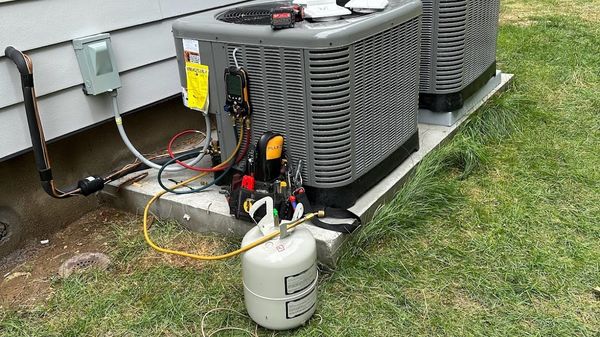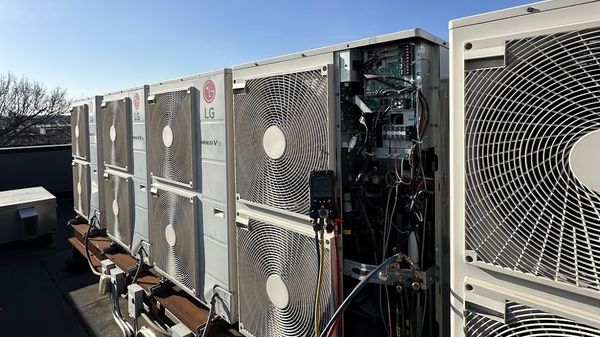
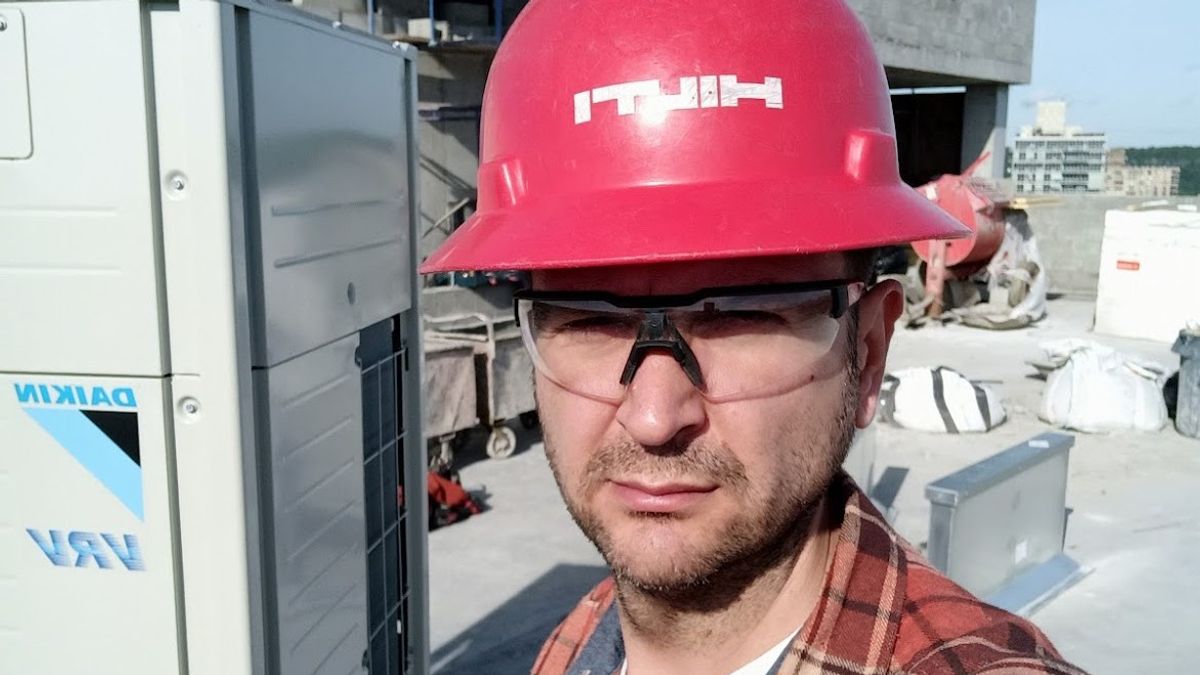
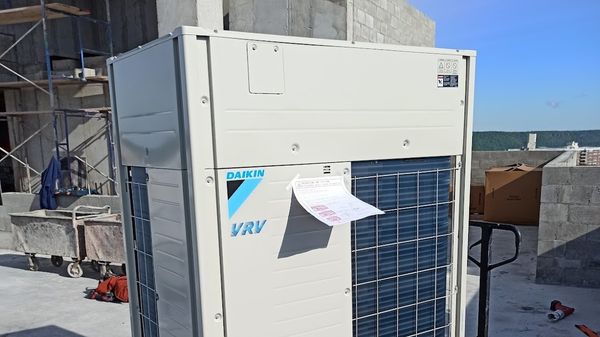
VRF / VRV system installation in progress on a NYC commercial building by the Art HVAC team
Back to Blog HVAC TIPS

What Is VRF HVAC? How Variable Refrigerant Flow Works

Jul 7, 2026 9 min read Alex Weber
Quick Read

This article covers:

  • What VRF (and VRV) actually means — and why the two names are the same thing
  • How an inverter compressor modulates refrigerant instead of cycling on and off
  • The difference between heat-pump and heat-recovery VRF — and when each one pays off
  • Where VRF fits in NYC apartments, brownstones, offices, and mixed-use buildings
  • What a VRF system costs to install, and the maintenance it needs to last

Estimated read time: 5 minutes.

VRF stands for variable refrigerant flow. It is a heating and cooling system built around one — or a few — outdoor condensing units that feed refrigerant to many indoor units, and the whole idea is in the name: the system varies how much refrigerant it sends to each indoor unit, moment to moment, so every room gets exactly the amount of heating or cooling it needs and nothing more.

You will also hear it called VRV. That is not a different technology — VRV (variable refrigerant volume) is simply Daikin's trademarked name for the same idea, coined when the company introduced it in the 1980s. Because the term is protected, other makers like Mitsubishi, LG, and Samsung call their systems VRF. When a contractor says VRV, they mean a Daikin-style VRF system.

If a ductless mini-split is the small version of this idea — one outdoor unit, a handful of indoor heads — then VRF is the building-scale version: dozens of indoor units on a single refrigerant loop, each independently controlled, with far more capacity and smarter load-sharing. Here is how it works, and where it earns its keep.
Warning Sign #01

1. An Inverter Compressor That Modulates

A conventional AC compressor has two settings: full blast or off. VRF uses an inverter-driven, variable-speed compressor that ramps anywhere from about 10% to 100% of capacity, then settles at the exact output the building is asking for and holds it there.

Variable speed from ~10% to 100%
No hard on/off cycling
Holds temperature within a degree
Draws far less power at part load
Less wear than stop-start compressors
Warning Sign #02

2. Refrigerant Carries the Heat — Not Air or Water

There is no bulky trunk ductwork moving conditioned air across the building and no water loop to freeze or leak. Thin copper line sets run from the outdoor unit to each indoor unit, which makes VRF compact and a natural fit where shaft space and ceiling height are scarce.

Small-diameter copper line sets
No large duct trunks or air handlers
Routes through tight NYC risers
Long runs between floors are fine
Every indoor unit taps the same loop
Warning Sign #03

3. Branch Controllers Direct the Flow

Between the outdoor unit and the indoor units sit branch selector boxes and electronic expansion valves that meter refrigerant to each zone in real time — opening up for the conference room that just filled with people, throttling back for the empty office next door.

Electronic expansion valve per zone
Branch selectors route the refrigerant
Each zone controlled on its own
Setpoints per room, not per floor
Occupancy and load drive the flow
Warning Sign #04

4. Heat Pump or Heat Recovery

A heat-pump VRF heats or cools the whole system at once — every indoor unit is in the same mode. A heat-recovery VRF does both at the same time: it captures heat pulled out of a warm zone and moves it to a zone that needs warmth, instead of rejecting it outside.

Heat pump: all zones one mode
Heat recovery: simultaneous heat + cool
Recovery reuses waste heat
Ideal for mixed-use and core/perimeter
Recovery costs more up front
Warning Sign #05

5. Part-Load Efficiency Is the Real Payoff

Buildings almost never run at 100% load. VRF spends most of its life at part load, where a modulating compressor is dramatically more efficient than equipment that cycles. That is why VRF often beats conventional systems on running cost even though it costs more to install.

Real buildings run at partial load
Modulation beats on/off cycling
Lower kWh across the whole season
Zone-level control cuts waste
Strong base for phased electrification
A Quick Rule of Thumb

VRF earns its premium when a building has many rooms with different needs at the same time — a brownstone with sunny top-floor bedrooms and a cold garden level, an office with a packed conference room beside empty cubicles, or retail below apartments. If you only have one or two rooms to condition, a ductless mini-split does the same job for far less. VRF pays off at scale, not for a single zone.

TYPICAL INSTALLED COST, NYC (2026)

What VRF Costs to Install in NYC (Installed)

2–3 Zone Multi-Split$8,000–$18,000
Small VRF (Apartment / Brownstone)$20,000–$40,000
Heat-Recovery VRF (Mixed-Use)$40,000–$90,000
Whole-Building Commercial VRF$90,000–$250,000+

* Installed NYC pricing including outdoor units, indoor heads, line sets, branch controllers, controls, and electrical — not equipment-only figures. Heat-recovery systems and long vertical pipe runs push toward the top of each range. A firm number always follows a site visit and load calculation.

VRF Heat Pump vs. VRF Heat Recovery

Heat-Pump VRF
All indoor units run one mode at a time — heat or cool
Lower equipment and installation cost
Simpler two-pipe refrigerant design
Great for homes and single-tenant offices
Best when the whole space wants the same thing
Still fully zoned for temperature per room
Heat-Recovery VRF
Heats some zones while cooling others, at once
Higher up-front cost, lower running cost in mixed loads
Three-pipe design with branch selector boxes
Ideal for mixed-use, hotels, offices with a hot core
Reuses waste heat instead of rejecting it
Best when different rooms disagree year-round

Is VRF Right for Your NYC Building?

VRF is not automatically the answer — it is the right answer for specific situations. Here is how to tell:

  1. Start with the building, not the brochure. VRF shines in multi-room, multi-tenant, or mixed-use buildings where zones genuinely differ. A single open loft rarely justifies it; a five-story brownstone or a floor of offices usually does. A sound system selection starts from your layout and load, not a product line.
  2. Check the electrical service. VRF is all-electric, and older NYC buildings often need a service or panel upgrade to carry it. That belongs in the budget from day one — it is normal, just make sure the quote includes it rather than discovering it mid-job.
  3. Respect the refrigerant piping. Line-set length and the vertical lift between outdoor and indoor units have manufacturer limits. Runs that exceed them cause poor performance and reliability problems, so the design has to come from someone who has installed VRF before — not learned on your building.
  4. Plan for commissioning and maintenance. VRF is precise, which means it needs a correct refrigerant charge and yearly attention. Budget for VRF service and maintenance the way you would for a commercial elevator — it is what protects the efficiency you paid for.
The best VRF install is boring: sized to the building, piped within spec, commissioned properly, and maintained on schedule. That is what turns the technology into an actual low utility bill.

We design, install, and service VRF and VRV systems across Manhattan, Brooklyn, and Queens — from a single brownstone to a full commercial installation — and we will tell you honestly when a simpler ductless setup would serve you better.

VRF, Electrification & Local Law 97

Because VRF is all-electric and highly efficient at part load, it is one of the main tools NYC owners use to cut carbon and stay under Local Law 97 emissions caps. Replacing gas equipment with a well-designed VRF system can lower a building’s direct carbon emissions by roughly 40–60%, and heat-pump equipment can qualify for Con Edison and NYSERDA Clean Heat rebates. If you are weighing the switch, our comparison of heat pumps vs. traditional systems and the rebate details explain what qualifies.

VRF HVAC

Frequently Asked Questions

Find answers to common questions about our HVAC, plumbing, and refrigeration services.

Yes. VRV (variable refrigerant volume) is Daikin's brand name for variable refrigerant flow; VRF is the generic industry term for the same technology. Because 'VRV' is trademarked, makers like Mitsubishi, LG, and Samsung call their systems VRF. Functionally they work the same way — one outdoor unit modulating refrigerant to many independently controlled indoor units.

A ductless mini-split is essentially a small VRF: one outdoor unit serving one to about five indoor heads. True VRF scales far beyond that — dozens of indoor units on a single loop, longer piping, higher capacity, and heat-recovery options that let some rooms heat while others cool. For one or two rooms a mini-split is the practical choice; for a whole building, VRF is.

Yes. Modern VRF heat pumps are rated to heat well below freezing, and cold-climate models hold usable capacity into the low single digits Fahrenheit. In the coldest snaps some buildings keep a backup heat source, but for most of a NYC winter a properly sized VRF system heats the building on its own.

With correct commissioning and yearly maintenance, VRF equipment typically lasts 15–20 years. The compressor and controls matter most, and both depend heavily on a correct refrigerant charge — which is exactly why annual service is not optional on these systems.

It depends on the building. VRF costs more to install than conventional equipment, but its part-load efficiency and zone-level control lower running costs, and for buildings over 25,000 square feet it helps with Local Law 97 compliance. In multi-zone and mixed-use buildings the payback is real; for a single room it is not.

That is one of its biggest advantages. VRF uses small copper refrigerant lines instead of large ducts, so it retrofits into brownstones, lofts, and older commercial buildings with no room for ductwork. The indoor units mount on walls, ceilings, or in soffits, and the line sets route through compact chases.

Thinking About VRF for Your Building?

Whether it is a single brownstone or a full commercial floor, we will assess the building, size the system properly, and tell you honestly whether VRF, ductless, or a conventional system is the smart money. Free consultations across NYC and Long Island.

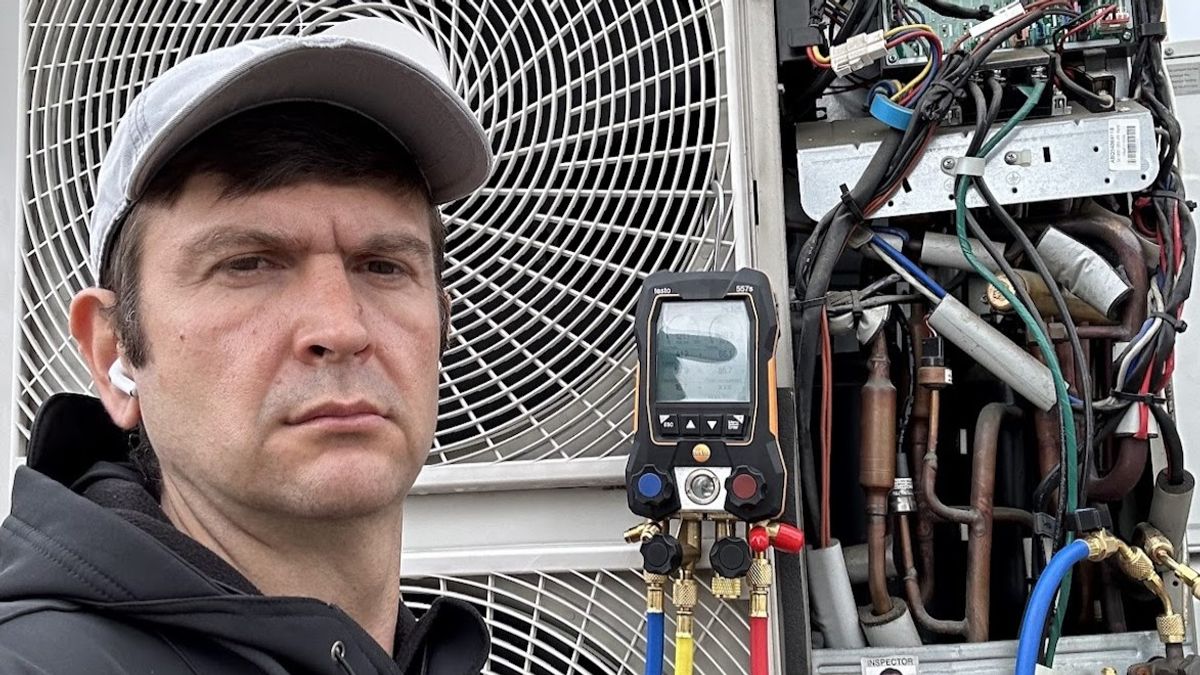
Alex Weber