
HVAC Maintenance in Manhattan, With a Written Record of Every Visit
HVAC maintenance in Manhattan often has a second reader. A condo may want a service contract on file with the managing agent, a store or office lease a contract the landlord can see, and a warranty claim some proof the unit was looked after. We service closet heat pumps, fan coils, PTACs, ducted units above the ceiling, splits and rooftop units, and every visit ends with a written condition report: what was cleaned, what shape each unit is in and what needs attention.

- Every maintenance visit ends with a written condition report
- Split or central AC tune‑up: $250–$450
- Closet heat pumps, PTACs, fan coils, several units: quoted on site
- Anything needing repair is priced before work starts
Who Asks for Proof of HVAC Maintenance in Manhattan
In a house, upkeep is between you and the furnace. In an apartment or an office here, other people can have a say, and they ask for paper, not promises. Four of them, and what each one can ask for:
| Who asks | What for |
|---|---|
| Your condo board | A maintenance contract with an approved vendor, filed with the managing agent |
| Your landlord, for a store or office | A service contract for the units serving your space, shown on request |
| The manufacturer | Proof of upkeep; model, serial number and dates for a claim |
| The city, if you rent the apartment out | From June 2031, a yearly inspection of opted‑in cooling, with records |
A condo that writes it into the rules
The rules filed for one condominium on Gramercy Park require every unit owner to keep a maintenance, service and repair contract for the heating and air conditioning in the apartment, with a vendor the board approves and to its guidelines. A copy goes to the managing agent, each renewal has to reach the agent before the old contract runs out, and so does the vendor’s insurance certificate. An owner who ignores the rule can be fined $1,000 a month.
Not every building goes that far. Ask the managing agent whether your house rules or the board’s guidelines say anything about yearly service, and get the answer in writing. If the building wants our certificate of insurance on file, we send one naming the building and its managing agent.
A lease for a store or an office
The city’s Small Business Services guide to commercial leases is blunt: if a unit serves only your space, you will likely have to repair, maintain and replace it. The model retail lease published by the New York City Bar Association goes further. The tenant keeps a service, maintenance and repair contract for the units serving the premises, with a company the landlord finds acceptable, and hands over a copy within 10 days of being asked. If the tenant doesn’t, the landlord may hire a company and bill the tenant as additional rent.
In the Bar’s form that clause sits in the repairs and maintenance article; look for it in the same place in yours. If it names a number of visits, the agreement should match it. Our maintenance agreements in the borough run from two visits a year to four.
The manufacturer, when something fails
A warranty claim is where a missing record costs the most. ClimateMaster’s home warranty covers only one- and two‑family houses, so a closet unit in an apartment building falls under its commercial warranty: 12 months from start‑up or 18 from shipment, whichever comes first, with no filters or labor, and no coverage for damage caused by improper maintenance or by contaminated water. Friedrich’s current PTAC warranty does cover apartments and condos, but not failures from maintenance that wasn’t done as its instructions say, or from running the unit while drywall is being sanded near it. Its manual suggests keeping a log of maintenance dates, and a claim needs the model, the serial number and the date the part failed.
The city, if you rent the apartment out
Local Law 23 of 2026 adds cooling to the city’s housing code. Tenants can ask for it from March 1, 2028. From June 1, 2030, each bedroom a tenant opts in must have cooling that can hold it at 78°F or below from June 15 to September 15, and permanent cooling equipment in a rented apartment has to be kept able to do that. From June 1, 2031, cooling provided for an opted‑in room gets an inspection once a year, with records kept in a form HPD approves. For a condo or co‑op apartment you rent out, the law treats the unit owner, or the shareholder on the proprietary lease, as the owner.
What the Written Report Records, Line by Line
Every maintenance visit ends with a written condition report. Here is the shape of one after a spring visit to an apartment with three closet units, filled in with made-up values. The numbers beside the lines say why each one is there and who reads it.
Sample · made-up values, not a client’s record
Maintenance visit report
ART HVAC
- Visit
- Spring, before cooling season
- Equipment
- Three water-source heat pumps
Unit 1 · Hall closet
- Filter
- Replaced
- Coil
- Light dust, cleaned in place
- Drain pan, line
- Flushed, draining freely
- Strainer
- Cleaned
- Condition
- Running normally in cooling
Unit 2 · Bedroom closet
- Done
- Filter, coil, drain, strainer
- Condition
- Running normally in cooling
Unit 3 · Second bedroom
- Drain
- Slow: line flushed, pan treated
- Condition
- Running; drain to watch
- Needs attention
- Unit 1 hose cracking at the valve. Priced; not replaced.
- Next visit
- Before October 1; recheck Unit 3 drain
Why each line is there
-
The date
One dated page per visit is easy to file. If your condo rules or lease ask for proof, forward it to the managing agent or the landlord.
-
The filter
ClimateMaster: check filters monthly. Daikin fan coils: every three months. Friedrich PTACs: clean at least every 30 days. Between visits, the filter is yours to keep up.
-
The drain
ClimateMaster asks for a drain check twice a year, and a clogged line is how a closet unit floods the ceiling below.
-
The condition
How each unit ran on the visit, in plain words, so the next visit has something to compare with.
-
Priced, not done
Repairs are written up with a price for you to approve. Nothing is replaced on a maintenance visit without your OK.
-
The next visit
Set by the building: before the switch to cooling in spring and before heat season opens on October 1.
Other units get their own lines: a fan coil’s drain pan, filter and cabinet liner; a PTAC’s sleeve, plug and outdoor coil; a rooftop unit’s belts and gas heat, with a combustion analysis where the equipment allows it.
One Visit for a Whole Apartment or Office Floor
A large apartment can have a closet unit for every bedroom, and an office floor a row of ducted units over its hung ceiling. Doing them all on one visit takes a little preparation on your side and on the building’s.
-
Name every unit, room by room
You
Which rooms have a unit, where each one sits, and a photo of each nameplate. If you are not sure which units are yours and which belong to the building, say so; we sort that out on the first visit.
-
Clear the way to each one
You
Closet doors open and the space in front of the unit empty, furniture off the front of a PTAC, nothing stacked under a ceiling access panel. The Gramercy Park condo’s rules spell out the last one: the ceiling access doors must never be blocked.
-
Paperwork and a time slot
ART HVAC and the building
We send the certificate of insurance the building asks for and book the visit inside its contractor hours, with the super if the service elevator is needed.
-
Unit by unit
ART HVAC
Filter, coil, drain pan and line, the strainer where the valves allow it, then a test run in the season’s mode. Each unit gets its own lines on the report.
-
Valves that will not close
Super or building engineer
If a unit’s shutoffs don’t hold, its strainer and hoses wait until the building can close the riser. We note it on the report so the super can plan it, instead of opening a wet line in your closet.
-
One report for the visit
ART HVAC
Every unit, what was done, how it ran, and a price for anything that needs repair. Forward it to the managing agent or the landlord if they keep records.
When to Book: The Building’s Schedule Sets the Date
Outside, maintenance follows the weather. Inside a Manhattan building it follows the building: when a two‑pipe system switches from hot water to chilled, when the loop’s cooling tower starts, when heat season opens on October 1. Book around those dates and the visit can test the mode you are about to use.
| Unit | What the manual asks | Book it |
|---|---|---|
| Fan coil, two‑pipe system | Filter every 3 months; drain pan and coil yearly, before cooling season | Spring, before the switch to chilled water |
| Closet water‑source heat pump | Filter monthly; drain twice a year; coil and amps yearly | Spring for cooling, fall for the drain |
| PTAC or PTHP | Filters every 30 days; checks several times a year | Spring, and after dusty work |
| Rooftop unit | Quarterly checks; cooling and heating items each season | Spring and fall, as on our agreements |
Renovating? Turn the units off first
Friedrich tells owners not to run its units while framing, drywall, spackling, sanding, painting or flooring is under way in the room, and its warranty excludes failures from running during construction. ClimateMaster’s troubleshooting table lists construction dust on the coil among the causes of a high‑pressure trip. Switch the units off for the dusty weeks and book a cleaning before they run again.
Away for the summer?
The Gramercy Park condo asks owners who leave for long stretches to keep the apartment at no more than 80°F from May 15 to October 15 and no less than 60°F the rest of the year, so a unit keeps working with nobody home. A visit before you leave beats coming back to a full drain pan. For the building’s own boiler and what it checks before heat season, see our heat season checklist.
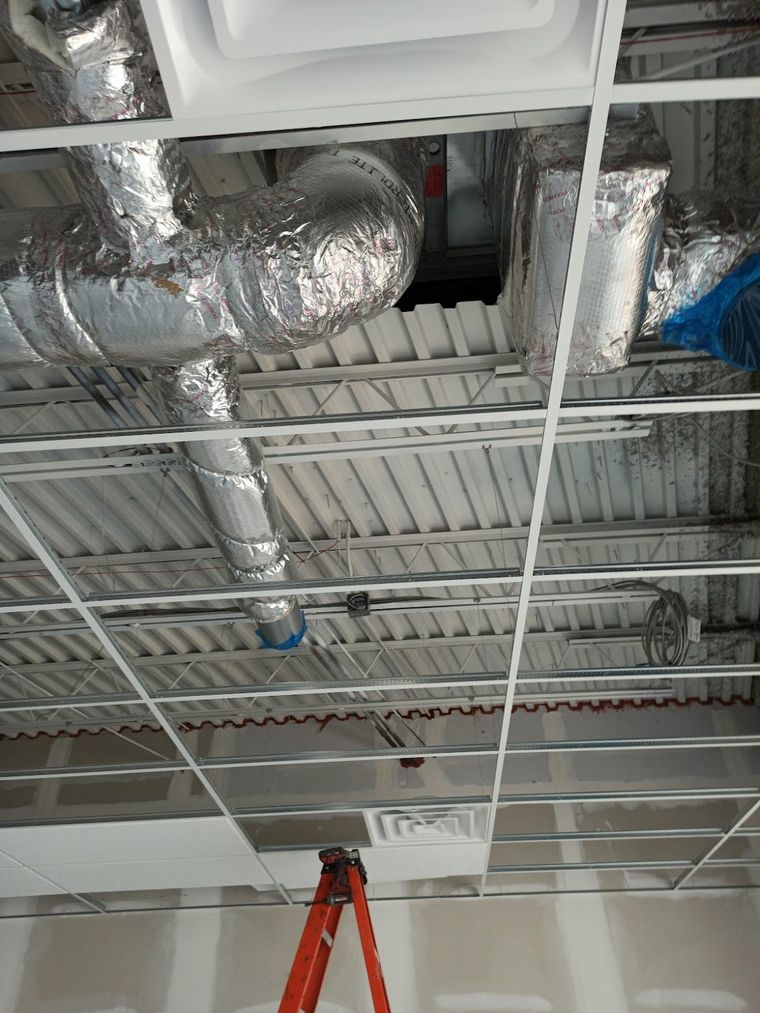
What Maintenance Costs in Manhattan, With Several Units
The one HVAC maintenance price on our NYC list is the AC tune‑up. Everything else depends on the kind of unit, how many there are and how they are reached, so it is quoted once we know.
- Split or central AC tune‑up
- $250–$450
- Filter, both coils, drain, electrical and thermostat checks, and a written condition report.
- Closet water‑source heat pump
- Quoted on site
- Strainer, drain and coil, priced once we know how many units and how they are reached.
- PTAC or PTHP
- Quoted on site
- Filters, coils, sleeve and grille, per the maker’s routine list.
- Fan coil
- Quoted on site
- Filter, drain pan, coil face and cabinet liner.
- Rooftop units and office agreements
- Quoted on site
- Two to four visits a year; the scope can follow your lease.
What changes the price in a Manhattan building
- How many units, behind how many doors
- Five closet units in one apartment are one visit. Five units in five apartments are five doors, five owners and five access arrangements.
- How each one is reached
- A closet door is quick. A ceiling access panel, a roof hatch or a booked service elevator takes longer.
- What the building has to do
- A strainer behind valves that won’t hold waits for the super to close the riser, which can mean a second trip.
When the visit finds a problem. It goes on the report with a price, and nothing is repaired without your approval. A separate repair call, outside maintenance, starts as a $200 service call, credited in full toward the repair. Who pays in a co‑op, a condo or an office is covered on our repair page for the borough.
Replacing instead? Closet units and PTACs past saving are covered on our heat pump page, splits on the mini‑split page. Installation estimates are free. Every range we charge is on the price list.
Recent Maintenance in Manhattan, Midtown to Tribeca
From our preventive maintenance records, Midtown down to Tribeca: the equipment, and what each visit or agreement covered.


Midtown
-
Midtown West
- Kitchen make‑up air units with heating and cooling, on a plan with four visits a year: filters at every visit, drains twice a year, coils once a year
-
Midtown East
- Two rooftop units and a central air system with a furnace, on a two‑visit plan: cooling side in spring, heating side in fall
-
Chelsea
- Five water‑source heat pumps: filters, coils, blower wheels, drains and strainers cleaned, water temperatures and amperage checked, a written report of the repairs needed
- HEPA air purification units: HEPA filters replaced and filter‑life meters reset under a two‑year agreement
-
East Village
- Mitsubishi ducted air handler: coil and drain pan cleaned, pan treated, drain flushed and water‑tested, float switch tested
-
Lower East Side
- Four 10‑ton air handlers and their condensing units: voltage, amperage, refrigerant pressures and temperature split recorded, with a report on their condition and the repairs recommended
-
Tribeca
- Central air conditioner tune‑up
Downtown
Clients on Service Visits, Upkeep Tips and Several Locations
All reviews on GoogleI recently had my air conditioning unit repaired and I am extremely satisfied with the service I received. The technician was prompt, professional, and knowledgeable. They quickly diagnosed the issue and explained the necessary repairs in a clear and understandable manner. The repair itself was done efficiently and effectively. The technician had all the necessary tools and parts on hand, which minimized any downtime. They worked diligently to fix the problem and ensured that everything was in proper working order before leaving. Not only was the repair completed to my satisfaction, but the technician also took the time to provide some helpful tips on how to maintain my air conditioning unit to prevent future issues. This level of customer service was greatly appreciated and demonstrated their commitment to ensuring customer satisfaction.
ART HVAC provides excellent service; they are professional and knowledgeable. I always reach out to them for my work. The company I work for owns several locations, and we have issues from time to time with our AC or heating systems, they are always very quick to respond, provide service, and fix the issue. I have been using their services for a long time and would recommend them to anyone wanting a trustworthy company.
Fortunate to find this company who serviced my AC unit!!! Thank you for providing an exceptional service
Excellent job! Thanks to the company. Now my air conditioner is like new.
Manhattan Maintenance Questions: Contracts, Records and Timing
My condo says I need an HVAC maintenance contract. What should it include?
Whatever your rules or the board's guidelines list. The rules filed for one Gramercy Park condominium, for example, ask for a maintenance, service and repair contract with a vendor the board approves, a copy with the managing agent, renewals before the old contract lapses and the vendor's insurance certificate on file. Send us the rule and we write the scope and the number of visits to match. Every maintenance visit ends with a written condition report you can forward.
Am I responsible for the rooftop unit over my store under my lease?
It may well be yours. The city's Small Business Services guide warns tenants that a unit serving only their space will likely be theirs to repair, maintain and replace, and the New York City Bar's model retail lease has the tenant keep a service contract and give the landlord a copy within 10 days of a request. Check the repairs clause of your own lease. Our maintenance agreements run from two to four visits a year.
Will skipping maintenance void my heat pump or PTAC warranty?
Not automatically, but it can sink a claim. ClimateMaster's commercial warranty, the one that covers closet units in apartment buildings, excludes damage caused by improper maintenance, and Friedrich's PTAC warranty excludes failures from not maintaining the unit as its instructions say. Keep the written reports with the warranty papers.
How often should a closet water‑source heat pump be serviced?
ClimateMaster's manual asks for the filter to be checked every month, the condensate drain inspected twice a year, and the coil and compressor amperage checked once a year. In a building that means a spring visit for the cooling side and a fall check of the drain, with filters changed in between.
I rent out my condo. What does Local Law 23 mean for its air conditioning?
Tenants can ask for cooling from March 1, 2028. From June 1, 2030, each bedroom a tenant opts in must have cooling that can hold it at 78°F or below from June 15 to September 15, and permanent cooling equipment has to be kept able to do it. From June 1, 2031, that cooling needs a yearly inspection with records in a form HPD approves. For a rented condo unit, the law treats you, the unit owner, as the owner.
Can you service every unit in my apartment in one visit?
Usually, if every unit can be reached and the building's hours allow it. Send a list of rooms with a photo of each nameplate, clear the closets and the ceiling access panels, and tell us the building's contractor rules. A strainer behind valves that won't hold may need a second trip once the super can close the riser.
Are the fan coils in my apartment mine to maintain, or the building’s?
Ask the managing agent before you book. In a co‑op the repair clause of the proprietary lease decides, and equipment that is part of the standard building equipment can be the co‑op's; our repair page for the borough explains the common wording. If the unit is yours, Daikin's fan coil manual asks for a filter check every three months and a drain pan and coil cleaning once a year, before the cooling season.
What does a maintenance visit cost in Manhattan?
An AC tune‑up runs $250 to $450 on our price list and ends with a written condition report. Closet heat pumps, PTACs, fan coils, rooftop units and visits with several units are quoted on site. Anything the visit turns up is priced before any repair; a separate repair visit is a $200 service call, credited in full toward the repair.
More for Manhattan Apartments and Offices: Repairs, Units and Guides
- Area HVAC repair in the borough Find the unit that stopped, and who fixes what
- Area Closet heat pumps and PTACs Chassis swaps and replacements
- Area Mini‑splits in Manhattan Placement, board paperwork and costs
- Area VRF and VRV systems Offices, shops and large apartments
- Service HVAC maintenance across NYC Visits and agreements for homes and businesses
- Prices Price list The AC tune‑up and every repair range
- Guide Heat pump or plain AC? Know what is in the closet before the visit
- Guide Duct inspection in NYC For ducted units above a hung ceiling
- Guide Heat season checklist What a building checks before October 1
- Guide Lower heating bills Filters, radiators and settings that matter
- Area Every service in the borough Other services for apartments, offices and shops
Maintenance on Record: Tell Us the Units and Who Reads the Report
List the units room by room, and tell us what your house rules, lease or warranty ask for. Every visit ends with a written condition report you can forward, and anything that needs repair is priced before work starts.