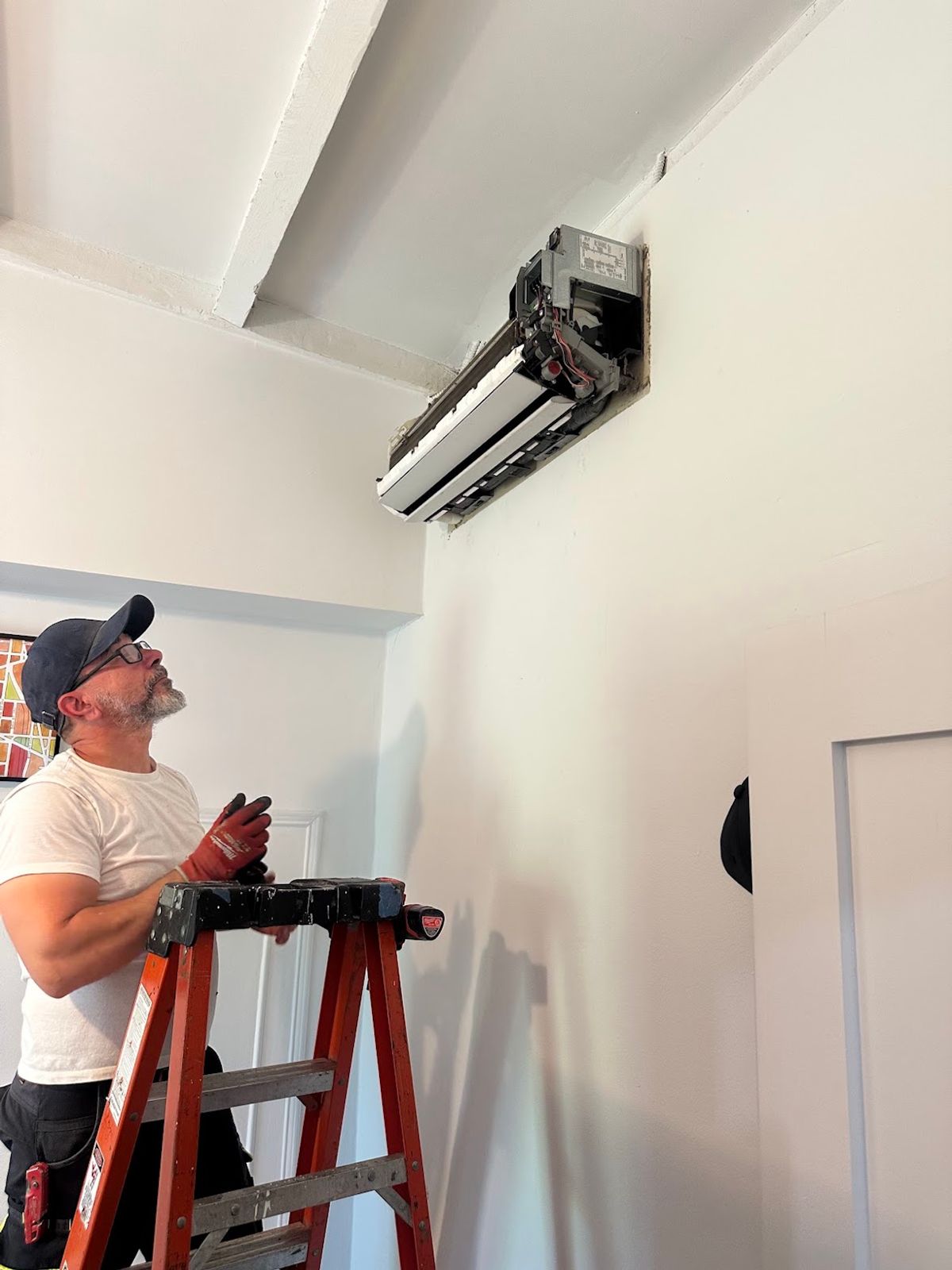
Art HVAC installer on a ladder mounting a ductless mini-split wall unit in a New York City apartment
Back to Blog HVAC TIPS

Best Ductless Mini-Split Brands for NYC Apartments: Fujitsu vs Mitsubishi vs Daikin

Sep 15, 2026 12 min read Alex Weber
Quick Read

This article covers:

  • Why the three brands are closer than their marketing suggests — and the four places they genuinely differ
  • Which line from each brand actually heats a NYC apartment in January, and which is a cooling unit with a heating mode
  • Why a single-zone system often outperforms a multi-zone one in a small bedroom, whatever the badge
  • What each configuration costs installed in NYC in 2026, and what the Con Edison incentive takes off the invoice
  • How co-op boards, landmark rules and pre-war walls decide the outcome before the brand does

Estimated read time: 5 minutes.

Asked which mini-split brand is best, most technicians who have installed all three will give the same unhelpful answer: any of them, installed properly, and it depends on the building. That answer is unhelpful because it is true. Mitsubishi Electric, Daikin and Fujitsu have been building inverter-driven ductless equipment for decades, their compressors and control boards come from the same tier of Japanese engineering, and a well-sized, well-commissioned system from any of the three will run fifteen to twenty years in a New York apartment.

The useful version of the answer is narrower. The brands differ in specific product lines, not across the board. They differ in how their cold-climate models behave below 5°F, in how far a given outdoor unit can throttle down, in what indoor formats they offer for a pre-war apartment with no place to put a wall unit, and in how their warranty terms and parts pipelines work in this city. Those differences decide the job — and they are the differences the brochures are least interested in explaining.

One more thing the brochures leave out. In a NYC apartment the brand is usually the third decision, after the building and the load. Where the outdoor unit can legally and physically go, how long the refrigerant lines have to run, what the co-op board will approve, and how many BTUs the rooms actually need — these narrow the field before a catalog is opened. A brand chosen first and forced onto the building afterwards is how a good system ends up performing like a bad one.

This article goes through what separates the three, what LG, Samsung and the value brands offer instead, what a system costs installed here, and how to run the decision in the right order. If you are still deciding whether a mini-split is the right move at all, start with mini-split versus window AC for a NYC apartment; our ductless installation page covers what the work itself involves.
Four Places the Brands Actually Differ

Strip away the finishes and the app, and the meaningful differences come down to these.

  1. Cold-climate performance. Every brand sells a standard line and a cold-climate line, and the gap between them is bigger than the gap between brands. Mitsubishi’s Hyper-Heating (H2i) models hold 100% of rated heating capacity at 5°F and keep running to −13°F, with the newer H2i Plus rated for usable heat down to −22°F. Daikin’s Aurora line is rated the same way — up to full capacity at 5°F, operation to −13°F. Fujitsu’s XLTH (Extra Low Temperature Heating) outdoor units hold rated capacity at 5°F and are rated to keep heating down to −15°F. The standard lines from all three lose a large share of their output in a cold snap. If the mini-split is going to be the only heat in the apartment, the choice is between the three cold-climate lines; if the radiators are staying, the standard lines are fine and cost less.
  2. How low the outdoor unit can throttle. An inverter compressor’s advantage is running at part load for hours instead of cycling. Its limit is the minimum output, and here the configuration matters more than the badge: a single-zone outdoor unit serving one head can throttle far lower than a multi-zone unit serving four. Put a 9,000 BTU head in a 120-square-foot bedroom on a large multi-zone system and it will cycle on and off, overshoot, and dehumidify poorly, whichever brand made it. Each brand publishes the minimum capacity per outdoor unit in its engineering data; that number decides small rooms.
  3. Indoor formats for buildings that will not take a wall unit. Wall-mounted heads are where the brands are most alike. The differences show up when a wall unit is not an option — a landmarked interior, a co-op that requires concealed equipment, a parlor floor with eight-foot ceilings. Fujitsu’s slim concealed-duct air handlers are the lowest-profile in the category and fit soffits the others do not. Mitsubishi and Daikin both offer ceiling cassettes, floor-mounted units for under-window installs, and concealed-duct units of their own. The brand with the format that fits the room is the brand for that room.
  4. Warranty terms and who backs them. The base warranties are similar; the extended ones are conditional, and the conditions are about the installer, not the equipment. Mitsubishi’s standard cover is five years on parts and seven on the compressor, rising to twelve and twelve when the system is installed under its contractor program and registered within 90 days. Daikin offers twelve years on parts with registration inside 60 days. Fujitsu gives ten years on parts and compressor with registration, and twelve when the install is done under its contractor program. All three now sell their new residential lines on lower-GWP refrigerants — R-32 for Daikin and Fujitsu, R-454B for Mitsubishi — and both refrigerants call for a technician equipped for A2L work, which is worth confirming before the first service visit.

The part that does not differ is worth stating plainly: none of the three has a reliability problem worth choosing around. The failures we see on all three are installation failures — undersized line sets, flare joints that were never torqued, outdoor units starved of airflow behind a parapet — and they look identical whatever the logo on the cover.

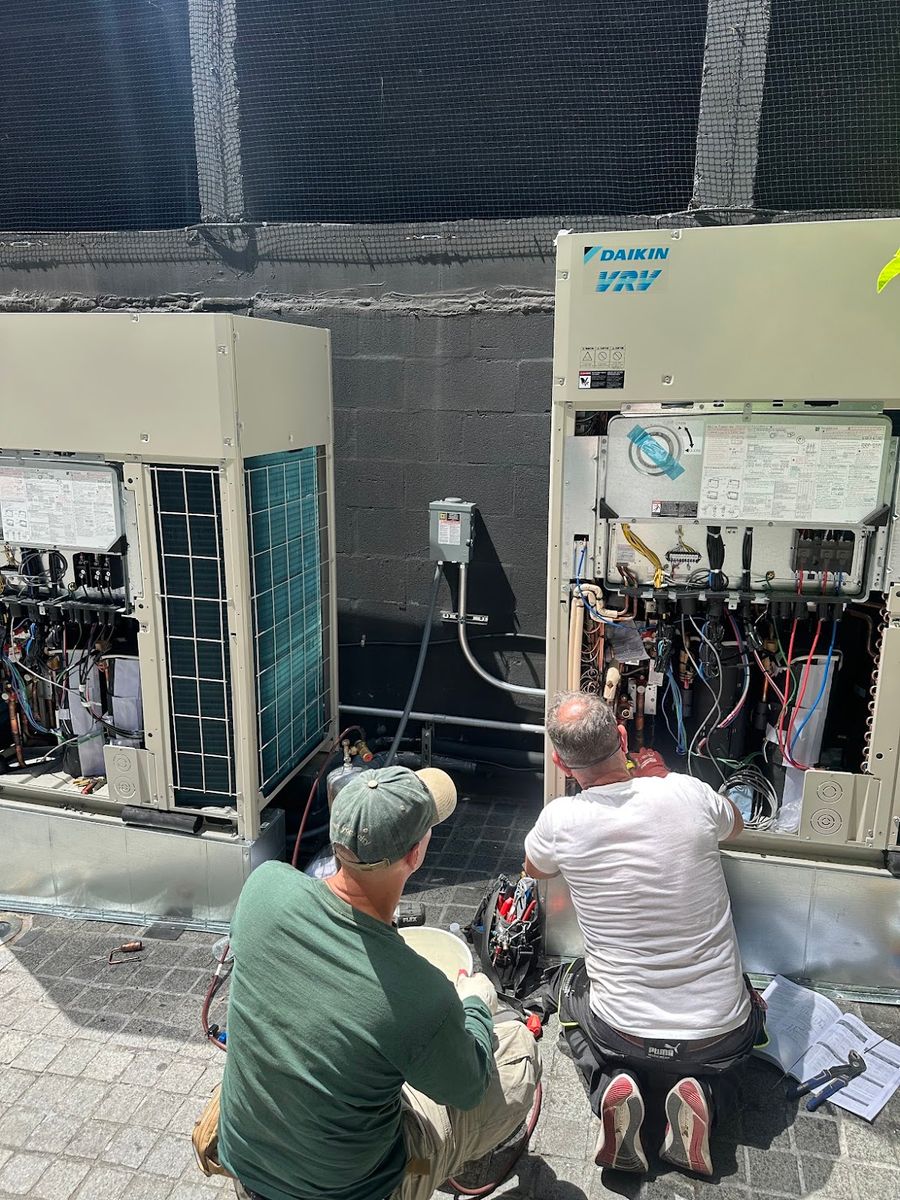
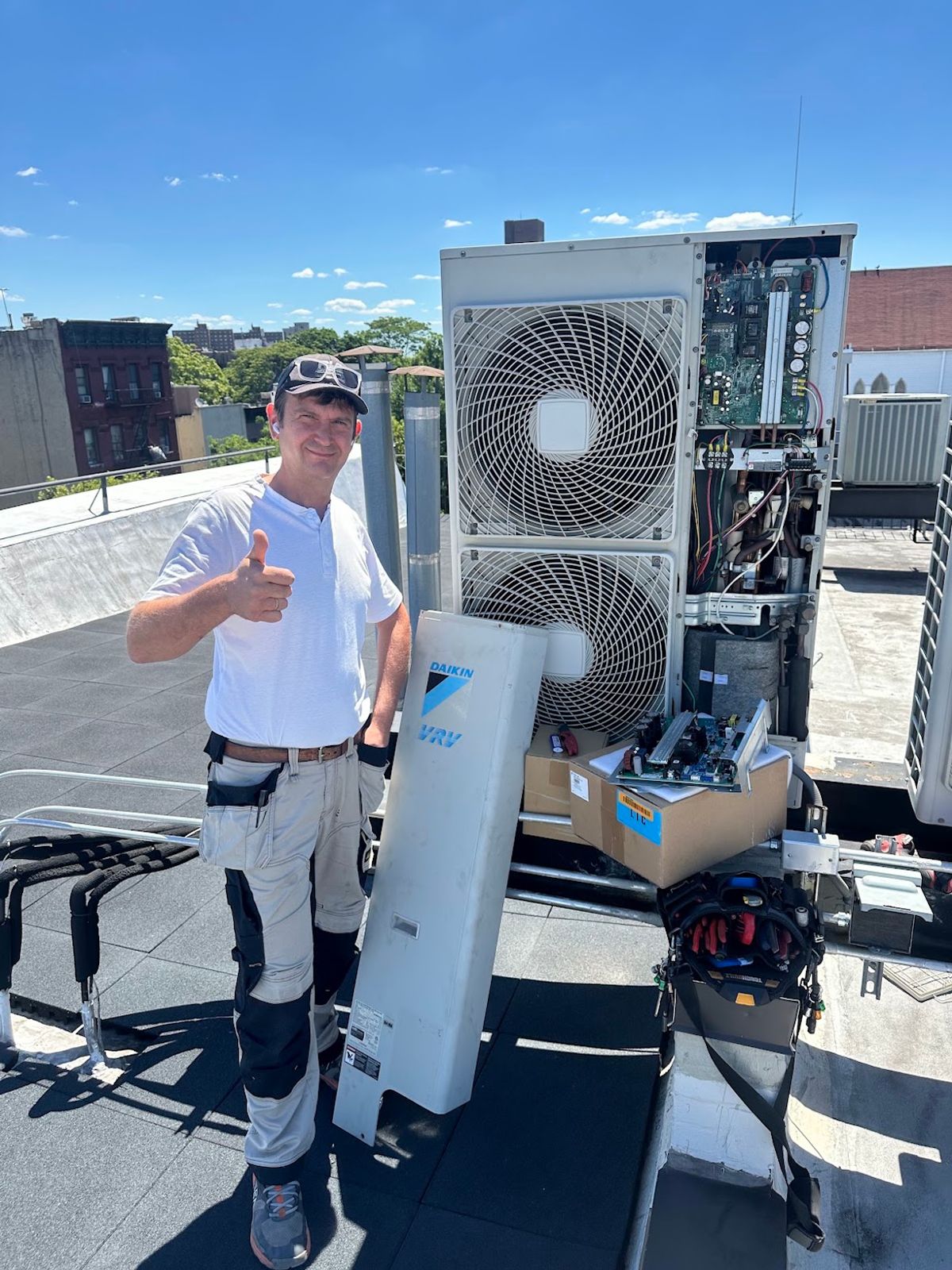
Two Art HVAC technicians commissioning Daikin outdoor units with the panels removed on a Brooklyn rooftop
Two Daikin outdoor units open on a Brooklyn roof during commissioning. The inverter board, the compressor and the coil are where brands differ. The plastic cover is not.
Brand #01

1. Mitsubishi Electric — The Default for a Reason

The brand most NYC contractors quote first, and the one with the deepest local parts pipeline — Mitsubishi Electric has sold ductless equipment in the US since the early 1980s, and since 2018 it has operated here as a joint venture with Trane. The M-Series wall units are the reference point everyone else is measured against; the Hyper-Heating H2i line is the one to specify if the system is the apartment’s only heat. Multi-zone outdoor units run two to eight heads, with a branch box above five.

Cold-climate line: Hyper-Heating H2i — 100% capacity at 5°F, runs to −13°F; H2i Plus to −22°F
New residential line on R-454B refrigerant
Warranty: 5 years parts / 7 years compressor standard; 12/12 under its contractor program with registration
Strongest parts availability in the city — boards, motors and valves usually within days
Premium pricing on equipment; labor is the same as for any other brand
Brand #02

2. Daikin — The Widest Catalog, and Our Official Partner

The world’s largest HVAC manufacturer, with a US manufacturing base in Texas that came with its 2012 acquisition of Goodman. Daikin builds its US residential ductless lines on R-32, a refrigerant it has run for years in other markets, and its catalog runs from entry-level single-zone wall units through the Aurora cold-climate line to residential VRF for a whole townhouse. We are an official Daikin partner — which matters less than it sounds for a single wall unit, and more for parts, technical escalation and warranty registration.

Cold-climate line: Aurora — up to 100% capacity at 5°F, operation to −13°F
Residential ductless on R-32; efficiency ratings at the top of the category on the newest wall units
Warranty: 12 years on parts with registration within 60 days
Broadest range of indoor formats and capacities; sensible mid-tier pricing
Whole-house residential VRF (VRV LIFE) for townhouses that outgrow a multi-zone
Brand #03

3. Fujitsu — Quiet, Compact, and Now Under Rheem’s Parent

Fujitsu General’s residential line — sold as AIRSTAGE since 2022, and still called Halcyon by most people — is the quiet specialist. Its wall units publish some of the lowest low-speed sound ratings in the category, and its slim concealed-duct air handlers are the answer to a pre-war ceiling with nowhere to hide a duct. Ownership changed in 2025: Fujitsu General became a wholly owned subsidiary of Paloma Rheem Holdings, Rheem’s parent company. US operations are still run from New Jersey, which keeps parts close.

Cold-climate line: XLTH — rated capacity at 5°F, heating down to −15°F
New residential lines on R-32; AIRSTAGE H-Series is the former Halcyon line, same model numbers
Warranty: 10 years parts and compressor with registration; 12/12 under its contractor program
Slim-duct air handlers with the lowest profile in the category — the pre-war ceiling solution
US headquarters in Fairfield, NJ; a smaller NYC installer base than Mitsubishi or Daikin
Brand #04

4. LG and Samsung — The Contenders

Both Korean brands make genuine cold-climate lines — LG’s LGRED° and Samsung’s Max Heat are each rated at 100% capacity at 5°F with operation to −13°F — and both are competitive on price and on features like Samsung’s draft-free Wind-Free indoor units. We install both. The gap to the top three is not the compressor; it is the depth of the installer and parts network in New York, and the odds that the contractor answering the phone in ten years has seen the unit before.

Cold-climate lines: LG LGRED° and Samsung Max Heat — 100% at 5°F, run to −13°F
Equipment pricing typically below Mitsubishi and Daikin for comparable capacity
Samsung Wind-Free indoor units for people who dislike feeling the airflow
Thinner NYC service and parts base than the big three — ask who services them locally
Both have models on the cold-climate lists that the Con Edison incentive requires
Brand #05

5. The Value Tier — Gree, Midea and the Badges Built on Them

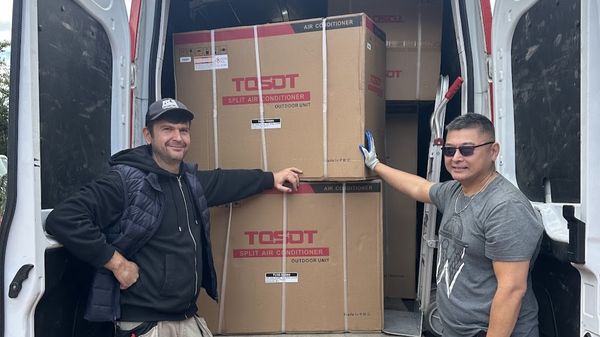
A large share of the world’s mini-splits come out of two Chinese manufacturers, Gree and Midea, sold under their own names and under a long list of others; TOSOT, Senville and Pioneer sit in the same tier, and so do some familiar American badges. The equipment is not junk; it is built to a price, with simpler controls, shorter warranties, thinner cold-weather performance and, in this city, a real question about who will service it. For a rental bedroom that needs cooling and a little shoulder-season heat, it can be the right call. For the only heat in an owner-occupied apartment, it usually is not.

Equipment cost typically 30–50% below the top three; labor cost is identical
Cold-weather capacity and minimum turndown are where the savings show
Check the cold-climate list before assuming the Con Edison incentive applies
Warranty support runs through distributors, not a manufacturer service network
Sensible for a single cooling zone; a compromise as sole heat
Brand #06

6. DIY Kits — Precharged Line-Set Units

Kits with precharged, quick-connect line sets are sold so that a handy owner can avoid a technician. In a NYC apartment that solves the wrong problem. The hard parts of the job here are the outdoor unit placement, the wall penetration through a masonry façade, the electrical circuit and the co-op paperwork — none of which the kit addresses. And because Con Edison’s incentive is paid through a participating contractor’s invoice, a self-installed unit is not eligible for it at all.

No contractor invoice, no Con Edison incentive — the discount is applied by the installer
Line-set length is fixed to the kit; NYC runs to a roof or rear yard often exceed it
Permits and co-op alteration agreements still apply; most boards will not accept a self-install
A masonry penetration, a condensate route and a dedicated circuit are still professional work
Reasonable for a detached garage in Suffolk County; a poor fit for a fifth-floor walk-up
The Brand Is the Third Decision

Before a brand comes up, two things have to be settled. First, the load: a Manual J calculation for each room, not a rule of thumb per square foot. NYC apartments vary enormously — a top-floor corner room with a western exposure and a ground-floor interior room can differ by a factor of two in the same building — and an oversized head short-cycles, leaves the room clammy in July and wears its compressor early. Second, the configuration: one outdoor unit per head, or one multi-zone unit for several. Single-zone systems throttle lower, run quieter and fail independently; multi-zone systems save façade space and money, which in a co-op with one approved location for outdoor equipment is often decisive. Only then does the brand question have an answer, because it is now a question about which brand’s specific outdoor unit meets that load at that minimum output in that location.

TYPICAL INSTALLED COST — NYC, 2026

What a Mini-Split Costs Installed in NYC, by Configuration

Single Zone, Standard Line — Cooling Plus Shoulder-Season Heat$3,000–$6,000
Single Zone, Cold-Climate Line — H2i, Aurora or XLTH$4,000–$6,500
Two Zones on One Outdoor Unit$6,000–$11,000
Three Zones$11,000–$18,000
Whole Apartment, Four to Five Zones$18,000–$30,000+

* Typical NYC installed ranges for Mitsubishi, Daikin and Fujitsu equipment, before incentives. Cold-climate lines sit at the top of each range; value brands run roughly 15–25% below on the same configuration, with labor unchanged. Rigging, long line-set runs, masonry penetrations, electrical upgrades and board-required engineering push past these figures. Con Edison’s NYS Clean Heat incentive comes off the invoice on qualifying full replacements. Planning ranges, not a quote.

Real Differences vs. Brochure Noise

Differences Worth Paying For
A cold-climate line rated at full capacity at 5°F, if the system is the only heat
A minimum output low enough for the smallest room on the system
An indoor format that fits the room — slim duct, floor unit, cassette — where a wall unit cannot go
A model on the cold-climate list, so the Con Edison incentive applies
A parts pipeline in New York, and an installer base that knows the line
A warranty term the installer can actually deliver, with the registration filed
Brochure Points You Can Ignore
A SEER2 number two points higher — invisible on a NYC bill next to sizing and line-set length
Indoor sound ratings a decibel or two apart on the lowest fan speed
Filter marketing — plasma, ion, nano — that replaces nothing you would notice
App features; every brand has one, and none of them fixes a short-cycling head
“Up to” capacity figures quoted without the outdoor temperature they were measured at
“Commercial-grade” on a residential unit — the residential lines are the residential lines

How to Run the Decision in the Right Order

Five steps, and the brand does not show up until the fourth. That is not a trick; it is how a system ends up doing what it was bought to do.

  1. Start with where the outdoor unit can go. Rear yard, roof, a bracket on the back wall, a setback — each has a line-set length attached, and each brand’s outdoor unit has a maximum run and a maximum vertical rise. In a landmarked building nothing visible from the street goes up without Landmarks Preservation Commission sign-off; in a co-op the location is usually the board’s decision, not yours. This step alone eliminates some configurations before a catalog is opened.
  2. Decide what the system is for. Cooling with the radiators staying on is one job; replacing the heat entirely is another. The second requires a cold-climate line and a load calculation done at New York’s winter design temperature, and it is also the job Con Edison pays the most for — the incentive is largest when the old fossil-fuel heating is decommissioned. Our guide to the 2026 heat pump rebates covers the amounts; the point here is that the answer decides which product line you are shopping in.
  3. Size every room, then pick the configuration. A room-by-room Manual J, then the single-zone versus multi-zone question, then a check that the outdoor unit’s minimum output suits the smallest head on it. A living room and two small bedrooms on one multi-zone unit is the classic NYC install, and the classic complaint afterwards is a bedroom that will not hold temperature at night — because the smallest head on the system cannot throttle low enough. Sometimes the right answer is two small outdoor units instead of one large one. The ductless installation page walks through the formats and the process.
  4. Now choose the brand — for the specific line, not the logo. With the location, the heating role, the load and the configuration fixed, the question is concrete: which of Mitsubishi, Daikin or Fujitsu has an outdoor unit that meets this load at this minimum output on this line-set length, with an indoor format that fits these rooms, on the cold-climate list if the incentive is in play. Usually two of the three do, and the decision comes down to price, the indoor unit you prefer looking at, and which line your installer commissions most often.
  5. Ask the installer four questions. Which Manual J number each head is sized to. What the line-set length is, and what the outdoor unit allows. Which warranty term this install actually qualifies for, and who files the registration. And what commissioning readings you will get in writing — refrigerant charge, line pressures, supply-air temperature — before the crew leaves. A contractor with fast answers to those four is worth more than any brand preference.
We install all three brands every month. The system that disappoints is almost never the wrong brand. It is the right brand, sized by the square foot, on a line set that was too long, in the one spot on the façade the board would allow.

The building-specific realities — board packages, freight elevator scheduling, façade rules, pre-war electrical service — are covered on our Manhattan page and the borough pages for Brooklyn, Queens and the Bronx. If you want a real recommendation for a real apartment rather than a brand ranking, the useful first step is a site visit with a load calculation, and that is what a quote request starts.

Co-op and Condo Approvals Come Before the Catalog

If you own in a co-op or condo, the alteration agreement runs the timeline, not the equipment lead time. Expect the board to want a package: the proposal with drawings showing the outdoor unit location and the line-set route, the contractor’s certificate of insurance naming the building, proof of permits, and often a review by the building’s engineer. Nothing visible on a street-facing façade in a landmark district goes up without Landmarks Preservation Commission approval. Boards rarely care which brand is proposed; they care about noise at the neighbor’s window, water from the condensate line, holes through the façade, and who is liable when something leaks. A well-prepared package clears in weeks; a missing certificate of insurance can add a month. Start that process before choosing between Mitsubishi and Daikin, because the board’s decision on placement may make the choice for you.

MINI-SPLIT BRANDS IN NYC

Frequently Asked Questions

Find answers to common questions about our HVAC, plumbing, and refrigeration services.

For most apartments any of the three is a sound choice, and the decision comes down to the specific line, not the badge. Mitsubishi has the deepest parts and installer base in the city and the best-known cold-climate line in Hyper-Heating H2i. Daikin offers the widest catalog and strong value in the mid-range, with the Aurora line for cold-climate work. Fujitsu is the pick when noise or ceiling space is the constraint — its wall units publish some of the lowest low-speed sound ratings in the category and its slim-duct air handlers fit soffits the others cannot. If the system will be the only heat, compare the three cold-climate lines; if the radiators are staying, the standard lines from any of them are fine.

On reliability and cold-weather performance, yes. Fujitsu’s XLTH outdoor units hold rated capacity at 5°F and are rated to keep heating to −15°F; Mitsubishi’s H2i holds 100% at 5°F and runs to −13°F, with the H2i Plus rated for usable heat to −22°F. Fujitsu’s edge is in quiet operation and in its compact concealed-duct units; Mitsubishi’s is a larger installer and parts network in New York and a longer track record here. Fujitsu General’s ownership changed in 2025 — it is now a wholly owned subsidiary of Paloma Rheem Holdings, Rheem’s parent — which has not changed the product line or the US support operation in New Jersey. Warranty terms are close: ten years with registration for Fujitsu, rising to twelve under its contractor program; five and seven for Mitsubishi standard, twelve and twelve under its program.

Only if the mini-split will be the primary or only heat. New York’s winter design temperature is around 15°F, and a standard-line mini-split loses a substantial share of its output before it gets there. A cold-climate model — Mitsubishi H2i, Daikin Aurora, Fujitsu XLTH, LG LGRED° or Samsung Max Heat — is rated at full capacity at 5°F, which is the difference between an apartment that holds 70°F in a cold snap and one that does not. If the building’s radiators or a furnace are staying in service, the standard line handles cooling and shoulder-season heating at a lower price. Cold-climate equipment is also what the Con Edison incentive is written around.

For a single cooling zone in a rental or a room that has radiators for winter, often yes: the equipment costs 30–50% less, and the compressor technology is not fundamentally different. The compromises are in cold-weather output, in how low the unit can throttle before it starts cycling, in controls, in warranty support that runs through distributors rather than a manufacturer service network, and in whether the model appears on the cold-climate list the Con Edison incentive requires. Labor costs the same for any brand, so on a whole-apartment system the saving is smaller than the equipment discount suggests. As the only heat in an owner-occupied apartment, we would not recommend it.

No — the specific model does. NYS Clean Heat incentives in Con Edison territory require cold-climate air-source equipment listed on, or meeting the criteria of, the NEEP cold-climate product list, and the incentive is paid as a discount on a participating contractor’s invoice. Mitsubishi, Daikin, Fujitsu, LG and Samsung all have listed models; the question is always whether the exact outdoor and indoor combination on the quote is on the list. For 2026 the incentive for a full replacement that decommissions fossil-fuel heating is $8,000 for a single-family home and $4,000 for an apartment, rising to $10,000 and $5,000 in a designated Disadvantaged Community, capped at 70% of project cost. A self-installed kit is not eligible, because there is no participating contractor invoice to apply it to.

Fifteen to twenty years is realistic for any of the three brands with annual service and an install done to the manufacturer’s line-set and charging specifications; poorly installed systems fail in a fraction of that regardless of brand. Warranties cover parts and the compressor, not labor, and the extended terms are conditional: Daikin’s twelve years on parts requires registration within 60 days; Mitsubishi’s twelve years on parts and compressor requires installation under its contractor program and registration within 90 days, against five and seven years otherwise; Fujitsu’s ten years requires registration, with twelve under its contractor program. Ask the installer which term your job qualifies for and who is filing the registration — it is the least glamorous question in the process and the one that costs the most when it is skipped.

Want a Brand Recommendation for Your Actual Apartment?

Tell us the building, the rooms and whether the radiators are staying. We come out, run the load calculation, check where an outdoor unit can go and what the board will accept, and quote the two or three configurations that genuinely fit — Mitsubishi, Daikin or Fujitsu — with the Con Edison incentive shown on the invoice where it applies.

Alex Weber