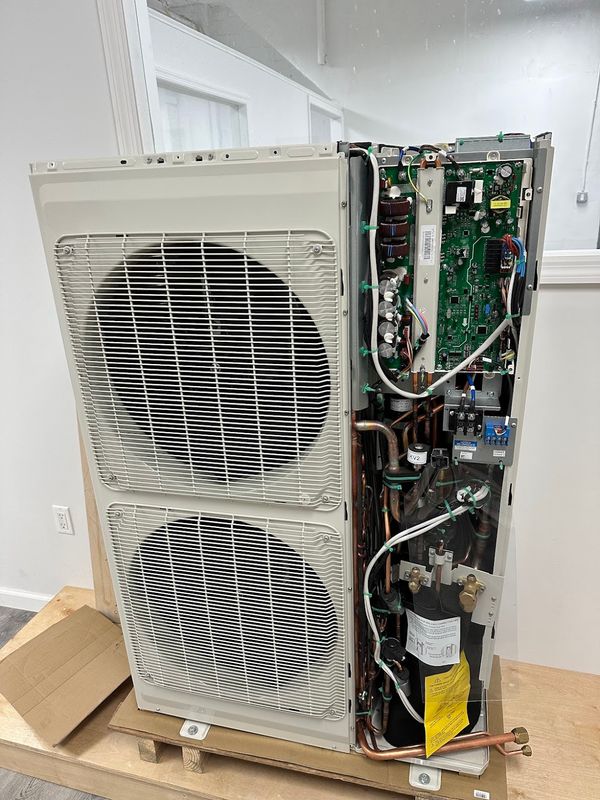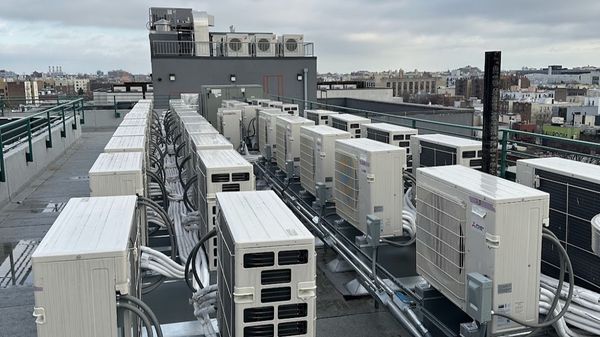
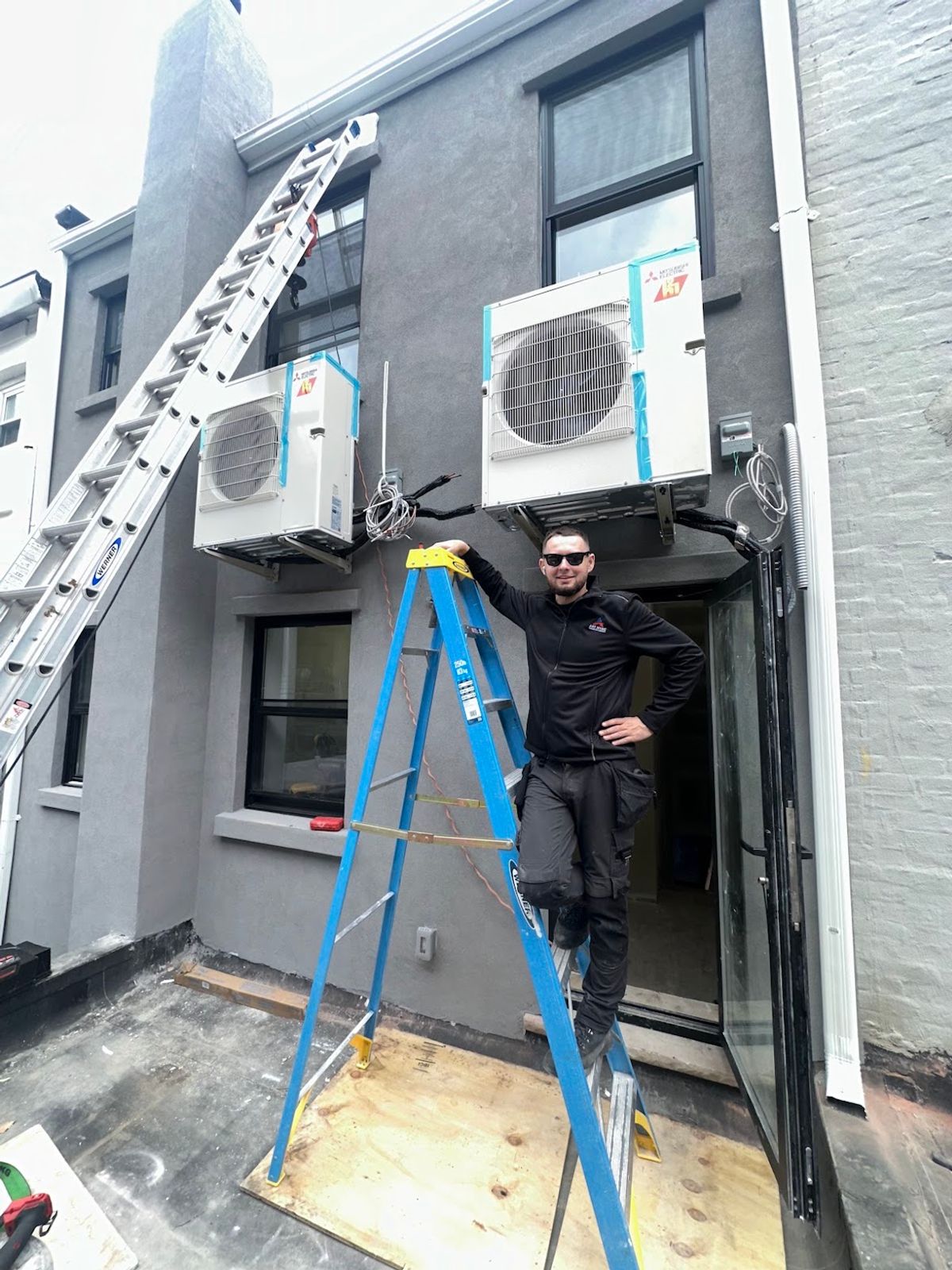
Two Mitsubishi cold-climate heat pump outdoor units wall-mounted on the rear elevation of a New York City building during a ductless installation
Back to Blog ENERGY SAVINGS

NYC Heat Pump Rebates & Incentives (2026): How Much You Can Save + Install Guide

Aug 20, 2026 12 min read Alex Weber
Quick Read

This article covers:

  • What changed on January 1, 2026 — the federal credit ended, the state and utility money did not
  • Con Edison heat pump incentive amounts for 1–4 family homes, in plain numbers
  • Why the same house can qualify for $2,500 or $10,000 depending on a single decision
  • What multifamily and commercial buildings get instead, now that Clean Heat is residential only
  • The five rules that decide your final number: the 70% cap, DAC status, sizing, equipment lists and timing

Estimated read time: 5 minutes.

Two things are true at once this year, and most of what you will read online only has one of them.

The federal side is gone. The 25C Energy Efficient Home Improvement Credit, which paid up to $2,000 toward a qualifying heat pump, applied to property placed in service through December 31, 2025 and was not extended. The 25D residential clean energy credit, which covered geothermal, ended on the same date. If you install a heat pump in 2026, there is no federal credit attached to it.

The state and utility side did not go away — it got restructured, and in Con Edison territory the numbers are considerably larger than the credit that expired. A single-family home in the city that installs a full-load cold-climate heat pump and decommissions its fossil-fuel heating currently qualifies for $8,000 through NYS Clean Heat, and $10,000 if the address sits in a designated Disadvantaged Community. That money is not a check you chase afterwards; it comes off the invoice as a discount, filed by the contractor before the job.

The rest of this article is the practical version: what each program pays, who it applies to, and the handful of rules that decide whether a quote turns into the number on the brochure. If you would rather skip to a real figure for your building, our rebates and incentives page covers the programs we file, and heat pump installation covers what the work itself involves.
Three Pots of Money, and How They Overlap

Almost every mistake we see at the quote stage comes from mixing these three up.

  1. Utility incentives (NYS Clean Heat). Administered by Con Edison and the other New York utilities under a statewide program. For 2026 through 2030 the Clean Heat name covers residential buildings of one to four dwelling units only. Amounts are prescriptive — a fixed figure per project, set by what you install and by whether the old system stays.
  2. Utility programs for everything larger. Buildings of five or more dwelling units, and commercial properties, were moved out of Clean Heat and into Con Edison’s own multifamily and commercial electrification programs. Same idea, different arithmetic: dollars per dwelling unit, or per MMBtu of fossil heating load removed, rather than a flat per-project figure.
  3. NYSERDA programs for income-eligible households. EmPower+ carries state and federal funding for lower-income households and can cover most or all of a project. The rule worth knowing before you start: NYSERDA and utility Clean Heat incentives cannot both be applied to the same installed measure. On the heat pump itself you take one path or the other, not both.

Financing sits alongside all of it rather than competing with it. NYSERDA’s Green Jobs–Green New York program offers unsecured loans up to $25,000 for one- to four-family homes, including an On-Bill Recovery option that puts the payment on your utility bill instead of a separate loan statement.

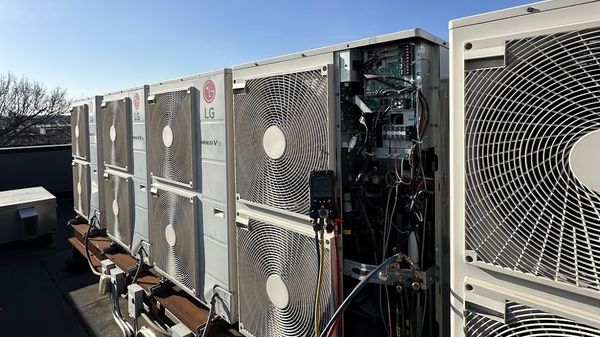
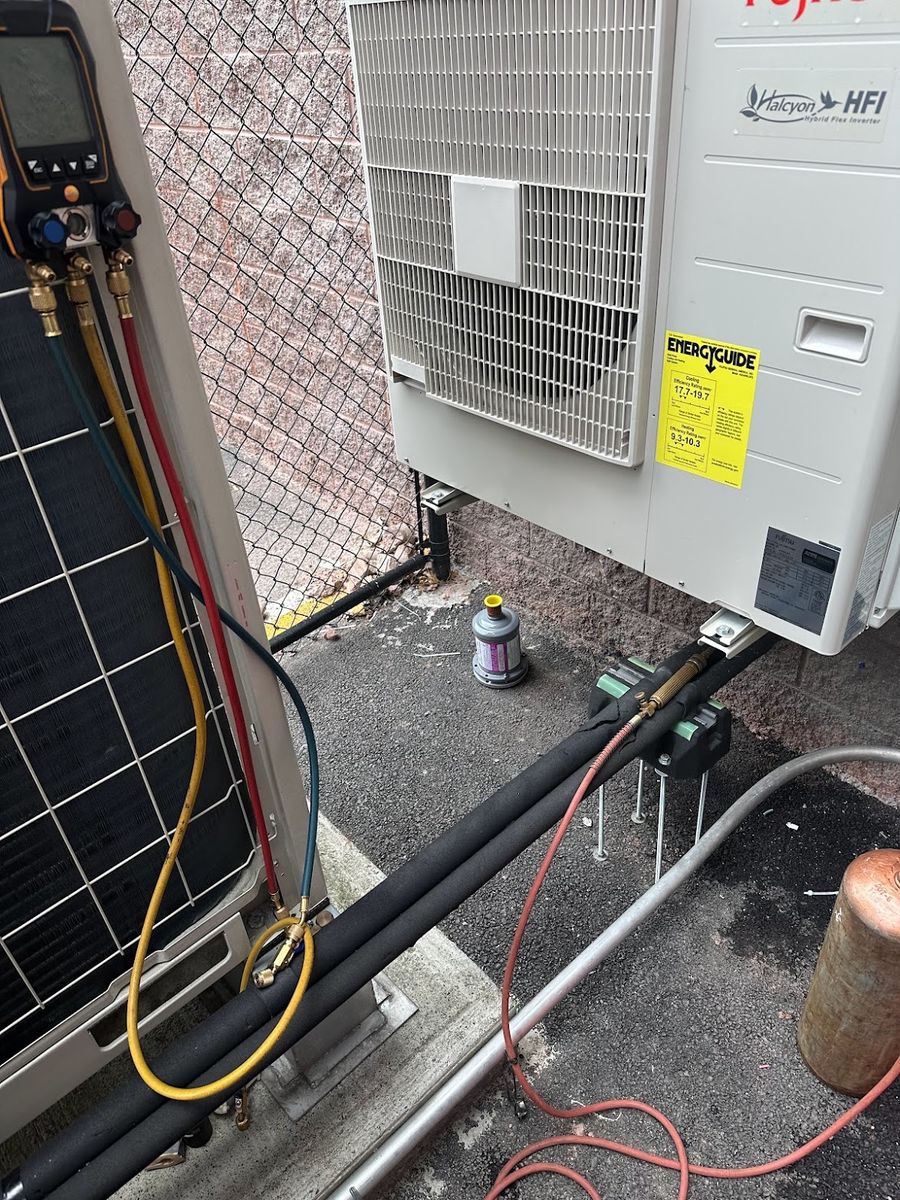
EnergyGuide efficiency label on a heat pump outdoor unit, with manifold gauges connected during a service visit
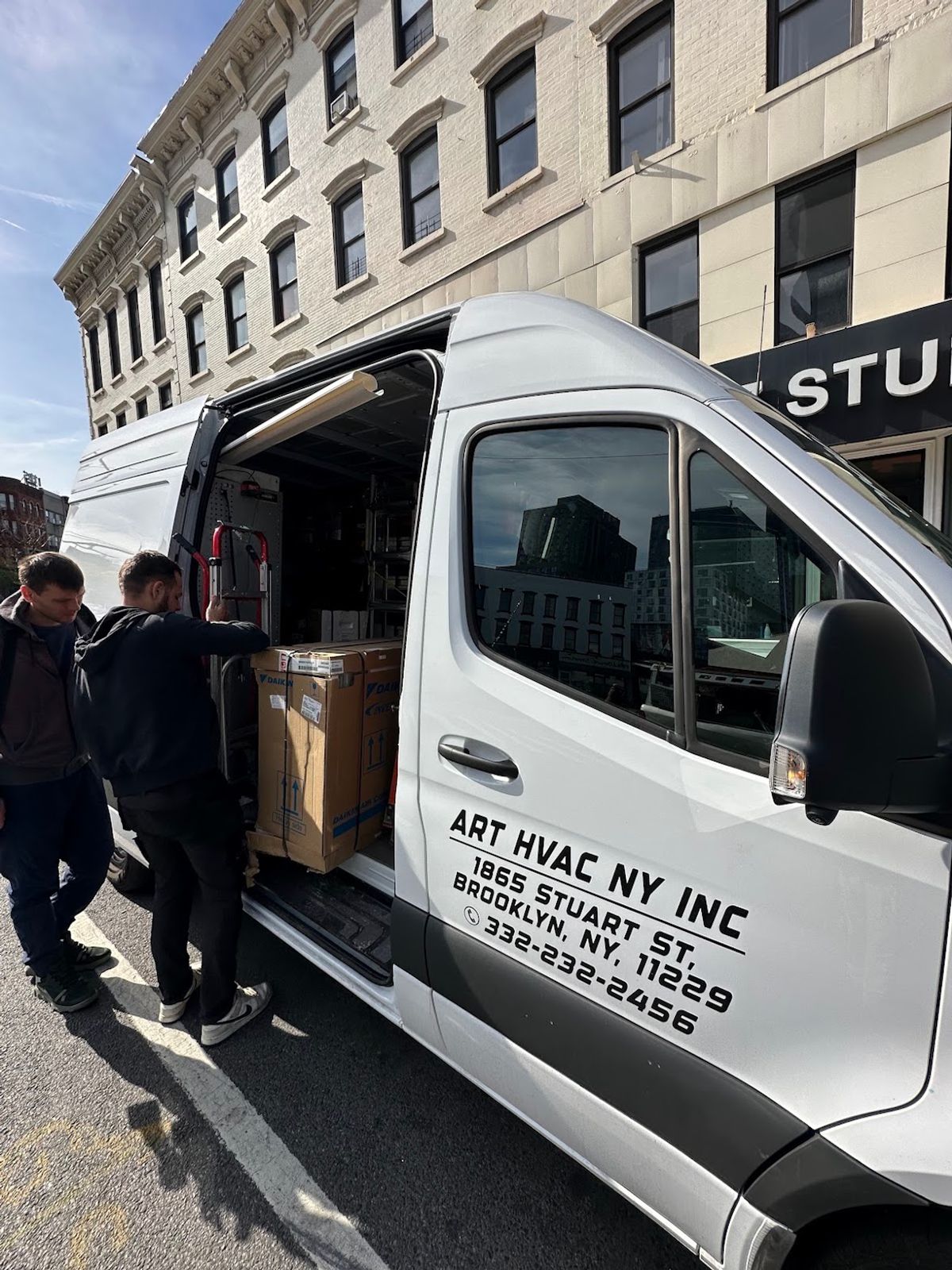
The EnergyGuide label on an outdoor unit is not decoration. Eligibility runs off rated efficiency and cold-climate performance, so the model number on the quote is what sets the incentive — not the brand on the van.
Program #01

1. Con Edison / NYS Clean Heat — 1 to 4 Family Homes

The main residential program, and the largest single number available to a house or small building in the city. The amount turns on one decision: whether the old fossil-fuel system is decommissioned or kept as backup. Full-load cold-climate heat pumps with the legacy system removed pay the most; keeping the boiler or furnace with integrated controls pays substantially less.

Full replacement with decommissioning: $8,000 single-family, $4,000 apartment
Same project in a Disadvantaged Community: $10,000 and $5,000
Keeping the fossil system with integrated controls: $2,500 and $1,000
Adding to an existing partial heat pump to reach full load: $4,000
Equipment must meet cold-climate (ccASHP) criteria to qualify at all
Program #02

2. Geothermal / Ground-Source

Ground-source sits in its own Clean Heat category with by far the highest incentive, reflecting what a loop field costs. Con Edison pays a whole-building rate, which means the project scope has to cover every dwelling unit in a one- to four-unit building rather than a single apartment. In existing buildings in Con Edison territory, the existing heating system has to be decommissioned as part of the work.

$30,000 per building, or $40,000 in a Disadvantaged Community
Whole-building rate — all dwelling units in a 1–4 unit building
Equipment must meet the ENERGY STAR geothermal specification
The system must meet 100% of the load at design conditions
Site constraints, not incentives, are the limiting factor in most of NYC
Program #03

3. Con Edison Multifamily — Five Units and Up

From 2026, buildings with five or more dwelling units are outside Clean Heat and inside Con Edison’s multifamily electrification program. Rates are paid per dwelling unit or per MMBtu of heating load electrified, and qualifying affordable housing is paid at a materially higher rate than market-rate work. Existing buildings must decommission the fossil-fuel system as a condition of the incentive.

Market rate, full building load: $5,000 per dwelling unit, prescriptive path
Custom path: $200 per MMBtu; phased electrification $70 per MMBtu
Qualifying affordable housing: $12,000–$14,000 per unit for space heating
Capped at $1 million per project, or 50% of cost (85% for affordable)
New construction is not eligible — existing buildings and gut rehabs only
Program #04

4. Con Edison Commercial & Industrial

Offices, retail, restaurants and institutional buildings are paid per MMBtu of fossil heating load removed rather than per piece of equipment. The structure deliberately rewards doing the whole building at once: full-load electrification pays materially more per MMBtu than a phased approach that converts one floor or one zone at a time.

Full building load electrification: $120 per MMBtu
Phased load electrification: $70 per MMBtu
Domestic hot water electrification: $200 per MMBtu
Total incentive capped at 50% of eligible project cost
Projects completed by October 1, 2026 may qualify for a 20% bonus
Program #05

5. NYSERDA EmPower+ — Income-Eligible Households

Income-qualified households go through NYSERDA rather than the utility, and the coverage runs far deeper — a heat pump project can be substantially or entirely covered depending on income tier and scope. The rule to establish before anything is ordered: utility Clean Heat incentives and NYSERDA incentives cannot both be applied to the same installed measure, so these are alternatives rather than a stack.

Income-tiered; the deepest coverage goes to the lowest income bands
Usually paired with a home energy assessment and weatherization first
Cannot be combined with NYS Clean Heat on the same measure
Administered through NYSERDA-approved contractors
Eligibility is confirmed before the work is scheduled, not after
Program #06

6. Financing — Green Jobs–Green New York

Not an incentive, but it changes what a project costs per month, which is usually the real question. NYSERDA’s GJGNY program offers unsecured loans up to $25,000 for one- to four-family homes in two forms: a conventional loan repaid to NYSERDA’s servicer, or an On-Bill Recovery loan repaid as a charge on your utility bill.

Unsecured loans up to $25,000 for 1–4 family homes
On-Bill Recovery puts the payment on the utility bill
Stacks with Clean Heat — it finances what the discount does not cover
Covers efficiency and renewable work generally, not only heat pumps
Worth pricing before assuming a project is out of reach
The Rebate Is a Discount, Not a Check

This detail trips people up more than any other. In Con Edison territory, NYS Clean Heat air-source incentives are paid as an instant discount: the participating contractor identifies the incentive on your invoice, takes it off the price, and is reimbursed by the program afterwards. A project sold without the rebate shown on the customer invoice is not eligible at all. Three practical consequences follow. You do not front the money and wait. You cannot claim it yourself after the fact. And the contractor has to be enrolled in the program before the work starts, because enrollment cannot be applied backwards to a job already done.

CON EDISON / NYS CLEAN HEAT — 2026 RATES

What the Incentive Is Worth by Project Type

Single-Family, Keep the Furnace + Integrated Controls$2,500
Apartment, Full Replacement with Decommissioning$4,000
Single-Family, Full Replacement with Decommissioning$8,000
Same, at an Address in a Disadvantaged Community$10,000
Ground-Source, Whole Building (1–4 Units)$30,000–$40,000

* Con Edison territory figures as published for 2026. Incentives are capped at 70% of project cost, or 85% in a Disadvantaged Community, and program rules and funding are subject to change. Multifamily and commercial projects are paid on separate per-unit or per-MMBtu schedules. Confirm current amounts before signing anything.

Keep the Boiler, or Take It Out?

Full Replacement (Decommission)
Pays $8,000 in Con Edison territory, $10,000 in a Disadvantaged Community
Heat pump must carry the full heating load at design conditions
Requires a Manual J load calculation, not a rule-of-thumb swap
Ends the flue, the fuel account and the annual combustion service
Electrical service has to support the whole load — check the panel first
The path NYC policy and Local Law 97 compliance are built around
Partial — Keep the Fossil System
Pays $2,500 for a single-family home, $1,000 for an apartment
Heat pump runs the mild majority of the season, boiler covers deep cold
Integrated controls are required and must be on the qualified product list
Lower electrical demand — often the practical answer in older buildings
Two systems to maintain, and the gas or oil account stays open
Sensible when the existing furnace or boiler still has years left in it

The Five Things That Decide What You Actually Receive

Published rates are the ceiling. What lands on the invoice is set by a short list of details, and every one of them is decided before the equipment is ordered.

  1. The 70% cap. Incentives cannot exceed 70% of project cost, or 85% if the address is in a Disadvantaged Community. On a small single-zone job this binds before the headline number does — an $8,000 incentive needs a project of roughly $11,400 or more to be paid in full.
  2. Your DAC status. Disadvantaged Community designation is by address, not by household income, and a substantial share of the city qualifies. It is worth checking before assuming the standard rate: the difference between $8,000 and $10,000 is decided by a map, and the same map lifts the cost cap from 70% to 85%.
  3. Sizing, on paper. The program requires the system to meet the full heating load at design conditions, evidenced by a Manual J calculation, and systems sized well beyond that load draw additional review. This is not bureaucratic friction — an oversized heat pump short-cycles, dehumidifies poorly in summer and wears its compressor early, so the paperwork is enforcing something you wanted anyway.
  4. The equipment list. Air-source equipment has to be cold-climate rated — listed on, or meeting the criteria of, the NEEP cold-climate product list — and ground-source has to meet the ENERGY STAR geothermal specification. A model that is nearly as efficient but not listed pays nothing at all. Brand is not the deciding factor; we install Mitsubishi and other listed lines, and the question is always whether the specific outdoor and indoor combination appears on the list.
  5. Timing and contractor allocation. Con Edison assigns each participating contractor a quarterly incentive allocation, and applications have to be submitted within 30 days of the installation. In practice that means program money is finite per contractor per quarter, and a project pre-approved in advance stands on much firmer ground than one sold on the assumption that funds will still be there at the end.
The rebate is decided at the quote stage, not at the end of the job. By the time equipment is on site, every variable that sets the number has already been fixed.

One more thing worth budgeting for honestly: the incentives are for the heat pump, not for the things that make the heat pump possible. Panel upgrades, dedicated circuits, condensate handling and any structural work for outdoor unit placement sit outside the incentive and inside the project cost — which, in fairness, also helps clear the 70% cap. For apartments and brownstones with no ductwork, that project is usually a ductless system; for a house with usable ducts it is a central swap, and our guide to residential heating and cooling systems walks through which one fits what. The borough pages cover the local specifics — co-op and condo approvals, outdoor unit placement and pre-war electrical realities — for heat pump installation in Brooklyn, Queens, Manhattan and the Bronx.

Local Law 97 and the October Deadline

Two dates matter for anyone managing a larger property. Buildings over 25,000 square feet fall under Local Law 97 carbon caps, which tighten again in 2030 — for those owners, electrifying heat is a compliance strategy with a payment attached rather than an optional upgrade. Separately, Con Edison’s commercial and industrial electrification incentives carry a bonus for projects completed by October 1, 2026. Work at that scale takes months to design, permit and commission, so a project intending to catch that bonus needs to be in design now rather than in procurement later.

NYC HEAT PUMP REBATES

Frequently Asked Questions

Find answers to common questions about our HVAC, plumbing, and refrigeration services.

No. The 25C Energy Efficient Home Improvement Credit, which paid 30% of qualifying costs up to $2,000 for a heat pump, applied to property placed in service on or before December 31, 2025 and was not renewed. The 25D residential clean energy credit that covered geothermal ended on the same date. Equipment placed in service in 2025 can still be claimed on that year’s return; anything installed in 2026 has no federal credit attached. In Con Edison territory this matters less than it sounds, because the utility incentive for a full replacement is several times larger than the credit that expired.

For a single-family home in Con Edison territory that installs a full-load cold-climate heat pump and decommissions the existing fossil-fuel heating system, the incentive is $8,000 — rising to $10,000 at an address in a designated Disadvantaged Community. An apartment on the same basis receives $4,000, or $5,000 in a DAC. Keeping the existing heating system as backup with integrated controls pays $2,500 for a single-family home and $1,000 for an apartment. All of these are capped at 70% of project cost, or 85% in a DAC.

No — in Con Edison territory the air-source heat pump incentive is delivered as an instant discount. The participating contractor shows it on the invoice, subtracts it from the price you pay, and is reimbursed by the program afterwards. A job sold without the incentive itemized on the customer invoice is not eligible, and you cannot apply for it yourself later. That makes contractor enrollment something to confirm before you sign rather than after.

Not through NYS Clean Heat. For 2026 through 2030 that program covers buildings of one to four dwelling units only. Buildings with five or more units go through Con Edison’s multifamily electrification program instead, which pays per dwelling unit or per MMBtu of heating load electrified — with materially higher rates for qualifying affordable housing — and caps the total at $1 million per project or a percentage of project cost. The application process is heavier than the residential one and starts well before installation.

Not on the same piece of equipment. Utility NYS Clean Heat incentives and NYSERDA incentives such as EmPower+ cannot both be applied to the same installed measure, so income-eligible households pick one route rather than stacking them. Financing is different: a NYSERDA Green Jobs–Green New York loan can cover the balance of a project after a Clean Heat discount has been applied, including an on-bill option repaid through your utility bill.

Generally no. The incentives are tied to the heat pump equipment and the heating load it serves. Electrical service upgrades, dedicated circuits, condensate work and any structural or access work for placing outdoor units are project costs rather than incentivized measures. Budget for it honestly at the start — in older NYC buildings running 100-amp service, the panel is often the item that decides whether a full replacement or a partial system makes more sense, and that decision moves the incentive by thousands of dollars.

Want a Real Number for Your Building?

We will look at your existing heating system, your electrical service and your address — Disadvantaged Community status is decided by the map, not by guesswork — and come back with what the equipment costs, what the incentive brings it down to, and what the work involves. The paperwork is ours; the decision is yours.

Alex Weber