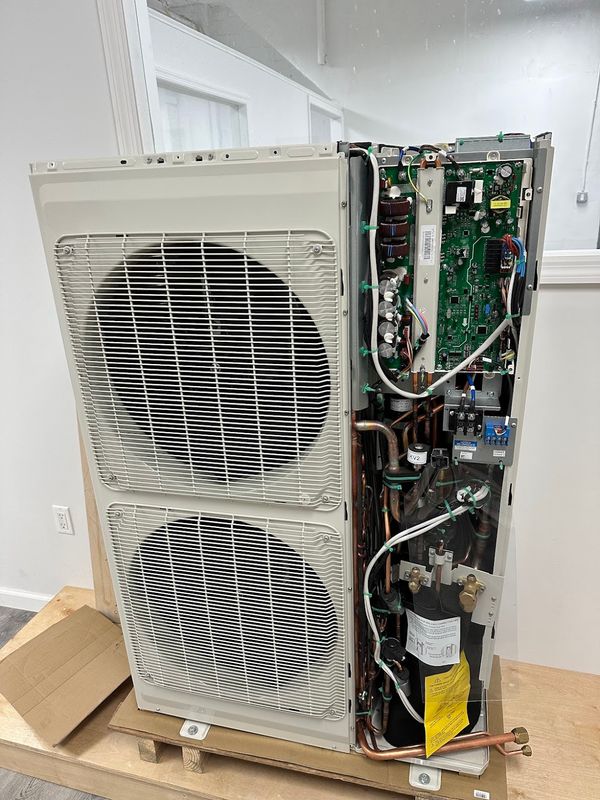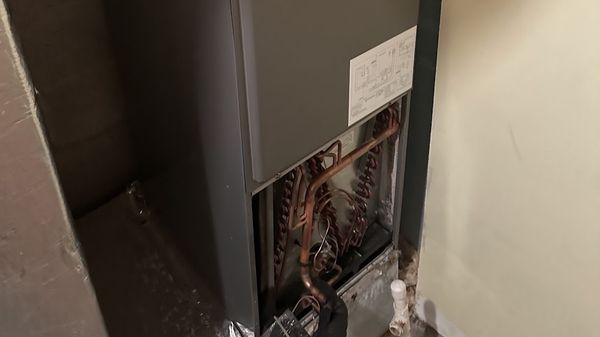
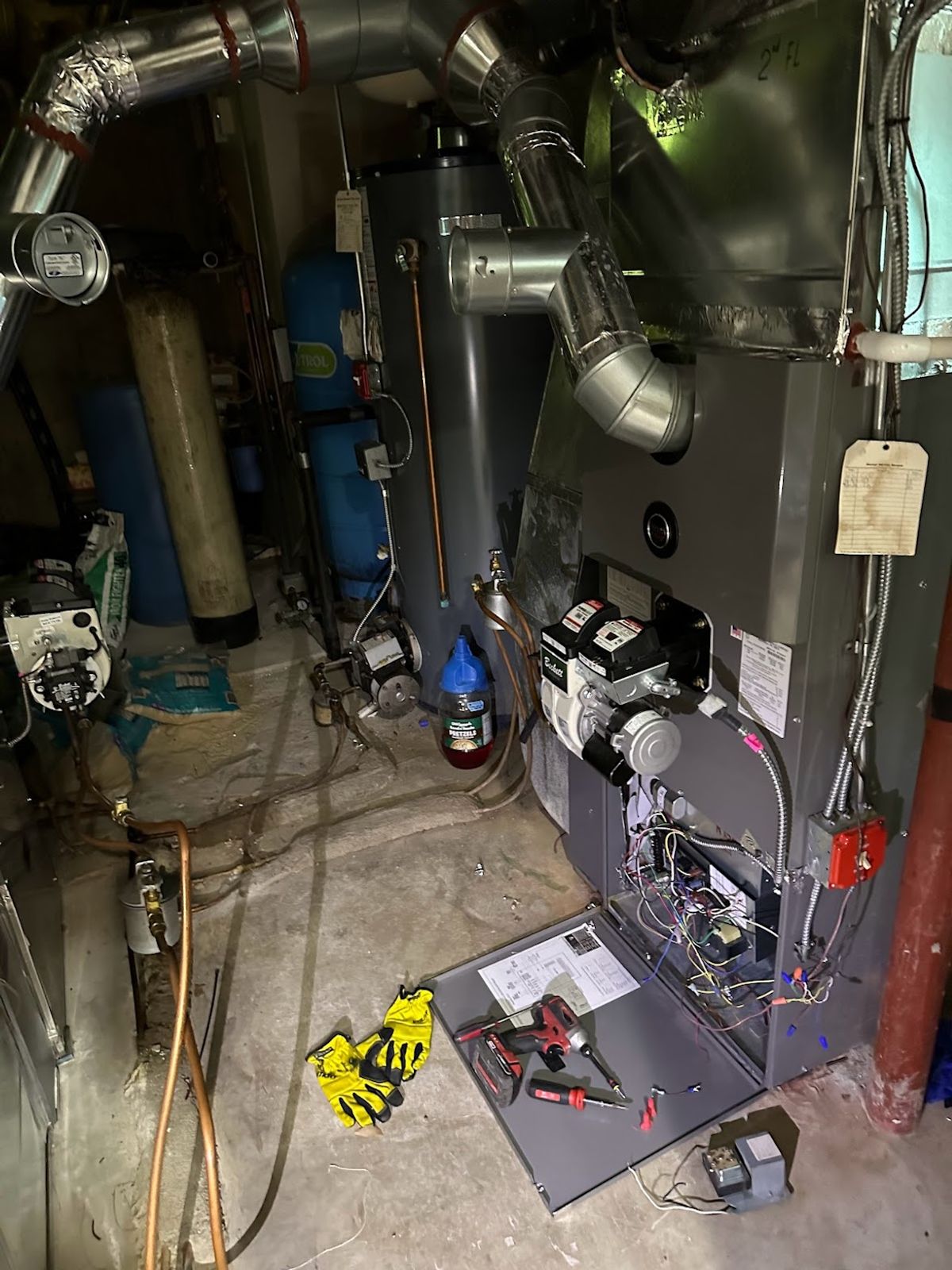
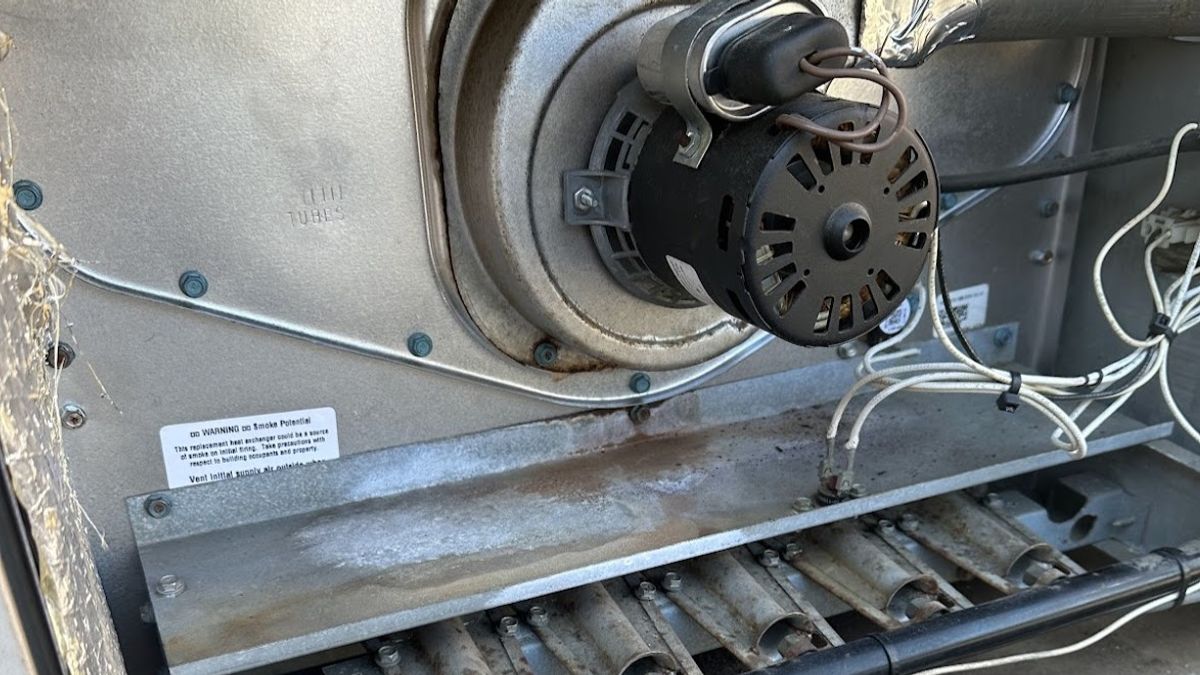
Gas furnace opened for diagnosis in a basement during a no-heat service call, with tools laid out on the access panel
Back to Blog HVAC TIPS

HVAC Blowing Cold Air When the Heat Is On? 8 Reasons Why

Aug 3, 2026 10 min read Alex Weber
Quick Read

This article covers:

  • The two settings behind most "cold air on heat" calls — both take under a minute to check
  • Why a heat pump blowing cool for a few minutes in January is normal, and when it is not
  • How a $12 filter can shut your burners off while the fan keeps running
  • What ignition faults look like from the hallway: flame sensor, igniter, and lockout codes
  • What each repair typically costs in NYC, and the three symptoms that mean stop and call

Estimated read time: 5 minutes.

Cold air pouring out of a vent while the thermostat says HEAT feels like a breakdown. Sometimes it is. But a meaningful share of the calls we take in December end with a technician changing one setting and the customer feeling slightly robbed. Before assuming the worst, it is worth three minutes on the checks below — they cost nothing and they resolve a real percentage of these complaints.

It also matters a great deal which kind of system you have, because the same symptom means different things. A gas furnace either produces heat or it does not — the blower running without a flame is a genuine fault. A heat pump normally delivers cooler supply air than a furnace and deliberately blows cool for a few minutes during defrost. Identical complaint, opposite verdicts. If you are not sure which one is in your basement or on your roof, this guide walks through the checks.

The list below runs roughly in the order a technician works through it: cheapest and most likely first, then the faults that need tools, then the ones that need parts. If the answer turns out to be "this furnace has reached the end," that becomes a replacement conversation instead — and in this city it increasingly ends at heat pump installation in Brooklyn and the other boroughs rather than another gas furnace.
Cause #01

1. The Fan Is Set to ON Instead of AUTO

The single most common cause, and the easiest to miss. With the fan on AUTO, the blower runs only when the system is actively heating. Set to ON, it runs continuously — including during the long stretches between heating cycles, when it is pushing room-temperature air that feels cold against your skin. Nothing is broken. Move the switch to AUTO and the complaint disappears.

Look for a FAN switch: ON / AUTO on the thermostat
AUTO = blower runs only during a heat call
ON = constant airflow, cold between cycles
Smart thermostats bury this in Fan or Circulate settings
Check this before anything else — it is free
Cause #02

2. The Thermostat Is Set or Wired Wrong

Beyond the obvious (system switch left on COOL after a warm week), heat pumps have a specific trap: the O/B terminal tells the reversing valve which mode is which. If that setting is flipped — after a thermostat swap, a battery pull, or a factory reset — the system runs cooling when you call for heat, cheerfully and at full power. It is a settings problem, not a hardware failure.

Confirm the mode is HEAT, not COOL or FAN
Raise the setpoint at least 3°F above room temperature
Heat pumps: check the O/B reversing-valve setting
After any thermostat replacement, re-verify heat mode
Dead batteries can drop a thermostat into a default mode
Cause #03

3. Your Heat Pump Is in a Defrost Cycle

On cold, damp days, frost builds on the outdoor coil and the system briefly reverses into cooling to melt it off. For five to fifteen minutes you get cool air indoors and what looks like steam or smoke rising off the outdoor unit. This is designed behavior. Most systems energize backup heat during defrost to soften the effect, so if yours feels dramatic, that backup may not be engaging.

Normal defrost lasts roughly 5–15 minutes
Steam off the outdoor unit is melting frost, not a fire
It should end on its own and return to heating
Frequent defrosts, or ice that never clears, needs service
Backup heat should cover the gap — if not, it needs a look
Cause #04

4. A Clogged Filter Is Overheating the Furnace

Restrict the return air and the heat exchanger has nowhere to send its heat, so temperature inside the furnace climbs until the high-limit switch cuts the burners for safety. The blower keeps running to cool things down, which is why you get cold air out of the vents. It relights, overheats, cuts out again. Left alone, this cycle cracks heat exchangers.

Classic pattern: warm air, then cold, repeating
Check the filter first — replace if light does not pass through
Also check for closed or blocked supply registers
A collapsed flex duct causes the identical symptom
Repeated limit trips are how heat exchangers fail early
Cause #05

5. Ignition Failure — Flame Sensor or Igniter

A furnace that starts, runs a few seconds, then stops and tries again is usually failing to prove flame. The flame sensor is a thin metal rod in the burner path that confirms the fire is lit; a film of oxidation on it is enough for the control board to shut the gas valve as a safety measure. A cracked hot-surface igniter produces a similar story: inducer runs, no ignition, lockout.

Symptom: ignites, runs 3–10 seconds, shuts down, retries
After 3–5 failed tries, the board locks out for an hour
Most furnaces flash a diagnostic code through the sight glass
Flame-sensor cleaning is a common, inexpensive repair
Do not keep resetting — note the flash code and call
Cause #06

6. Gas Supply or Valve Problems

No fuel, no heat — and the blower may still run. Check whether your other gas appliances work: if the stove will not light either, the problem is upstream of the furnace, at the meter or the utility. If everything else works and only the furnace is out, suspect the gas valve, a tripped safety, or a blocked flue that is stopping the pressure switch from closing.

Test another gas appliance to isolate the problem
Confirm the furnace gas shut-off is open (handle in line with the pipe)
Blocked flue or intake will trip the pressure switch
Snow, nests or debris block sidewall vents every winter
Smell gas? Leave the building first, then call
Cause #07

7. Duct Leaks or a Disconnected Duct

The furnace is making heat, but the heat is not making it to you. A duct that has separated in a cold crawlspace, attic, or unheated basement dumps warm air where nobody lives and pulls cold air into the run through the gap. Registers farthest from the equipment go lukewarm first. This is often the answer when only some rooms are cold.

Common where ducts run through unconditioned space
Some rooms fine, others cold — a strong clue
Listen for airflow where there should not be any
Sagging or crushed flex duct kills delivery temperature
Sealing and insulating leaky runs pays for itself quickly
Cause #08

8. Low Refrigerant or an Iced-Over Heat Pump

A heat pump low on refrigerant still runs, just weakly — supply air drifts down toward room temperature, and the system runs constantly without gaining ground. If the outdoor coil is solid ice rather than light frost, defrost has failed, often from a bad sensor, board, or reversing valve. Refrigerant does not get used up; if it is low, there is a leak that needs finding.

Symptom: runs nonstop, air barely warm, bills climbing
Solid ice on the outdoor unit = failed defrost, not normal
Low charge always means a leak — topping off is not a repair
A stuck reversing valve leaves the system in cooling
Aux heat masking the problem shows up as a high electric bill
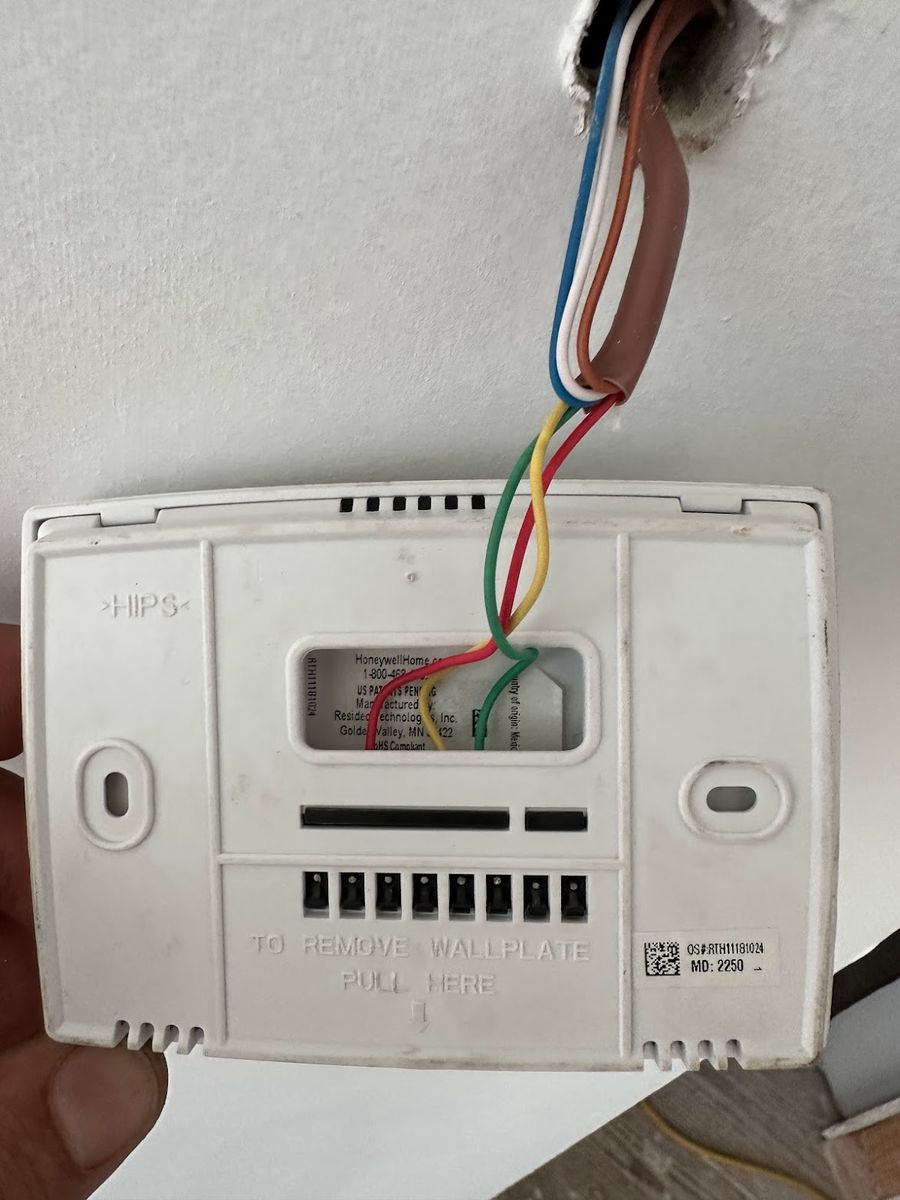
Thermostat wallplate removed from the wall showing the labeled wire terminals during a heating diagnosis
The thermostat wallplate is the first stop on most no-heat calls. On heat-pump systems, the O/B terminal decides which direction the reversing valve sits in — set it wrong and the equipment runs cooling on a heat call.
The Three-Minute Check Before You Call

Do these in order. One: set the thermostat fan to AUTO and the mode to HEAT, then raise the setpoint at least three degrees. Two: pull the air filter and hold it up to a light — if you cannot see light through it, replace it and wait twenty minutes. Three: walk past your supply registers and make sure none are closed or buried under furniture. Four: if you have a heat pump, look at the outdoor unit; light frost with the fan running is normal, a solid block of ice is not. If all four check out and the air is still cold, the problem needs tools, and you can tell the technician exactly what you already ruled out.

TYPICAL REPAIR COST BY CAUSE

What These Repairs Typically Run in NYC

Thermostat Setting or Filter Change (DIY)$0–$40
Diagnostic Visit, Flame Sensor Clean or Swap$150–$350
Hot-Surface Igniter, Limit Switch, Relay$300–$700
Gas Valve, Inducer Motor, Blower Motor$600–$1,600
Reversing Valve or Refrigerant Leak Repair$1,200–$3,000+

* Typical NYC ranges including parts and labor on a standard visit; emergency and after-hours rates run higher, and older or proprietary equipment can push parts costs well past these numbers. Diagnostics are usually credited toward the repair. These are planning figures, not a quote.

Same Symptom, Different System

Gas Furnace Blowing Cold
Cold air on a heat call is always a fault — never normal
Most likely: fan on ON, clogged filter, or ignition failure
Watch for a repeating warm-then-cold-then-off pattern
Diagnostic flash codes appear at the sight glass
Repeated lockouts and resets risk the heat exchanger
Supply air should read 120–140°F when it is working
Heat Pump Blowing Cool
Cooler supply air than a furnace is normal by design
A 5–15 minute cool spell during defrost is expected
Most likely: O/B setting flipped, low charge, failed defrost
Solid ice on the outdoor coil is the clearest red flag
Aux heat should cover deep cold and defrost gaps
Supply air should read 90–105°F when it is working

When to Stop Resetting It and Call Someone

Most of what is on this page is safe to check yourself. A few things are not, and the difference matters more than a service fee:

  1. You smell gas. Do not test switches, do not look for the source. Leave the building, then call the gas utility from outside. Everything else waits.
  2. The system locks out again and again. A furnace that shuts itself down after several failed ignition attempts is doing exactly what it should. Each reset asks it to try again with the underlying fault still present. Two resets is diagnosis; ten is how a $200 flame sensor becomes a cracked heat exchanger.
  3. The flame is yellow or lazy, or a CO alarm sounds. A healthy gas flame is crisp and blue. Yellow, flickering, or rolling flame means incomplete combustion, and incomplete combustion means carbon monoxide. Shut the system off at the switch, ventilate, and get it inspected before it runs again.
  4. The outdoor unit is encased in ice. Light frost is routine on a heat pump. A solid shell of ice that does not clear after a defrost cycle means the defrost control has failed, and running the system that way strains the compressor. Shut it off and book a diagnostic visit rather than chipping at the ice, which damages the coil fins. If you are in Brooklyn, our HVAC repair page for the borough covers what a call-out involves.
  5. There is water around the furnace or air handler. A high-efficiency condensing furnace produces condensate, and a blocked drain backs it up into the cabinet, where it reaches the control board. Water plus electronics turns a drain-line clog into a board replacement quickly.
A furnace that shuts itself down is usually protecting you from something. Resetting it repeatedly is how a small repair becomes a big one.

Worth adding: almost every failure on this list announces itself in advance. Flame sensors foul gradually, filters clog on a schedule, defrost boards degrade before they quit. A pre-season heating tune-up catches most of them in October rather than at 11pm in January, and HVAC maintenance in Brooklyn is the same visit that would have found the fouled sensor. We handle heating diagnostics and repairs across the city — HVAC repair in Brooklyn, Queens, Manhattan and the Bronx — and the January calls are almost always things that were visible in the fall.

Three Things Not to Wait On

Gas odor, a carbon monoxide alarm, or a burner flame that is yellow rather than blue are not troubleshooting items — they are stop-now items. Shut the system down at the service switch, get people out and air moving, and have it inspected before it runs again. The same goes for a furnace that has locked out repeatedly in one evening: the lockout is a safety response to a fault the equipment has already detected, and repeated resets override the protection without fixing the cause.

COLD AIR ON HEAT

Frequently Asked Questions

Find answers to common questions about our HVAC, plumbing, and refrigeration services.

In order of likelihood: the fan is set to ON instead of AUTO, so the blower runs between heating cycles and pushes room-temperature air; the filter is clogged and the high-limit switch is cutting the burners while the fan keeps running; or the furnace is failing to ignite and locking out. The first two you can check in a couple of minutes. The third shows up as a repeating start-stop pattern, usually with a flash code at the furnace.

Two kinds of cool are normal. Heat-pump supply air runs 90–105°F rather than a furnace’s 120–140°F, so it can feel cool to the hand while heating the house perfectly well. And during a defrost cycle — five to fifteen minutes, with steam coming off the outdoor unit — the system briefly reverses to melt frost off the coil. What is not normal is genuinely cold air for long stretches, or an outdoor unit sealed in solid ice.

Yes, and it is one of the most common causes we find. A restricted filter starves the furnace of return air, heat builds up inside the cabinet, and the high-limit switch shuts the burners off to prevent damage. The blower keeps running, so you get cold air from the vents. The furnace then relights and repeats. Beyond the comfort problem, that repeated overheating is a leading cause of premature heat-exchanger cracks.

That cycle is the signature of a safety switch doing its job — usually the high-limit switch responding to overheating from restricted airflow, or a flame-proving failure shutting the gas valve. Start with the filter and the registers. If airflow is clear and it still cycles, the fault is in the ignition or control side and needs a technician with a meter and the manufacturer’s code chart.

It is a reasonable stopgap to keep the house warm while you wait for service, but treat it as exactly that. Emergency heat bypasses the heat pump and runs electric resistance strips or the backup furnace, which will heat the house and cost noticeably more per hour. Use it overnight if you need to, then have the heat pump looked at rather than leaving it on Em Heat through the season.

Usually yes, with three exceptions: any smell of gas, any CO alarm or yellow burner flame, and a furnace that has locked out several times in one evening. In those cases shut it off at the service switch and leave it off. For the ordinary cases — fan setting, filter, duct leak, a heat pump running weak — leaving it running while you wait is fine, and a space heater in the room you are using bridges the gap safely if you keep it away from fabric and unattended outlets.

No Heat, or Heat That Doesn’t Feel Like Heat?

Tell us what the system is doing and what you already checked, and we will bring the right parts on the first visit. We diagnose gas furnaces, boilers, and heat pumps across all five boroughs — including the evenings and weekends when heating decides to quit.

Alex Weber